Saturday, June 15, 2019

Christian Testament text for 16 June 2019

Romans 5.1-5        Since we are justified by faith, we have peace with God through our Lord Jesus Christ, through whom we have obtained access to this grace in which we stand; and we boast in our hope of sharing the glory of God. And not only that, but we also boast in our sufferings, knowing that suffering produces endurance, and endurance produces character, and character produces hope, and hope does not disappoint us, because God's love has been poured into our hearts through the Holy Spirit that has been given to us.

Reflection            Some 30 years ago I was lying on my Rolfer’s table, wincing with excruciating pain.   For those of you who may have missed out on the alternative medicine that was available in Santa Fe, New Mexico in the late 1980s, Rolfing was a ten session program intending to realign the body structure and functioning through manipulation of connective tissues. Rolfing is not to be confused with massage.  In other words, it is not intended to produce relaxation. It systematically works on the connective tissues throughout the body, driving hard into the heart of physical pain and erupting emotional trauma along the way. 

In any case, in the midst my third or fourth Rolfing session when tightening my shoulder muscles in resistance to the intrusion of  Margaret the Rolfer’s elbow piercing my scapula,  Margaret counseled, “If you would just relax around the pain rather than resisting it, this will not hurt.” Without missing a beat Margaret waxed on, “One day you will be grateful for all of the pains you have endured.” 

It was a good thing I paid for all ten sessions in advance, insurance I would stick it out, because I seriously considered leaping off Margaret’s table to limp away and lick my wounds.  I tell you this story because it is the first experience that erupts on my thought horizon when I hear Paul’s counsel to the Romans, “And not only that, but we also boast in our sufferings, knowing that suffering produces endurance, and endurance produces character, and character produces hope, and hope does not disappoint us, because God's love has been poured into our hearts through the Holy Spirit that has been given to us.”

Paul, Margaret, what are you saying? I believe the key to the meaning of this scripture as well as Margaret’s counsel lies in where it lands, “God’s love poured into our hearts…” You see, regardless of our situation, regardless of our suffering and the challenges we endure, “the Holy Spirit of God has been given to us.” When life is flowing along smoothly and we are enjoying pink sunsets and the freshness of brand new baby breath, it is easy to proclaim, “I found God in the extraordinary sunset. I found God in promise of new life revealed in this infant.” Lovely as they are, these experiences do not stretch or grow our faith.

The questions that actually grow and align (justify) our faith are, “How do we find God in the not so beautiful places? How do we welcome our uneasy places, our disappointments or challenges? How do we relax around the edges of our pain and endure?” For me the only way to do so is by remembering, “God is with me, especially in my suffering.” This is the substance of our faith, faith that holds us in right relationship with God, faith that God is faithfully with us, enabling us to endure no matter what.

If you found this post to be meaningful please share by clicking on the icons below. Thank you.

** The image represents the structure and function of a protein molecule.

Friday, June 7, 2019

Gospel Text for Pentecost 9 June 2019


John 14:8-17, 25-27        Philip said to Jesus, "Lord, show us the Father, and we will be satisfied." Jesus said to him, "Have I been with you all this time, Philip, and you still do not know me? Whoever has seen me has seen the Father. How can you say, `Show us the Father'? Do you not believe that I am in the Father and the Father is in me? The words that I say to you I do not speak on my own; but the Father who dwells in me does his works. Believe me that I am in the Father and the Father is in me; but if you do not, then believe me because of the works themselves. Very truly, I tell you, the one who believes in me will also do the works that I do and, in fact, will do greater works than these, because I am going to the Father. I will do whatever you ask in my name, so that the Father may be glorified in the Son. If in my name you ask me for anything, I will do it.

"If you love me, you will keep my commandments. And I will ask the Father, and he will give you another Advocate, to be with you forever. This is the Spirit of truth, whom the world cannot receive, because it neither sees him nor knows him. You know him, because he abides with you, and he will be in you.”

"I have said these things to you while I am still with you. But the Advocate, the Holy Spirit, whom the Father will send in my name, will teach you everything, and remind you of all that I have said to you. Peace I leave with you; my peace I give to you. I do not give to you as the world gives. Do not let your hearts be troubled, and do not let them be afraid."


Reflection        Jesus leaves his peace with us, peace intended to replace our fear of the dark and murky places, our fear of what we do not know and cannot control, our fear of people who look and think and believe differently than us.  When we say  “yes” to Jesus’ peace the Spirit of Truth blooms from the inside out, illumining  our minds, inflaming our hearts and inciting our courage to act in spite of the complexity and uncertainty of our time. I believe the Spirit of Truth is with Warren Scott.

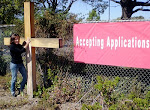
Warren Scott is a thirty six year old humanitarian aid worker  who provided water, food and shelter to two suffering undocumented migrants . Scott is a volunteer with No More Deaths, a Tucson-based aid group that leaves supplies for migrants crossing the Southern border. The provisions left in the desert are considered lifesaving, as at least 3,000 migrants are believed to have died walking through the desolate expanse. This week Scott faces charges in Federal Court; one count of conspiring to transport and two counts of harboring two Central American men who crossed into the U.S. from Mexico.

In light of Jesus’ parable of the Good Samaritan, what was Warren Scott to do? You recall the story Jesus told to a lawyer who wanted to test him and asked, “What must I do to inherit eternal life?” Jesus answered, ‘You shall love the Lord your God with all your heart, and with all your soul, and with all your strength, and with all your mind; and your neighbor as yourself.’ The lawyer countered, “who is my neighbor?” Whereupon Jesus tells the story of a Jewish man who is robbed, beaten and left half dead at the side of a road. A priest and a Levite, both Jews, pass him by but a foreigner, a Samaritan, moved with pity (the Spirit of Truth within him), breaks the law prohibiting Samaritans from touching Jews, stops and gives humanitarian aid to the dying stranger. The question Jesus poses to the lawyer and us is, “Which of these three, do you think, was a neighbor to the man …” suffering at the side of the road?”  Clearly our answer must be, “the one who showed …mercy.” How then can we ignore Jesus’ instruction, ‘Go and do likewise?” (Luke 10.29-36)

There are Good Samaritan laws in this country, laws intended to protect people who give assistance to those who are or who they believe may be injured, ill or in peril. The laws are intended to reduce bystanders fear of being sued or prosecuted for helping, to mitigate our fear of uncertain outcomes. 

Yes, it can make us anxious to do what we know is the Truth in our hearts because we cannot control the consequence. Even Good Samaritan laws cannot insure a favorable result when we are moved to loving action by the Spirit of Truth within us. Nonetheless we are assured, “My peace I leave with you, my peace I give to you. I do not give as the world gives. Do not let your hearts be troubled and do not let them be afraid.’ Now go, in the Spirt of Truth, and be merciful to those in need. 

If you found this post to be meaningful please share by clicking on the icons below. Thank you.

Saturday, June 1, 2019

Gospel Text for Sunday 2 June 2019

John 17:20-26        Jesus prayed for his disciples, and then he said. "I ask not only on behalf of these, but also on behalf of those who will believe in me through their word, that they may all be one. As you, Father, are in me and I am in you, may they also be in us, so that the world may believe that you have sent me. The glory that you have given me I have given them, so that they may be one, as we are one, I in them and you in me, that they may become completely one, so that the world may know that you have sent me and have loved them even as you have loved me. Father, I desire that those also, whom you have given me, may be with me where I am, to see my glory, which you have given me because you loved me before the foundation of the world.

"Righteous Father, the world does not know you, but I know you; and these know that you have sent me. I made your name known to them, and I will make it known, so that the love with which you have loved me may be in them, and I in them.”

Reflection        Given the bitterly divided state of our current social, political and religious worlds how can we possibly aspire to becoming ‘completely one’ as Jesus prays? Jesus is not praying for uniformity of custom, singularity of theology, nor homogeneity of political perspectives. Jesus prays for unity, not uniformity. Jesus prays that we experience that which draws us together and is greater than anything can divide. 

When we claim our place in the intimate relationship of humanity with divinity we are participating in something deeper than any possible divisions, we are affirming something wider than the myriad ways we disagree. You see, when we claim our place in the intimate relationship of humanity with divinity we are raised up  with Jesus and experience the glorious unity that is evinced in the love of Jesus with the Father. 

This interpenetrating love, this oneness in relationship with God, is the heart of unity. It is this love, this oneness,  that enables us to bury our hatchets and listen to those with whom we disagree. It is this love, this oneness, that gives us the courage to tare down walls that separate us from those whom we call other. Don’t you see, Jesus is not praying for uniformity of social, political or religious opinion. Jesus is inviting us to claim our place in the life of the Trinity.

What does that mean, life in the Trinity? For help explaining I turn to one of my favorite German theologians, who if still living is nearing one hundred years old. Jürgen Moltmann understands the Trinity as fundamentally social. The three persons of the the Trinity, Father, Son and Holy Spirit, are defined by their relationships. Although there are three distinctive individual expressions of being they are understood by their relationships with one another. Relationship is the defining quality.  Trinity is the unparalleled model for our human relationships.

As humans created in the image and likeness of God, we are distinctive individual expressions of being and we are defined by our relationships. We live and breath and find our meaning in our interconnected, interpenetrating relationships. Because the Spirt of God lives and breathes and moves within us, all of us, we participate in what Moltmann calls, the Social Trinity. 

How does that translate to life among us humans? I believe it looks like each one of us and all of us together bringing our core values to bear on the institutions and culture around us. It means questioning our purity codes (who is in and who is out) and stretching the borders of our hearts and minds to make room for everyone. Where ever hatred, hostility or sorrow thrive we are meant to deliver kindness, good will and joyfulness. Where bitterness and resentment abound we are meant to tender friendship and affection.

Through our selfless expressions of love people will be drawn to the source of our love, the love that we experience in the love of God and Jesus the Christ, the love that we share with confidence because we know we are loved and we desire nothing less than to draw all people into the intimate relationship we share with God, into the life of the Social Trinity. 

Listen to Fr. Thomas Keating speak on "Living Ordinary Life with Extraordinary Love," by clicking on top right image.

If you found this post to be meaningful please share by clicking on icons below. Thank you.


Saturday, May 25, 2019

Readings for 6th Sunday of Easter 26 May 2019

 In A "People Connecting" Way....


Acts 16:9-15
During the night Paul had a vision: there stood a man of Macedonia pleading with him and saying, "Come over to Macedonia and help us." When he had seen the vision, we immediately tried to cross over to Macedonia, being convinced that God had called us to proclaim the good news to them.

We set sail from Troas and took a straight course to Samothrace, the following day to Neapolis, and from there to Philippi, which is a leading city of the district of Macedonia and a Roman colony. We remained in this city for some days. On the sabbath day we went outside the gate by the river, where we supposed there was a place of prayer; and we sat down and spoke to the women who had gathered there. A certain woman named Lydia, a worshiper of God, was listening to us; she was from the city of Thyatira and a dealer in purple cloth. The Lord opened her heart to listen eagerly to what was said by Paul. When she and her household were baptized, she urged us, saying, "If you have judged me to be faithful to the Lord, come and stay at my home." And she prevailed upon us.

John 5:1-9
After Jesus healed the son of the official in Capernaum, there was a festival of the Jews, and Jesus went up to Jerusalem.
Now in Jerusalem by the Sheep Gate there is a pool, called in Hebrew Beth-zatha, which has five porticoes. In these lay many invalids-- blind, lame, and paralyzed. One man was there who had been ill for thirty-eight years. When Jesus saw him lying there and knew that he had been there a long time, he said to him, "Do you want to be made well?" The sick man answered him, "Sir, I have no one to put me into the pool when the water is stirred up; and while I am making my way, someone else steps down ahead of me." Jesus said to him, "Stand up, take your mat and walk." At once the man was made well, and he took up his mat and began to walk. Now that day was a sabbath.


Reflection       Do you ever get that feeling inside, something telling you, “I need to call Emily?” or suddenly for no apparent reason it occurs to you, “I really ought to visit Uncle George?” Or maybe you see a homeless person and feel a tug inside? Or hear about the needs at the Monastery that is serving the newest refugee guests in Tucson and something moves inside you? Or a friend you haven’t heard from in years calls at the moment you are feeling really down and says, “I had a dream about you… is everything alright?” There are so many ways the Spirit of God lives and breathes and moves in our lives. Mostly they are not Marvel Comic action movie moments. Usually they are subtle whispers, nudges or tugs, synchronous encounters or intuitions. 

Paul in today’s reading from the Acts of the Apostles, requires an action packed moment to break him out of his God denying behavior. Most of us do not need such drama, so it behooves us to listen to our more subtle inner urgings. As people of God we can expect the Spirit of God to move within and among us.

Listening to his inner urgings, Paul travels to Macedonia. Eventually he meets Lydia, a successful business woman who by listening to her inner urgings,  becomes Paul’s first convert to Christianity. Listening to and acting on her more subtle inner urgings Lydia passes the good news on to her family and becomes a leader in establishing the Church in Phillipi. 

Listening and acting, like dance partners, the two belong together, complete each other because there is no dance without the two together. This is what we witness at the pool by the Sheepgate, Beth-zatha in the gospel text from John. We are shocked to learn one sick man has laid at the side of the healing pool for thirty-eight years. Although he has been stirred up time and time again, it is not until he hears and responds to Jesus’ invitation to “stand up…and walk” that the man is made well. 

You see, we can desire to be made well. We can pray to be made well. We can hope that someone will come along and rescue us from our dire strait. We can even hear the inner stirrings of God’s Spirit inviting us to be well. But, until and unless we make a decision to receive and respond to the good news of new and renewed life we remain on the sidelines. Much as the sick man lying at the side of the healing pool, life passes us by until we decide to stand up, pick up our mats and walk.

One cannot deny that the Spirit of God is stirring up the waters in our world today, inviting us to grow beyond our current identity. The question is, how is it stirring up your waters? What news item brings you to tears? What story inflames you? What pleadings for help have you heard that keep gnawing at you? What story inspires you? What message of hope can you bring by your actions to people you have not met? The Spirit of God is stirring things up in our world  inviting us to move out of our comfortable ruts. Are you ready to stand up and act on it? 

Listen to the TeDX talk above, right
 - how music reaches across borders to the allá - the something just beyond to which we all aspire.

If you found this post meaningful please share by clicking on icons below. Thank you. 

Friday, May 17, 2019

Epistle and Gospel Texts for Sunday 19 May 2019


Acts 11:1-18        Now the apostles and the believers who were in Judea heard that the Gentiles had also accepted the word of God. So when Peter went up to Jerusalem, the circumcised believers criticized him, saying, "Why did you go to uncircumcised men and eat with them?" Then Peter began to explain it to them, step by step, saying, "I was in the city of Joppa praying, and in a trance I saw a vision. There was something like a large sheet coming down from heaven, being lowered by its four corners; and it came close to me. As I looked at it closely I saw four-footed animals, beasts of prey, reptiles, and birds of the air. I also heard a voice saying to me, `Get up, Peter; kill and eat.' But I replied, `By no means, Lord; for nothing profane or unclean has ever entered my mouth.' But a second time the voice answered from heaven, `What God has made clean, you must not call profane.' This happened three times; then everything was pulled up again to heaven. 

At that very moment three men, sent to me from Caesarea, arrived at the house where we were. The Spirit told me to go with them and not to make a distinction between them and us. These six brothers also accompanied me, and we entered the man's house. He told us how he had seen the angel standing in his house and saying, `Send to Joppa and bring Simon, who is called Peter; he will give you a message by which you and your entire household will be saved.' And as I began to speak, the Holy Spirit fell upon them just as it had upon us at the beginning. And I remembered the word of the Lord, how he had said, `John baptized with water, but you will be baptized with the Holy Spirit.' If then God gave them the same gift that he gave us when we believed in the Lord Jesus Christ, who was I that I could hinder God?" When they heard this, they were silenced. And they praised God, saying, "Then God has given even to the Gentiles the repentance that leads to life." 

John 13:31-35
At the last supper, when Judas had gone out, Jesus said, "Now the Son of Man has been glorified, and God has been glorified in him. If God has been glorified in him, God will also glorify him in himself and will glorify him at once. Little children, I am with you only a little longer. You will look for me; and as I said to the Jews so now I say to you, 'Where I am going, you cannot come.' I give you a new commandment, that you love one another. Just as I have loved you, you also should love one another. By this everyone will know that you are my disciples, if you have love for one another."given even to the Gentiles the repentance that leads to life."

Reflection        Something new is happening because the home of God is right here, right now, in this place, dwelling in us. The home of God is among us givers and takers, winners and losers, sinners and saviors, guardians and oppressors, star-gazers and pragmatists, Republicans and Democrats and none of the above. We are all born on a single white sheet let down in the heart of God. God is with us, all of us, and makes no distinctions.

This is really hard to swallow so we seek our friend Jesus’ counsel during our last supper together asking, “How can we live like this?” Jesus answers, “Just as I have loved you, you also should love one another…”

Isn’t it interesting, Jesus does not find it necessary to spin extensive commentary about what to believe? Not a word about the hypostatic union of his dual divine and human nature, no mention of the essential ousia of his being in God.  Jesus merely shows us how to live, “Just as I have loved you, you should love one another.” This is the difference between orthodoxy, right belief,  and orthopraxy, right behavior, right living. 

Orthodoxy gives us propositional statements of faith or doctrine to believe and profess in order to be identified with a particular religious group. Orthodoxy defines us and them, who is in and who is out. Orthopraxy shows us how to live in right relationship with God and with all people, making no distinctions.  Everyone is in. Orthodoxy slices and dices and makes things complicated. Orthopraxy cuts to the bottom line.

There is a story in the Talmud, a central teaching text in Judaism, about two rabbis and a gentile (non-jew). The gentile comes to the rabbis and says, “I will convert to Judaism if you recite the entire Torah while standing on one foot? The first rabbi turns beet red, he is infuriated. “What are you thinking? So who could do such a thing?”  And he stomps away enraged. The second rabbi balances on one foot and says, “That which is hateful to you, do not do to your neighbors. That is the whole Torah. So the rest of it,  is commentary.”  The gentile is immediately converted. (Starr, Mirabai, “God of Love,” p110)    Let me suggest, this is the something new. The new song,  the new creation and it is not complicated.

The new, old thing is orthopraxy, returning to the first century Jesus movement and learning to love without distinction.  So let me ask you, can you recite the entire scripture standing on one foot? If you can, the world will be converted. 


If you found this post  to be meaningful, please share by clicking on icons below. Thank you.

Friday, May 10, 2019

Gospel text for Sunday 12 May 2019


John 10:22-30        At that time the festival of the Dedication took place in Jerusalem. It was winter, and Jesus was walking in the temple, in the portico of Solomon. So the Jews gathered around him and said to him, "How long will you keep us in suspense? If you are the Messiah, tell us plainly." Jesus answered, "I have told you, and you do not believe. The works that I do in my Father's name testify to me; but you do not believe, because you do not belong to my sheep. My sheep hear my voice. I know them, and they follow me. I give them eternal life, and they will never perish. No one will snatch them out of my hand. What my Father has given me is greater than all else, and no one can snatch it out of the Father's hand. The Father and I are one.”

Reflection       Thanks to the brave guerilla fighter Judas Maccabee, in the year 166BCE the Temple building is restored to holiness, the center of Jewish worship is intact. Still, two hundred years later in John's gospel text the Jews  are looking for the Messiah, the king or high priest who will lead them to a happily ever after life. Lately many of them have seen and almost all of them have heard about the man Jesus, the inscrutable prophet who touches and heals, teaches with authority, forgives unconditionally, offers hope to all people, and at the same time he is irreverent, hangs out with all the wrong folks,  violates  Temple traditions and discredits the orthodoxy of the elite religious and political authorities. 

The Jews are not sure what to make of Jesus. So when they see him  “walking in the Temple, in the portico of Solomon” they ask him, “If you are the Messiah, tell us plainly.” But Jesus’ speech is anything but plain. Of course, they do not understand. They cannot hear the deep meaning of Jesus’ words.  They cannot see that Jesus embodies the temple, the new way of worship in Spirit and in Truth. (John 4.23) I believe this is what Jesus was alluding to earlier in John’s gospel when he drove the vendors who were selling sheep and cattle, doves and money out of the Temple and said, “Destroy this temple and in three days I will raise it up.” (John 2.19)      

From our privileged point of view two thousand years later, we know Jesus is not talking about a superhero’s brick and mortar magical building plan.  Jesus is talking about his own body, all of our bodies, as the new temples of God, the new places of holiness. And, Jesus did not make this up.

From the very beginning we hear in one of our Genesis creation myths God speaking, “‘Let Us make humankind in Our image, in Our likeness’…. So God created humankind in God’s own image…” (Gen 1.26-27) Like Jesus, all of humanity is meant to be the dwelling place, the temple, the image of God. The contemporary theologian and wisdom bearer, Rabbi Lord Jonathan Sacks cites Leviticus in which “The Lord says to Moses: “Speak to the entire assembly of Israel and say to them, ‘Be holy because I, the Lord, your God, am holy,’” (Lev 19.1-2) and  goes on to explain, this is the first time such an all inclusive command from God is resolutely articulated. Sacks writes, “It is life itself that is to be sanctified…  Holiness is to be made manifest in the way the nation makes its clothes and plants its fields, in the way justice is administered, workers are paid, and business conducted. The vulnerable – the deaf, the blind, the elderly, and the stranger – are to be afforded special protection. The whole society is to be governed by love, without resentments or revenge.”*

Sacks calls this “the radical democratisation of holiness.” Prior to this communication between God and Moses the Jews understood the place of the Temple to be holy and only certain designated holy people, the priests, had access to it. So this is a great re-turning point in our human story,  an expanded understanding of our relationship with God and one another. We are all meant to be holy, to be temples of the living God, which means all people are to be dignified and cared for, at least as well as we care for our temples, our churches, our homes. 

As we remember the Festival of the Dedication of the Temple shall we rededicate our selves, our souls and bodies as the new temples of God? Shall we reaffirm our commitment to dignify and care for all people as well as we care for our brick and mortar homes, churches and temples? 

* Rabbi Sacks blog  Covenant and Conversation, 8 May 2019


If you found this post to be meaningful please share by clicking on icons below. Thank you. 

Friday, May 3, 2019

Acts of the Apostles for 3rd Sunday of Easter, 5 May 2019


Acts 9:1-20        Saul,  still breathing threats and murder against the disciples of the  Lord, went to the high priest and asked him for letters to the synagogues at Damascus, so that if he found any who belonged to the Way, men or women, he might bring them bound to Jerusalem. Now as he was going along and approaching Damascus, suddenly a light from heaven flashed around him. He fell to the ground and heard a voice saying to him, "Saul, Saul, why do you persecute me?" He asked, "Who are you, Lord?" The reply came, "I am Jesus, whom you are persecuting. But get up and enter the city, and you will be told what you are to do.”

The men who were traveling with him stood speechless because they heard the voice but saw no one. Saul got up from the ground, and though his eyes were open, he could see nothing; so they led him by the hand and brought him into Damascus. For three days he was without sight, and neither ate nor drank.

Now there was a disciple in Damascus named Ananias. The Lord said to him in a vision, "Ananias." He answered, "Here I am, Lord." The Lord said to him, "Get up and go to the street called Straight, and at the house of Judas look for a man of Tarsus named Saul. At this moment he is praying, and he has seen in a vision a man named Ananias come in and lay his hands on him so that he might regain his sight." But Ananias answered, "Lord, I have heard from many about this man, how much evil he has done to your saints in Jerusalem; and here he has authority from the chief priests to bind all who invoke your name." But the Lord said to him, "Go, for he is an instrument whom I have chosen to bring my name before Gentiles and kings and before the people of Israel; I myself will show him how much he must suffer for the sake of my name." So Ananias went and entered the house. He laid his hands on Saul and said, "Brother Saul, the Lord Jesus, who appeared to you on your way here, has sent me so that you may regain your sight and be filled with the Holy Spirit." And immediately something like scales fell from his eyes, and his sight was restored. Then he got up and was baptized, and after taking some food, he regained his strength.
For several days he was with the disciples in Damascus, and immediately he began to proclaim Jesus in the synagogues, saying, "He is the Son of God.”

Reflection       Several “I found God… or God found me” cards could be written from this scripture in the Acts of the Apostles.  Saul might write, “I was going about state business, on my way to Damascus to round up annoying subversives who are following the Way of that agitator Jesus when out of nowhere the most bizarre thing happened. It was like a flash of light, it blinded me. I fell to the ground and heard a voice, "Saul, Saul, why do you persecute me?" When I asked, "Who are you, Lord?”I heard, ”I am Jesus, whom you are persecuting. But get up and enter the city, and you will be told what you are to do.” My life has never been the same.” 

Then we turn over Ananais’ God card and read, “God called to me in a vision and I answered, “Here I am,” then God instructed me to go to that evil-doer Saul of Tarsus who has been beating and binding, even killing good people who follow The Way of Jesus. It was really hard for me to go. I was afraid and did not want to have anything to do with that tyrant, but, I decided to put my faith in God and felt surprisingly strengthened and encouraged, so I went, laid my hands on Saul, who had been struck blind. His sight was restored and he was filled with the Holy Spirit. Amazing. I never would have imagined that evil Saul would turn away from murdering our people and receive baptism into the family of God.” 

Saul starts out as a faithless man whose actions are taking him further and further away from God, ”breathing threats and murder against the followers of The Way.”  And so God dramatically breaks into Saul’s rabid consciousness by striking him down, overwhelming him and rendering him helpless, like lightening striking a tall pine tree.

By contrast, Ananais, a disciple of Jesus whose actions draw him ever closer to God,  has a vision, a quiet, interior experience in which he is called by God. Ananias hears his name and responds, “Here I am Lord” and proceeds, not without trepidation, to act in accord with God’s instruction. With Ananias the Spirit of God enters his consciousness gently, like a droplet of water dropped falling onto a sponge.

St. Ignatius of Loyola, founder of the Society of Jesus whose Spiritual Exercises are the heart of Jesuit spirituality, encourages us to find God in all things and  teaches the discernment of spirits to help us understand the way the Spirit of God moves within us. For a person who is moving further and further away from God, the  Good Spirt of God breaks in either by stingng our conscience with pangs of guilt and waves of anxiety or dramatically upsetting our consciousness. The latter is what happens with Saul who has been going from bad to worse, persecuting God and followers of God. 

For people like Ananias who earnestly seek to be in right relationship with God and other people, the Spirit of God operates in the opposite fashion; by subtly giving insight, courage, strength to act on behalf of God for the good of others.  

Back to our story. As soon as Saul stops “breathing threats and murder” against God, the Spirit of God proceeds more gently through Ananais’ healing touch, restoring Saul’s sight and then baptizing him. Saul  is filled with the Holy Spirit. Once Saul turns toward God, he experiences God’s presence more like water dropped onto a sponge than lightening striking a tree.  

Most of us, most of the time, are oriented toward God, which means, the Spirit of God will arise in our consciousness in subtle, nuanced ways. Only rarely do we experience lightening bolts, unless of course, we are not paying attention or we are wandering away from God. 

How have you experienced the Spirit of God moving in your life? Gently? Overwhelmingly? 

If you found this post to be meaningful, please share by clicking on icons below. Thank you.