Showing posts with label One. Show all posts

Friday, April 15, 2022

Passion Narrative for Good Friday 15 April 2022


Link to Passion Narrative according to John   John 18:1-19:42 


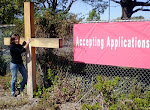
Reflection        Each tentative step I had to pause, adjust the heft of the rough hewn cross on my shoulder as I made my halting way to the altar steps and there laid down the burden of the awkward Good Friday cross. Having completed my part of the liturgy, I sat down in the chancel facing the church half full of people.


One by one folks left their pew to wait in line to touch, bow before, kiss or weep over the stark symbol of suffering. It was not long before hot tears dripped like blood from my chin, painting dark stains on my mourning cassock as I watched the people wait in somber silence for their turn at the cross. Without favor my river of tears accompanied the wealthy, poor, elders and teens, beautiful and bent until the eyes of my heart rested on a person whom I always judged as having the perfect blessed life, and like lightening I “knew” with my heart what my head could not fathom. 


With the scales on my eyes washed away by my tears I “saw” the river of humanity flowing up the church aisle to reverence the Good Friday cross as one, one intimate and holy communion in suffering. Suffering, a great equalizer. Suffering cutting through every strand of diversity, born in the hearts of all human beings. 


Suffering is suffering. It is not better. It is not worse. It is not more and it is not less. Suffering is suffering. Great riches do not protect us from suffering. Neither does brilliance or poverty, good judgement or folly make our suffering less. In suffering we all participate. In suffering we all belong. This truth is stamped on my heart forever. In suffering we are all one holy communion.


Perhaps that is the good part of Good Friday. We cannot and we will not suffer alone. This night we weep the tears of the powerful and the poor, the dying and the to be born, the pious and pretentious, the murdered innocents and their perpetrators. This night we are one, one holy communion joined in suffering, suffering with God.


If you find this post to be meaningful please share by clicking on icons below. Thank you. 

Saturday, June 26, 2021

Psalm 84 Morning Prayer on the Mountain 26 June 2021


Psalm 84.5 

Fulfilled are those who know

That in each moment

The One dwells within us

And in each moment

We dwell within the One.     (Translation Rabbi Yael Levy, in Directing the Heart)


Reflection


Everything is Smiling


Arms raised in orans

Ponderosa pine are praying

Everything is smiling 

Around me

Within me.


Sitting on soft dirt

Beside chance medicine circle 

How many hands placed the stones

Pinecones conceiving

Mary’s ripe almond mondorla?


Balmy vanilla air

Kisses the longing

The something more

Within me the praying pines

The medicine circle


Arms raised in orans

I am

Ponderosa pines praying

Mary’s ripe almond mondorla

Everything is smiling. 

Around me

Within me. 

Saturday, May 15, 2021

Gospel text for Sunday 16 May 2021


John 17:6-19        Jesus prayed for his disciples, “I have made your name known to those whom you gave me from the world. They were yours, and you gave them to me, and they have kept your word. Now they know that everything you have given me is from you; for the words that you gave to me I have given to them, and they have received them and know in truth that I came from you; and they have believed that you sent me. I am asking on their behalf; I am not asking on behalf of the world, but on behalf of those whom you gave me, because they are yours. All mine are yours, and yours are mine; and I have been glorified in them. 


And now I am no longer in the world, but they are in the world, and I am coming to you. Holy Father, protect them in your name that you have given me, so that they may be one, as we are one. While I was with them, I protected them in your name that you have given me. I guarded them, and not one of them was lost except the one destined to be lost, so that the scripture might be fulfilled. But now I am coming to you, and I speak these things in the world so that they may have my joy made complete in themselves. I have given them your word, and the world has hated them because they do not belong to the world, just as I do not belong to the world. I am not asking you to take them out of the world, but I ask you to protect them from the evil one. They do not belong to the world, just as I do not belong to the world.


Reflection       “Trauma that is not transformed is transmitted.” I cannot count the number of times I have heard this statement since the first time it grabbed my attention. Years ago speaking at a conference on Recovery Ministries the Franciscan priest Richard Rohr averred, “I am not sure who first said this, but it is true. “Trauma that is not transformed is transmitted.”" 


In one of my several previous vocations I designed and oversaw treatment programs for adjudicated adolescent sex offenders. This is what I discovered. One hundred percent of the boys between the ages of fourteen and twenty-two who were convicted of a sexual offense had been victims of repeated sexual abuse from as early as age three.  “Trauma that is not transformed is transmitted.” This is true.


On March 11, 2020 the World Health Organization declared we were living in the throes of a global pandemic. By the middle of April cases were reported in all North American territories. One month later more than 161 million cases were confirmed and 3.35 million deaths were attributed to the coronavirus. Like deer caught in a car’s headlights, we were frozen in our tracks as we learned that the air we breathed and every surface we touched could be deadly. In a flash family, friends and neighbors were recast in the role of masked grim reapers. The routine work, school and pleasures of life were stripped away as we were locked down and locked out of relationships. Trauma; individual, community and global trauma. And what we know is this. “Trauma that is not transformed is transmitted.”


What are we to do when an invisible enemy lurks in the air and all of our programs for happiness have been over turned? What are we to do to transform and not transmit  trauma?


This is the question that wakes me in the middle of the night and pokes my groin every time a new bit of breaking news tells me to put on a mask (or two), take them off or beware of a virulent South African variant. What are we to do when what we are told to do changes every breaking hour? What are we to do to transform and not transmit the trauma? 


I believe a clue is tied to the tangle of perplexing words we hear Jesus praying for the disciples and us.  “Holy Father, protect them in your name that you have given me, so that they may be one, as we are one. While I was with them, I protected them…  Protect them so that they may be one, as we are one. “ Jesus’ desire for the disciples and us it that we find our security, safety, esteem, power and control in our intimate relationship with God. This is what being at one means;  being in relationship with God rather than being at the mercy of the stormy sea changes of worldly circumstance. 


Unlike the dramatic parables, epic exorcisms and fervent calls to repentance found in the three synoptic gospels, the Johanine Jesus gives us lengthy discourses and prayers, lots of words intended to articulate his relationship with God characterized by the intimacy of Father and Son. Listening to Jesus’ words we witness a relationship that fosters his well-being even in the midst of harrowing circumstance. And Jesus desires the same for us, a trustworthy relationship that enables us to endure excruciating events without losing our peace or perspective, without transmitting trauma. 


Jesus prays for us to participate in the profoundly intimate and life sustaining relationship he has with the Father so that our trauma will be transformed. In other words, Jesus is praying for us to be allied and unified by putting our faith and finding our peace in our intimate relationship with God.  Which of course means we turn toward God rather than the world to find security, safety, esteem, power and control. And, this does not mean we reject the world nor look for a way out of it. 


Jesus continues praying, “I am not asking you to take them (the disciples and us) out of the world, but I ask you to protect them from the evil one.” Jesus understands the grave consequence of living a God centric life. He lived and died as a result of upsetting the status quo, acting deliberately to overturn systems that keep people marginalized, offering healing and inclusion rather than judgment and exclusion, daring to forgive rather than retaliate. Yes, Jesus comprehends the piercing consequence of transforming rather than transmitting trauma. 


As followers of the Way of Jesus we are meant to rise to the God’s eye perspective and allow our trauma to be transformed which means we cannot deny, hide or run away from the trauma. With our brother Jesus we must turn our faces toward Jerusalem, step into the fray,  speak truth to power,  act deliberately to dignify all people, extend mercy and demand justice for the marginalized, provide comfort and care for the vulnerable and forgive the wrong doers. And if you protest, "This is dangerous business, it too hard," be assured. It was too hard for Jesus which is why he prayed and prayed and put his faith and found his peace being at one in God. 


If you found this post to be meaningful please share by clicking on icons below. Thank you.


Saturday, June 1, 2019

Gospel Text for Sunday 2 June 2019

John 17:20-26        Jesus prayed for his disciples, and then he said. "I ask not only on behalf of these, but also on behalf of those who will believe in me through their word, that they may all be one. As you, Father, are in me and I am in you, may they also be in us, so that the world may believe that you have sent me. The glory that you have given me I have given them, so that they may be one, as we are one, I in them and you in me, that they may become completely one, so that the world may know that you have sent me and have loved them even as you have loved me. Father, I desire that those also, whom you have given me, may be with me where I am, to see my glory, which you have given me because you loved me before the foundation of the world.

"Righteous Father, the world does not know you, but I know you; and these know that you have sent me. I made your name known to them, and I will make it known, so that the love with which you have loved me may be in them, and I in them.”

Reflection        Given the bitterly divided state of our current social, political and religious worlds how can we possibly aspire to becoming ‘completely one’ as Jesus prays? Jesus is not praying for uniformity of custom, singularity of theology, nor homogeneity of political perspectives. Jesus prays for unity, not uniformity. Jesus prays that we experience that which draws us together and is greater than anything can divide. 

When we claim our place in the intimate relationship of humanity with divinity we are participating in something deeper than any possible divisions, we are affirming something wider than the myriad ways we disagree. You see, when we claim our place in the intimate relationship of humanity with divinity we are raised up  with Jesus and experience the glorious unity that is evinced in the love of Jesus with the Father. 

This interpenetrating love, this oneness in relationship with God, is the heart of unity. It is this love, this oneness,  that enables us to bury our hatchets and listen to those with whom we disagree. It is this love, this oneness, that gives us the courage to tare down walls that separate us from those whom we call other. Don’t you see, Jesus is not praying for uniformity of social, political or religious opinion. Jesus is inviting us to claim our place in the life of the Trinity.

What does that mean, life in the Trinity? For help explaining I turn to one of my favorite German theologians, who if still living is nearing one hundred years old. Jürgen Moltmann understands the Trinity as fundamentally social. The three persons of the the Trinity, Father, Son and Holy Spirit, are defined by their relationships. Although there are three distinctive individual expressions of being they are understood by their relationships with one another. Relationship is the defining quality.  Trinity is the unparalleled model for our human relationships.

As humans created in the image and likeness of God, we are distinctive individual expressions of being and we are defined by our relationships. We live and breath and find our meaning in our interconnected, interpenetrating relationships. Because the Spirt of God lives and breathes and moves within us, all of us, we participate in what Moltmann calls, the Social Trinity. 

How does that translate to life among us humans? I believe it looks like each one of us and all of us together bringing our core values to bear on the institutions and culture around us. It means questioning our purity codes (who is in and who is out) and stretching the borders of our hearts and minds to make room for everyone. Where ever hatred, hostility or sorrow thrive we are meant to deliver kindness, good will and joyfulness. Where bitterness and resentment abound we are meant to tender friendship and affection.

Through our selfless expressions of love people will be drawn to the source of our love, the love that we experience in the love of God and Jesus the Christ, the love that we share with confidence because we know we are loved and we desire nothing less than to draw all people into the intimate relationship we share with God, into the life of the Social Trinity. 

Listen to Fr. Thomas Keating speak on "Living Ordinary Life with Extraordinary Love," by clicking on top right image.

If you found this post to be meaningful please share by clicking on icons below. Thank you.



Friday, August 10, 2018

Gospel text for Sunday 12 August 2018

John 6:51-58        Jesus said, “I am the living bread that came down from heaven. Whoever eats of this bread will live forever; and the bread that I will give for the life of the world is my flesh.”

The Jews then disputed among themselves, saying, “How can this man give us his flesh to eat?” So Jesus said to them, “Very truly, I tell you, unless you eat the flesh of the Son of Man and drink his blood, you have no life in you. Those who eat my flesh and drink my blood have eternal life, and I will raise them up on the last day; for my flesh is true food and my blood is true drink. Those who eat my flesh and drink my blood abide in me, and I in them. Just as the living Father sent me, and I live because of the Father, so whoever eats me will live because of me. This is the bread that came down from heaven, not like that which your ancestors ate, and they died. But the one who eats this bread will live forever.”

Reflection            On Sunday morning we gather not only for our personal sustenance and transformation but also for the sake of the world. Each Sunday morning we participate in the liturgy, leitourgia, the Greek word that actually means “work of the people.” It is our work to come together to manifest the presence of the One God much as single grains of wheat are gathered to manifest one loaf of bread. We are the body of Christ that is revealed in the world as the Church. We are sacraments pointing beyond our small selves to something more.

Preaching to the early fifth century Church in North Africa, St. Augustine of Hippo directs our attention to the bread and wine of Holy Eucharist and says, “Be what you see, receive what you are,” (Sermon 272)  Or in other words, “Behold what you are, become what you eat.”  I believe Augustine was trying to articulate the potent reality of  sacraments.  We live in a sacramental world wherein objects can embody meaning that words are insufficient to convey. For example, think about being in love. The way we embody love is by giving gifts, writing poetry, singing love songs, making love. How often do we say to our lover, “Let’s sit down and have a discourse on the meaning of love and how it is embodied?” Neither can we grasp with our mind the meaning of ingesting the sacramental bread and wine.

I hear the echoes of my seminary advisor, the Rev. Dr. Louis Weil, one of the few outstanding liturgists living today. I can see Louis standing at the chapel altar and hear him proclaiming, “Bread and wine are not just symbols we use to remember the historical facts of Jesus’ death (unlike the Protestant reformers). Bread and wine are means by which we participate here and now. Bread and wine are signs that embody a reality. Holy Eucharist is a meal without which we cannot live.” Pausing for emphasis  Louis continues, “People, where else in this world does everyone receive the same gift?”

I believe the reality embodied in our Eucharistic bread and wine is the reality of our oneness with God and our desire to create the social conditions wherein all people are welcome, respected and have access to the resources necessary to reach their fulfillment. When Jesus says, “I am the living bread that came down from heaven… Those who eat my flesh and drink my blood abide in me, and I in them,” he is inviting us to claim our full inheritance individually and collectively, as sacramental beings imbued with more meaning and value than reason can convey. 

We are bread. We are blessed. We are broken. We are given for the good of all people. See what you are. Become what you eat.


If you found this post to be meaningful please share by clicking on icons below. Thank you.

Saturday, January 21, 2017

Christian Testament for 22 January 2017


1 Corinthians 1:10-18         Now I appeal to you, brothers and sisters, by the name of our Lord Jesus Christ, that all of you be in agreement and that there be no divisions among you, but that you be united in the same mind and the same purpose. For it has been reported to me by Chloe’s people that there are quarrels among you, my brothers and sisters. What I mean is that each of you says, “I belong to Paul,” or “I belong to Apollos,” or “I belong to Cephas,” or “I belong to Christ.” Has Christ been divided? Was Paul crucified for you? Or were you baptized in the name of Paul? I thank God that I baptized none of you except Crispus and Gaius, so that no one can say that you were baptized in my name. (I did baptize also the household of Stephanas; beyond that, I do not know whether I baptized anyone else.) For Christ did not send me to baptize but to proclaim the gospel, and not with eloquent wisdom, so that the cross of Christ might not be emptied of its power.  For the message about the cross is foolishness to those who are perishing, but to us who are being saved it is the power of God.

Reflection       …for it has been reported to me… that there are quarrels among you; fathers and daughters, friends, neighbors, life partners, business partners.  What I mean is that each of you says, “I belong to Trump,” or “I belong to anti-Trump,” or “I belong to Christ.” Has Christ been divided? … In whose name were you baptized? To what family do you truly belong? “

Yes, I have taken a few liberties with Paul’s words to the Corinthians. But today we are confronted with a similar situation to that which Paul faced in the early church. We, the People of God, are forgetting who and whose we are. We are girding up our loins and gerrymandering our lines, we are defining who is in and who is out and all the while we are afraid. 

We are afraid because we have forgotten who and whose we are. We are afraid because we have forgotten we are sisters and brothers in one family, the family of God.

Today we are faced with divided families, divided friendships, divided communities, a divided nation and divided hearts. In every region of our lives and our world Paul’s words ring true, “There are quarrels among us.” Still, we are good people. We are people of God. Yes we do have different ways of expressing our goodness. Yes we do imagine different ways of extending goodness to all people. But as Paul unequivocally proclaims, we should all be in agreement. There should be no divisions among us because we are “united in the same mind and the same purpose.”

What is this mind in which we are united? It is the Mind of Christ, the mind of inclusivity, compassion and nonviolence. What is the purpose that we share? It is continuing Jesus’ message that began in Galilee, proclaiming the good news to all people on earth. Now we arrive at the difficult part. Like Jesus we must put flesh on the bones of our words (instead of fighting over concepts or ideologies). We cannot only say with our mouths, “We are all sisters and brothers in Christ. We are one in the family of God.” As Jesus did, so must we make our proclamation real by our actions. It is up to each of us to directly touch the lives of the least the lost and the lonely as Jesus touched and healed the leper. It is up to each of us to discover the humanity of our enemy as did Jesus with the Roman soldier pleading with Jesus to cure his slave. It is up to each of us to apply the wisdom of all the law and the prophets and do to others as we would have them do to us. 

It is time for us to stop quarreling about concepts and ideologies and do to others as we would have them do to us. 


If you found this post meaningful please share by clicking on icons below. Thank you.

Friday, May 30, 2014

Gospel text for Sunday 1 June 2014

John 17:1-11       Jesus looked up to heaven and said, "Father, the hour has come; glorify your Son so that the Son may glorify you, since you have given him authority over all people, to give eternal life to all whom you have given him. And this is eternal life, that they may know you, the only true God, and Jesus Christ whom you have sent. I glorified you on earth by finishing the work that you gave me to do. So now, Father, glorify me in your own presence with the glory that I had in your presence before the world existed.
"I have made your name known to those whom you gave me from the world. They were yours, and you gave them to me, and they have kept your word. Now they know that everything you have given me is from you; for the words that you gave to me I have given to them, and they have received them and know in truth that I came from you; and they have believed that you sent me. I am asking on their behalf; I am not asking on behalf of the world, but on behalf of those whom you gave me, because they are yours. All mine are yours, and yours are mine; and I have been glorified in them. And now I am no longer in the world, but they are in the world, and I am coming to you. Holy Father, protect them in your name that you have given me, so that they may be one, as we are one. “
Reflection       Hears, believes, has… this is all present tense. According to John’s gospel eternal life is not about delayed gratification. It is not about post mortem reward. Right here, right now, hearing the Word of God, believing the Word of God, and acting in accord with the Word of God, we have already “passed from death to life.” This new life is eternal life. 
The way it has generally been understood we might envision eternal life as an enormous circle (which of course it is not because it could not possibly have edges). In any case, at some location far below the circle of eternal life is the tiniest of circles. That would be me. Or you. In our relationship to the enormous circle our understanding of eternal life is as something far above and beyond us, and, given my track record, probably inaccessible to me. 
Imagine again the enormous circle of eternal life but this time put our tiny circles inside the circle of eternal life. Our relationship with eternal life is utterly transformed. We are not outside eternal life, bouncing up and down trying to break in. We are always and everywhere intimately part of eternal life. Any sense of separation we may experience is because we are not hearing the Word of God, believing the Word of God or acting in accord with the Word of God. 
When we hear, believe and choose to act in accord with the Word of God we realize that the work of our life is to disentangle ourselves from any concerns that block the flow of Divine Presence. Actions driven to accumulate power, comfort, wealth or any other selfish motive create a false sense of separation between us and God and one another (our little distinguishing circle). But, we can choose to “sell everything,” which is to say,  we can choose to surrender our natural inclination toward selfishness. When we “sell everything” that interferes with the flow of love, joy, peace, patience, kindness, gentleness, generosity and self-control, the insubstantial membrane that seems to separate us from one another dissolves and we experience our lives as the unified whole that they are.  This is the answer to Jesus’ prayer.
“I ask not only on behalf of these, but also on behalf of those who will believe in me through (the disciples’) word, that they may all be one…  as we are one, I in them and you in me, that they may become completely one…” (John 17.20,23)

If you found this post to be meaningful please share with friends by clicking on the icons below. Thank you. 
Image by Alex Grey

Monday, May 6, 2013

Gospel text for Sunday 12 May 2013


John 17:20-26        Jesus prayed for his disciples, and then he said. "I ask not only on behalf of these, but also on behalf of those who will believe in me through their word, that they may all be one. As you, Father, are in me and I am in you, may they also be in us, so that the world may believe that you have sent me. The glory that you have given me I have given them, so that they may be one, as we are one, I in them and you in me, that they may become completely one, so that the world may know that you have sent me and have loved them even as you have loved me. Father, I desire that those also, whom you have given me, may be with me where I am, to see my glory, which you have given me because you loved me before the foundation of the world.
"Righteous Father, the world does not know you, but I know you; and these know that you have sent me. I made your name known to them, and I will make it known, so that the love with which you have loved me may be in them, and I in them."
Reflection       What does it mean for the many to “be one?” In the secular world we are instructed to “...practice tolerance and live together in peace with one another as good neighbours.” Words from the Preamble to the Charter of the United Nations. The word that leaps out for me is ‘tolerance.’ In the best sense tolerance means to be sensitive, charitable, kind and open-minded. It also bears a darker twist; to endure, be lenient or give lisence. Of more concern is what I believe is a fundamental assumption of tolerance  - we are not one. The implications are grave.
If we accept the premise that we are not one, rather than expecting integrity, connection and solidarity with my neighbors I expect partiality, incongruity and division. With this as the lens through which I see my neighbor naturally I approach her cautiously, using my discriminating mind to detect differences and relying on my intellect to protect my individuality. I hate to admit it but, too often this is my default position. No wonder harmony among peoples is so elusive in our world. No wonder Jesus did not pray for tolerance.

In the course of a single sublime prayer Jesus manged to step beyond the bicameral tendency of the human mind. First he affirmed that two can be one, “As you Father are in me and I am in you...” Then he stretched the tent to be all inclusive, “so that they may be one, as we are one, I in them and you in me, that they may become completely one...”
The many are one and the one is many. This is a fundamental principle of the Christian faith. No wonder so many people have a hard time with us. Our bottom-line or cardinal rule demands we stretch beyond tolerance (and reason)! “So we, though many, are one body in Christ, and individually members one of another.” (Ro 12.5) 
Jesus gives us a singular and unifying perspective. It transcends dualistic thought and dichotomies. It presumes alliance and accord, solidarity and peace. And there it is. The peace that Jesus leaves with us, the peace which passes all understanding, is not about tolerance. Jesus’ peace is the natural manifestation of our fundamental unity. Peace will prevail when we all “become completely one...”

Wednesday, June 1, 2011


John 17:1-11

Jesus loooked up to heaven and said, "Father, the hour has come; glorify your Son so that the Son may glorigy you, since you hve given him authority over all epople, to give eternal life to all whom you have given him. And this is eternal life, that they may know you, the only true God, and Jesus Christ whom you have sent. I glorified you on earth by finishing the work that you gave me to do. So now, Father, glorify me in your presence with the glory that I had in your sresence before the world existed.


I have made your name known to those whom you gave me fro the world. They were yours, and you gave them to me, and they have kept your word. Now they know that everything you have given me is from you; for the words that you gave to me I have given to them, and they have received them and know in truth that I came from you; and they have believed that you sent me. I am asking on their behalf; I am not asking on behalf of the world, but on behalf of those whom you gave me, because they are yours. All mine are yours, and yours are mine; and I have been glorified in ther. And now I am no longer in the world, but they are i the world, and I am coming to you. Holy Father, protect them in your name that you have given me, so that they may be one, as we are one."