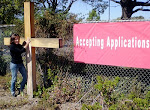
Friday, April 12, 2019

Passion Narrative for Sunday 14 April 2019

Luke 23:1-49        The assembly of the elders of the people rose as a body and brought Jesus before Pilate. They began to accuse him, saying, "We found this man perverting our nation, forbidding us to pay taxes to the emperor, and saying that he himself is the Messiah, a king." Then Pilate asked him, "Are you the king of the Jews?" He answered, "You say so." Then Pilate said to the chief priests and the crowds, "I find no basis for an accusation against this man." But they were insistent and said, "He stirs up the people by teaching throughout all Judea, from Galilee where he began even to this place.”

When Pilate heard this, he asked whether the man was a Galilean. And when he learned that he was under Herod's jurisdiction, he sent him off to Herod, who was himself in Jerusalem at that time. When Herod saw Jesus, he was very glad, for he had been wanting to see him for a long time, because he had heard about him and was hoping to see him perform some sign. He questioned him at some length, but Jesus gave him no answer. The chief priests and the scribes stood by, vehemently accusing him. Even Herod with his soldiers treated him with contempt and mocked him; then he put an elegant robe on him, and sent him back to Pilate. That same day Herod and Pilate became friends with each other; before this they had been enemies.

Pilate then called together the chief priests, the leaders, and the people, and said to them, "You brought me this man as one who was perverting the people; and here I have examined him in your presence and have not found this man guilty of any of your charges against him. Neither has Herod, for he sent him back to us. Indeed, he has done nothing to deserve death. I will therefore have him flogged and release him."
Then they all shouted out together, "Away with this fellow! Release Barabbas for us!" (This was a man who had been put in prison for an insurrection that had taken place in the city, and for murder.) Pilate, wanting to release Jesus, addressed them again; but they kept shouting, "Crucify, crucify him!" A third time he said to them, "Why, what evil has he done? I have found in him no ground for the sentence of death; I will therefore have him flogged and then release him." But they kept urgently demanding with loud shouts that he should be crucified; and their voices prevailed. So Pilate gave his verdict that their demand should be granted. He released the man they asked for, the one who had been put in prison for insurrection and murder, and he handed Jesus over as they wished.

As they led him away, they seized a man, Simon of Cyrene, who was coming from the country, and they laid the cross on him, and made him carry it behind Jesus. A great number of the people followed him, and among them were women who were beating their breasts and wailing for him. But Jesus turned to them and said, "Daughters of Jerusalem, do not weep for me, but weep for yourselves and for your children. For the days are surely coming when they will say, 'Blessed are the barren, and the wombs that never bore, and the breasts that never nursed.' Then they will begin to say to the mountains, 'Fall on us'; and to the hills, 'Cover us.' For if they do this when the wood is green, what will happen when it is dry?"
Two others also, who were criminals, were led away to be put to death with him. When they came to the place that is called The Skull, they crucified Jesus there with the criminals, one on his right and one on his left. Then Jesus said, "Father, forgive them; for they do not know what they are doing." And they cast lots to divide his clothing. And the people stood by, watching; but the leaders scoffed at him, saying, "He saved others; let him save himself if he is the Messiah of God, his chosen one!" The soldiers also mocked him, coming up and offering him sour wine, and saying, "If you are the King of the Jews, save yourself!" There was also an inscription over him, "This is the King of the Jews.”

One of the criminals who were hanged there kept deriding him and saying, "Are you not the Messiah? Save yourself and us!" But the other rebuked him, saying, "Do you not fear God, since you are under the same sentence of condemnation? And we indeed have been condemned justly, for we are getting what we deserve for our deeds, but this man has done nothing wrong." Then he said, "Jesus, remember me when you come into your kingdom." He replied, "Truly I tell you, today you will be with me in Paradise.”

It was now about noon, and darkness came over the whole land until three in the afternoon, while the sun's light failed; and the curtain of the temple was torn in two. Then Jesus, crying with a loud voice, said, "Father, into your hands I commend my spirit." Having said this, he breathed his last. When the centurion saw what had taken place, he praised God and said, "Certainly this man was innocent." And when all the crowds who had gathered there for this spectacle saw what had taken place, they returned home, beating their breasts. But all his acquaintances, including the women who had followed him from Galilee, stood at a distance, watching these things.

Reflection        Last Sunday during our forum on Jewish and Christian Values one of Rabbi Helen’s M’kor Hayim congregants asked, “The second commandment instructs us to make no graven images or idols of God. How does that fit with the crucifixes we see in many Christian churches and homes?” A great question especially as we walk with Jesus to Jerusalem this Holy week and the image of Jesus nailed to a cross looms high above us. The question gave me pause and reminded me of an experience I had when assigned to a field education parish as a first year seminarian.

The church was an ultramodern building nestled in a sumptuous Marin County residential setting.  Passing through a lush garden, mesmerized by the water music of a fountain mixed with the fragrance of perennial  blossoms I was stopped dead in my tracks as I passed through the sanctuary doors and came face to face with a twenty plus foot contemporary painted wood sculpture of a Mexican/Spanish styled Jesus nailed to a cross, hanging in the chancel, high above the altar. Thankfully no one else was present as I am sure my gasp was audible.

“Oh dear. How can I be in this place? How can I gaze at this enormous dead Jesus every week?” Looking for a place to escape, I anxiously searched the sanctuary. It was stark, no ornament except the regnant crucifix. After a time my eyes settled on a line of seats mostly hidden in the shadows far below the imposing sculpture. I actually felt my breath release as I realized, it would be on one of those seats that I would sit with the grand graven image well above and behind me. “Thank you God.”

It took several months for me to screw up the courage to ask the rector, my supervisor, how he could live with the daunting sculpture of dead Jesus reigning sovereign from on high above his head? He paused for awhile before responding. “Hanging there above us is a constant reminder of what we humans are capable of at our worst. We should never forget our potential for evil, the killing of innocents, all the ways we do so by our actions and inactions every single day.” And that reframe turned me around. 

We are not worshipping the mangled body of a god and thereby violating the second commandment. No. We contemplate the unsettling sculpture of love crucified to remind ourselves how easily we turn away from good, misuse our position, power or privilege, then either willfully or unwittingly execute evil and elevate it to regal heights. No wonder we do not like to look at the vexing sculpture of an innocent man’s dead body nailed to a cross. It brings us face to face with an inconvenient truth. Just like the crowds of people who follow Jesus as well as the religious leaders and public officials, ever so easily we too can be swept up in the emotional fray of a moment, we too give way and  shamelessly wheel around from following good to executing even the most innocent among us, we crucify love.

Too often I catch myself in the rear-view mirror hurrying on my all-important way rather than pausing to offer a handful of help and hope to the neighbor or stranger whom I fail to love as I love my self. Far too often I leap past disconcerting news stories rather than face the horrors that are happening just a few miles south of my comfortable home. No, I do not worship a graven image, but far too often I make an idol of myself; fashioning my security, my safety, my esteem,  my power, and my control into five demanding deities and crucify love. How about you? Lord have mercy upon us  and incline our hearts to keep your law. 


If you found this post to be meaningful please share by clicking on icons below. Thank you.

Friday, April 5, 2019

Hebrew & Gospel Texts for Sunday 7 April 2019

Isaiah 43:16-21
Thus says the Lord,
who makes a way in the sea,
a path in the mighty waters,
who brings out chariot and horse,
army and warrior;
they lie down, they cannot rise,
they are extinguished, quenched like a wick:
Do not remember the former things,
or consider the things of old.
I am about to do a new thing;
now it springs forth, do you not perceive it?
I will make a way in the wilderness
and rivers in the desert.
The wild animals will honour me,
the jackals and the ostriches;
for I give water in the wilderness,
rivers in the desert,
to give drink to my chosen people,
the people whom I formed for myself
so that they might declare my praise.

John 12:1-8      Six days before the Passover Jesus came to Bethany, the home of Lazarus, whom he had raised from the dead. There they gave a dinner for him. Martha served, and Lazarus was one of those at the table with him. Mary took a pound of costly perfume made of pure nard, anointed Jesus' feet, and wiped them with her hair. The house was filled with the fragrance of the perfume. But Judas Iscariot, one of his disciples (the one who was about to betray him), said, "Why was this perfume not sold for three hundred denarii and the money given to the poor?" (He said this not because he cared about the poor, but because he was a thief; he kept the common purse and used to steal what was put into it.) Jesus said, "Leave her alone. She bought it so that she might keep it for the day of my burial. You always have the poor with you, but you do not always have me.”

Reflection       In response to one of the most fundamental questions we humans entertain, “Why am I here?” St. Ignatius of Loyola puts it this way in the First Principle and Foundation of his Spiritual Exercises.  “God created human beings to praise, reverence, and serve God, and by doing this, to save their souls. God created all other things on the face of the earth to help fulfill this purpose.” In other words, we are meant to be in relationship with God and to use the things of the earth to articulate our relationship. Which of course means, when we use the things of creation for any purpose other than pointing toward God, we confuse ourselves and conceal God’s presence.

Although Mary of Bethany (not Mary the mother of Jesus nor Mary Magdalene), whom we meet at a dinner party given to honor Jesus, although she lived more than fourteen hundred years before Ignatius, Mary rather considerably embodies the wisdom that Ignatius espouses.  Watching carefully we see Mary holding nothing back. She pours out perfume worth a full year’s wages to anoint her dear friend Jesus. Fearless in the face of love, Mary defies taboos, daring to let her hair fall freely and wipe Jesus’ feet in an act of extravagant praise, reverence and service.  In every way Mary uses the things of the earth to articulate her relationship with Jesus.

What if instead of storing up our riches, we poured them out extravagantly for the love of God and all of creation?  What if we chose to imitate Jesus by fulfilling our purpose so clearly described in Isaiah’s scripture, “  to bring good news to the poor, to heal the brokenhearted, to proclaim release to the captives and recovery of sight to the blind, to let the oppressed go free…?” (Is 61.1)  What will it take for us to stop clinging to “former things, or perseverating over “the things of old?”  What will it take to let our proverbial hair down and perceive the new thing… God with us and with all people?  What will it take for us to be as bold as Mary and hold nothing back? to give our lives, to praise, reverence and reveal God’s holy presence? 

Returning to the wisdom of St. Ignatius,  “Our only desire and our one choice should be this: I want and I choose what better leads to God's deepening God’s life in me.”

This is the kingdom of God, already not yet. Do we dare to emulate Mary, audaciously pouring out all that we have and all that we are to divulge the secret that is hiding in plain sight … God is with us, already and not yet?

If you find this post to be meaningful, please share by clicking on icons below. Thank you. 

Friday, March 22, 2019

Gospel Text for Annunciation 24 March 2019


Luke 1:26-38        In the sixth month the angel Gabriel was sent by God to a town in Galilee called Nazareth, to a virgin engaged to a man whose name was Joseph, of the house of David. The virgin's name was Mary. And he came to her and said, "Greetings, favored one! The Lord is with you." But she was much perplexed by his words and pondered what sort of greeting this might be. The angel said to her, "Do not be afraid, Mary, for you have found favor with God. And now, you will conceive in your womb and bear a son, and you will name him Jesus. He will be great, and will be called the Son of the Most High, and the Lord God will give to him the throne of his ancestor David. He will reign over the house of Jacob forever, and of his kingdom there will be no end." Mary said to the angel, "How can this be, since I am a virgin?" The angel said to her, "The Holy Spirit will come upon you, and the power of the Most High will overshadow you; therefore the child to be born will be holy; he will be called Son of God. And now, your relative Elizabeth in her old age has also conceived a son; and this is the sixth month for her who was said to be barren. For nothing will be impossible with God." Then Mary said, "Here am I, the servant of the Lord; let it be with me according to your word." Then the angel departed from her."

Reflection   I wonder how many angels God sent to whisper in people’s ears; sent to prophets and widows, soothsayers and slaves, Kings, rabbis and peasants?  I wonder how many prospects were just not listening and how many others rather preferred to keep God in God’s distant place, after all, if God shows up right here right now, we might have to step out of our shadows and recast our selves? 

And God kept sending angels whispering, “Greetings favored one. Do not be afraid. It is the deepest desire of my heart to be born of your flesh.  I long to skip and spin, strut and sing, to be holy human. Be assured,  never will I force myself upon you. Never shall I transgress your will. Give me leave to be with you and we will be whole and holy.” No one can count the number of times God whispered this plaintive plea until at last a guileless girl named Mary consented,"Here am I, the servant of the Lord; let it be with me according to your word." 

Wide eyed and innocent, unjaded as a virgin, whoever would have predicted that of all the folks on earth this pubescent girl would be the one to hear the whisper of God tugging at her heart and access the audacity to affirm, “God is with me.”

What will it take for us to rescue God from imperial isolation, to eat the flesh, drink the blood and be holy human? What will it take for us to consent and affirm, God is with me? I know this is not the way the teaching tale is told in the Gospel according to Luke. What if instead of worrying about sex outside of wedlock, old women and virgin’s getting pregnant, the potency of the Holy Spirit, the whole question of extraordinary events that cannot be explained by natural or scientific laws, what if we were to consent to divine presence and agency impregnating every cell and every space of our own being? What if we were to consent to being holy human?

Yes, we would have to be bold and humble as Mary… and very very careful because claiming our identity as holy human God bearers is risky business. But that is the story we are preparing for this Lent, the story of Jesus, fully human and fully divine, who pays the ultimate price for claiming his identity. But, for today it is enough to respond to God’s whisper, “Greetings favored one. The Lord IS with you,” by ever so humbly and audaciously consenting to recast ourselves as holy human.

If you found this post to be meaningful, please share by clicking on icons below. Thank you.

Tuesday, March 12, 2019

Gospel text for the Annunciation 17 March 2018


Luke 1:26-38        In the sixth month the angel Gabriel was sent by God to a town in Galilee called Nazareth, to a virgin engaged to a man whose name was Joseph, of the house of David. The virgin's name was Mary. And he came to her and said, "Greetings, favored one! The Lord is with you." But she was much perplexed by his words and pondered what sort of greeting this might be. The angel said to her, "Do not be afraid, Mary, for you have found favor with God. And now, you will conceive in your womb and bear a son, and you will name him Jesus. He will be great, and will be called the Son of the Most High, and the Lord God will give to him the throne of his ancestor David. He will reign over the house of Jacob forever, and of his kingdom there will be no end." Mary said to the angel, "How can this be, since I am a virgin?" The angel said to her, "The Holy Spirit will come upon you, and the power of the Most High will overshadow you; therefore the child to be born will be holy; he will be called Son of God. And now, your relative Elizabeth in her old age has also conceived a son; and this is the sixth month for her who was said to be barren. For nothing will be impossible with God." Then Mary said, "Here am I, the servant of the Lord; let it be with me according to your word." Then the angel departed from her.

Reflection     How willing are we to affirm, “Here I am, the servant of the Lord; let it be with me according to your word?” After all, this is saying, “Yes, yes,” to certain uncertainty. It is saying, “ Yes, yes,” knowing that the things that frighten us most are likely to happen to us. This is where we squint and wonder, can we find our confidence in the angel’s proclamation,“Do not be afraid, for you have found favor with God?” This is where we wrestle with the question, “Is it possible that God finds favor even with me?”

As an unapologetic human who has tripped over more stumbling blocks and succumbed to more temptations than I care to recount, I must confess I was and to a great degree still am, shocked to experience God’s favor. For decades I refused to utter the word G-O-D because it represented all that I rejected; intolerance, injustice, inequity, condemnation and punishment. A distant deity preoccupied with my impending transgressions had no gravity with me. 

To say that I was stunned when a warm and consolatory God arose from the depths of my cadaverous dark night does not begin to translate my metamorphosis. Suffice to say, because of God’s favor toward me, I said, “Here I am,” and today I am a priest in God’s church - and still stunned by my transfiguration.

Last week when Arizona’s retired Episcopal Bishop Kirk Smith introduced the Presiding Bishop Curry to a church full of clergy, Smith referenced the now famous sermon that Curry preached at the wedding of Prince Harry and Meghan Markle. (Did you know that more people have listened to that sermon than any other sermon in history?) Being the unpretentious extrovert that he is, Curry explained that he was stunned by the enormous response and initially confounded. Until he realized, people from across the globe where astonished to hear a Christian speak of love. The narrative about Christians, at least in the US today is, Christians are angry, loud and exclusionary people who engage in hate group activity against abortion and LGBTQ people. Christians are inordinately concerned with deciding who will or will not get to heaven. This is the way Curry summarized it, “The dominant way Christianity is seen in the culture is not the way of love.” 

Like me, too many people hear this message about God and Christianity, have no use for it and turn away. How can folks believe God has found favor with them when the people (read clerics and other leaders) who speak for God’s Church express hostility, prejudice and malevolence toward them? 

Looks like those of us who have encountered a God of love, forgiveness and inclusion without exception need to stand up and give voice to this version of God in the world. Of course, the prospect is unnerving if we think we have to rely upon ourselves to speak up. But the good news is, we don’t have to put our faith in ourselves to find the efficacious words and the salient moments. All we have to do is say,”Yes, here I am Lord, let it be with me according to YOUR WORD,” and there we have it. 

The Word God is with us. We can depend on it. The Word God enables us to do all things and to renew all things.   The Word God with us empowers us to show the world that our God is God of mercy, compassion, justice and peace.  Do not be afraid. God has found favor with you.

If you found this post to be meaningful, please share by clicking on icons below. Thank you. 


Friday, March 8, 2019

Gospel Text for First Sunday in Lent 10 March 2019

Luke 4:1-13        After his baptism, Jesus, full of the Holy Spirit, returned from the Jordan and was led by the Spirit in the wilderness, where for forty days he was tempted by the devil. He ate nothing at all during those days, and when they were over, he was famished. The devil said to him, "If you are the Son of God, command this stone to become a loaf of bread." Jesus answered him, "It is written, 'One does not live by bread alone.’"

Then the devil led him up and showed him in an instant all the kingdoms of the world. And the devil said to him, "To you I will give their glory and all this authority; for it has been given over to me, and I give it to anyone I please. If you, then, will worship me, it will all be yours." Jesus answered him, "It is written, 'Worship the Lord your God, and serve only him.’" Then the devil took him to Jerusalem, and placed him on the pinnacle of the temple, saying to him, "If you are the Son of God, throw yourself down from here, for it is written, 'He will command his angels concerning you, to protect you,’and 'On their hands they will bear you up, so that you will not dash your foot against a stone.'"Jesus answered him, "It is said, 'Do not put the Lord your God to the test.'" When the devil had finished every test, he departed from him until an opportune time.

Reflection        When have you been full of  the Spirit? When have you been swept into a moment of wonder and awe; a near death experience? feeling the substance of a newborn who an hour ago was not there? having a book fall off a shelf and open to the precise words you needed to hear? taking the risk to speak your truth and being well received?  When have you felt loved? When have you felt chosen? When have you “known” what you know that you know with not the least notion of how you know it? When have words spilled from your mouth, startled your eyes and made you wonder, “Wow, where did that come from?” 

I believe, like Jesus, we all are full of the Holy Spirit, which is to say, we all are full of God’s power in action. And, like Jesus, it is up to us to choose how we will put God’s power into action?  Do we choose to use the Spirit, the power of God, to  feed our ravenous appetites by making bread out of stone? feeding our addictions for food, alcohol, pain killers, money, travel, sex, anything in excess? Or, do we choose to find trustworthy sustenance in our with God life? Do we choose to use the Spirit, the power of God in action, to elevate ourselves at the expense of others? Or, do we choose to follow Jesus and be humble purveyors of God’s no strings attached love? Do we choose to put God to the test demanding, if you are God end my adversity and stop the torrent of tragedy that floods the world? Or, do we consent to the suffering inherent in our human condition and experience solace knowing God suffers with us?

Here is the thing, the Spirit that is God’s power in action is with us always. We do not have to go looking for it. It has already made its home in us. But rather than using all things in creation, from bread to sex, from the power to create and influence to the opportunity to receive blessing and perceive the greater good, we have learned to seize and squander the things of this earth. We have bought into the illusion that the world is an awful and evil place, full of anger, hatred and greed and not enough for everyone.  Our eyes have been blinded to the beauty, goodness and abundance of creation. Remember, God called all of creation good and called humankind very good? 

When we buy into the illusion that the world has gone to hell in a hand basket, guess what? That is what we see.  As people of God, filled with the Holy Spirit of God, we must refuse that illusion and choose instead to see the beauty, goodness and abundance of creation so that we can put God’s power into action persuasively. How shall we begin? 

By the grace of God we can change our glasses. To dismantle our illusion that the world is nothing but darkness and despair let me suggest we begin with prayer. Pick a time each day to express gratitude, thanking God for the beauty, goodness and abundance in our life, even if we can only find the smallest thing for which we are grateful. Then ask ourselves, “When we have had the opportunity to put God’s power into action, did we succumb to our addictions to dull our pain or bury our conscience? Or did we turn to God and ask for help? When have we used our resources, influence or power without regard for the effect on others? When have we embodied the Spirit of abundance and expressed unconditional love? Then noticing the times that we could do better, pray for the grace to do so. Finally, thanking God for the power of the Spirit with us, even if we have not felt it. 


If you found this post to be meaningful, please share by clicking on icons below. Thank you. 

Friday, March 1, 2019

Gospel text for the Sunday 3 March 2019


Luke 9:28-36     Jesus took with him Peter and John and James, and went up on the mountain to pray. And while he was praying, the appearance of his face changed, and his clothes became dazzling white. Suddenly they saw two men, Moses and Elijah, talking to him. They appeared in glory and were speaking of his departure, which he was about to accomplish at Jerusalem. Now Peter and his companions were weighed down with sleep; but since they had stayed awake, they saw his glory and the two men who stood with him. Just as they were leaving him, Peter said to Jesus, "Master, it is good for us to be here; let us make three dwellings, one for you, one for Moses, and one for Elijah"--not knowing what he said. While he was saying this, a cloud came and overshadowed them; and they were terrified as they entered the cloud. Then from the cloud came a voice that said, "This is my Son, my Chosen; listen to him!" When the voice had spoken, Jesus was found alone. And they kept silent and in those days told no one any of the things they had seen.

Reflection       Speaking of transfiguration, the most compelling voice I have heard of late is that of Bruce Sanguin in his book If Darwin Prayed. The Canadian United Church Minister and evolutionary theologian writes, “All that we see around us, including our bodies and minds, are transfigurations of the originating Fireball. The entire universe is an ongoing transfiguration of the light and heat of the big bang 13.7 billion years ago. On the mountaintop, then, we can think of Jesus being bathed in uncreated light as the spiritual dimension of an evolutionary transfiguration that never ends.” (p 37) Sanguin then offers a poem/prayer for our reflection.

Light Transfusion

O Shining One,
you are the flame burning within,
the beacon on the horizon,
the radiance in all creation,
the bright idea apprehending us,
the sparkling in the eyes of our loved ones,
the uncreated light that is lighting all.

Transfigure us, this very day,
as we open into the radiance of the Christ
in each other, in song, in word, and witness.
May this be the day of our enlightenment,
when we see with clarity
the sacred life we are called to manifest.

Remake us
as sacraments of the Holy,
that we might embrace our calling;
to see with new eyes,
reach out with gentle hands,
imagine with transformed minds,
be still with hallowed presence,
and be filled with grateful prayers.
In the name of the Transfigured One we pray.
Amen.  (p 39)
Transfiguration is not a singular spectacular event that occurred two thousand years ago on a mountaintop with Jesus and his friends. Transfiguration is the revelation of who and how we all are meant to be. So let us bring enlightenment down from the mountaintop and embody it in the ‘plains’ of our lives. 

If you found this post to be meaningful, please share by clicking on icons below. Thank you.

Get your own copy of If Darwin Prayed  

https://smile.amazon.com/If-Darwin-Prayed-Prayers-Evolutionary/dp/0986592404/ref=sr_1_fkmrnull_1?keywords=if+darwin+prayed&qid=1551457138&s=gateway&sr=8-1-fkmrnull

Saturday, February 23, 2019

Hebrew Testament text for Sunday 24 February 2019


Genesis 45:3-11, 15     Joseph said to his brothers, "I am Joseph. Is my father still alive?" But his brothers could not answer him, so dismayed were they at his presence.
Then Joseph said to his brothers, "Come closer to me." And they came closer. He said, "I am your brother, Joseph, whom you sold into Egypt. And now do not be distressed, or angry with yourselves, because you sold me here; for God sent me before you to preserve life. For the famine has been in the land these two years; and there are five more years in which there will be neither plowing nor harvest. God sent me before you to preserve for you a remnant on earth, and to keep alive for you many survivors. So it was not you who sent me here, but God; he has made me a father to Pharaoh, and lord of all his house and ruler over all the land of Egypt. Hurry and go up to my father and say to him, 'Thus says your son Joseph, God has made me lord of all Egypt; come down to me, do not delay. You shall settle in the land of Goshen, and you shall be near me, you and your children and your children's children, as well as your flocks, your herds, and all that you have. I will provide for you there--since there are five more years of famine to come--so that you and your household, and all that you have, will not come to poverty.’"

And he kissed all his brothers and wept upon them; and after that his brothers talked with him.

Reflection        In the heart of darkness there is a spark of light. In the brilliant blossom of midday hides a hint of gloom. The way St. Ignatius of Loyola puts this is,“In the midst of desolation, when you are riddled with anxiety and things seem as bad as they can get, remember, the seed of consolation is hidden. Likewise, in the midst of consolation, when life is humming nicely along , thriving on peace and abundance, remember the seed of desolation lies within.” In other words, our experience of life fluctuates. We can no more hold onto the good times than we would cling to the not so good ones. 

The theatrical tale of Joseph and his nine half-brothers is a roller-coaster ride from fortune to misfortune, consolation to desolation. As the favored son of their father Joseph (fortune), he is despised by his half brothers who plot to kill him (misfortune), but decide instead to sell him into slavery. Proving himself to be a valuable asset to Pharaoh’s captain of the guard, Pontifer brings Joseph into his home to oversee his household (fortune). It is not long before Pontifer’s wife tries to seduce Joseph. But when he refuses her advances, she accuses him of trying to seduce her which lands Joseph in prison (misfortune).  While in prison Joseph befriends  a couple of the Pharaoh’s servants and correctly interprets their dreams.  (Here again, a glimmer of light in the midst of darkness.)

Two years in the desolation of prison pass before word gets to Pharaoh that the prisoner  Joseph can interpret dreams and he is summoned to do so for the Pharaoh. Hearing the Pharaoh’s dreams Joseph predicts seven years of abundance followed by seven years of famine and advises Pharaoh to stockpile grain during the years of abundance, which the Pharaoh then puts Joseph in charge of overseeing (fortune).  When the famine devastates, people from all over come to Joseph to buy the only grain available and escape starvation. (Consolation in the midst of desolation.)

Meanwhile, the famine is decimating Joseph’s father Jacob and his family so the half-brothers travel to the Pharaoh to buy grain. Although they fail to recognize Joseph, he recognizes them. After a series of clever exchanges, Joseph manages to cajole his half-brothers to return home and bring his only blood brother Benjamin to him. Skipping through time and many juicy details we arrive at this week’s Hebrew Testament text. 

The half-brothers have returned with Benjamin whereupon Joseph reveals the light in the midst of darkness, consolation in the midst of desolation. "Come closer to me." And they come closer. He says, "I am your brother, Joseph, whom you sold into Egypt. And now do not be distressed, or angry with yourselves, because you sold me here; for God sent me before you to preserve life.” Joseph sees beyond the immediacy of the rise and fall of his fortune to a thirty thousand feet above the ground perspective. “God sent me before you to preserve life.”

At the start of this story how many of us could see this outcome? How many of us could see the blessing to countless people saved from starvation as a result  of Joseph’s brothers selling him into slavery? 


Embedded in the details of our own personal, social or political ups and downs more often than not we forget that although we are distinct individuals we are also always participating in an interconnected, interdependent something more than we can wrap our minds around. And so we take heart and put our faith in St. Ignatius’ teaching, “In the midst of consolation is the seed of desolation, in the midst of desolation is the seed of consolation” and refuse to be imprisoned by the vagaries of life’s ups and downs. 

If you found this post to be meaningful please share by clicking on icons below. Thank you.