Friday, April 10, 2020

The Psalm for Easter in Diaspora, Sunday 12 April 2020


Psalm 130                                                                                              

Out of the depths I cry to you, O Lord.
   Lord, hear my voice!
Let your ears be attentive
   to the voice of my supplications!
If you, O Lord, should mark iniquities,
   Lord, who could stand?
But there is forgiveness with you,
   so that you may be revered.
I wait for the Lord, my soul waits,
   and in his word I hope;
my soul waits for the Lord
   more than those who watch for the morning,
   more than those who watch for the morning.
O Israel, hope in the Lord!
   For with the Lord there is steadfast love,
   and with him is great power to redeem.
It is he who will redeem Israel
   from all its iniquities.

Reflection        There is something ‘not yet’ about this coming Sunday morning. Although the calendar reads “Easter Sunday,” our “Alleluias” are stuck in our throat. How can we sing Alleluia, Alleluia, Alleluia while we and all the peoples of the earth are under attack by hidden cells scheming to make us their slave? to kill us? How can we sing Alleluia, Alleluia, Alleluia when we are ordered not to touch or breath or be within six feet of one another for fear of our deadly potential? Although the calendar reads, “Easter Sunday” it seems ill timed and tasteless to celebrate Easter Sunday in the tradition with which we have been accustomed. This is the “not yet” part of Easter.

I believe if we were to celebrate this day with gleaming gold threaded vestments, the appointed readings and expected prayers we would be clinging to tradition and sentiment rather than abiding in the living, breathing Word of God. These extraordinary times invite extraordinary responses to express our selves as God’s people. This Easter calls for spaciousness within which we can wait, held in abeyance between Good Friday and Resurrection Sunday, which is where I believe we hover as we witness death by a virus that has enslaved our bodies much as our distorted ways of living have enslaved our culture and economy. 

What then is the good new this  Easter?  Even though we wait in the uncertain space of social distancing and quarantine that does not mean all is lost. We still have cause to celebrate because our God is faithful. On this promise we lay our lives and wait with confidence. We the people of God have known tireless times of waiting from the beginning. This is what our psalmists and prophets sing about.

“Wait on the Lord, be of good courage, and God shall strengthen your heart, wait, I say, on the Lord.  Wait patiently for the Lord. Be brave and courageous. Yes, wait patiently for the Lord.”  From Psalm 27.14

From Psalm 130 “I wait for the Lord, my soul waits, and in God’s word I hope… for with God there is steadfast love.. and great power to redeem.”

The prophet Isaiah puts it this way, ”but they who wait for the LORD shall renew their strength; they shall mount up with wings like eagles; they shall run and not be weary; they shall walk and not faint.” Isaiah 40:31 This is God’s promise to us as we wait for liberation from the constraints of Covid-19;  as we wait to be together again, to put on our gold threaded vestments, light the new fire and with our whole hearts sing, alleluia, alleluia, alleluia. 

Everything is not alright this Sunday morning, in fact we have no idea how things will be forever changed.  But with God in God’s already not yet Kingdom, we wait. We wait in confidence and hope for even the ravages of Covid-19 will be redeemed. So, rejoice! God is with us now and always. 

If you found this post to be meaningful please share by clicking on icons below. Thank you. 

Join Apostles for Live  ZOOM Easter Sunday Worship Service 
WAITING ON GOD: IN BETWEEN GOOD FRIDAY & RESURRECTION SUNDAY

https://xoom.us/j/710342756     meeting ID  710 342 756

Friday, April 3, 2020

Psalm for Sunday of the Passion 5 April 2020


Psalm 31:9-16

Be gracious to me, O Lord, for I am in trouble;
   my eye wastes away from grief,
   my soul and body also. 
For my life is spent with sorrow,
   and my years with sighing;
my strength fails because of my misery,
   and my bones waste away. 

I am the scorn of all my adversaries,
   a horror to my neighbours,
an object of dread to my acquaintances;
   those who see me in the street flee from me. 
I have passed out of mind like one who is dead;
   I have become like a broken vessel. 
For I hear the whispering of many—
   terror all around!—
as they scheme together against me,
   as they plot to take my life. 

But I trust in you, O Lord;
   I say, ‘You are my God.’ 
My times are in your hand;
   deliver me from the hand of my enemies and persecutors. 
Let your face shine upon your servant;
   save me in your steadfast love.


Reflection       What makes you feel safe? A security system and camera on your doorbell? a face mask? a gun? What makes you feel secure?  A job? A good balance of stocks and bonds in your portfolio? A pantry bulging with garbanzo beans and toilet paper? What is your place of refuge? Your office? Your garden? Your addiction to food, alcohol, shopping, drugs, sex, gambling? 

In moments such as we face today our habitual strategies for safety, security and refuge  prove supremely insufficient to thwart the path of the dangerous interloper, Covid-19. Much as misinformation is spread by clandestine adversaries through social media gone viral, coronaviruses invade us through proteins on the surface of cells in our throat, lungs and intestinal tract. Once the hidden virus sneaks its genetic material into  a cell, as the geneticist Dr. Mendenhall writes, “the cell is duped into becoming a slave to the virus.”* 

A question we face today is “How have we been duped into becoming slaves to our personal strategies for safety, security and refuge?”

No amount of bleach, toilet paper or money can inoculate us against the ravages of life. We are fragile, vulnerable and intimately interconnected. When even a well intended handshake can deliver a deadly virus, we cannot comprehend the countless ways our mere presence on this planet can harm one another. 

What then will we do?

Will we go to our well stocked and electronically protected abodes, perseverate on the news, lick our wounds and look for someone or something to blame? Or will we take this time to pause and join our psalmist calling out to God, ““Have mercy on us, O Lord, for we are in trouble; * our eyes are consumed with sorrow, and also our throat and belly?” We are sick. We are dying. We are infected by mass marketing hype and poisoned by media’s misinformation. We have put our faith in consumptive strategies for safety, security and refuge and they are killing us.”

“O God, have mercy on us, for we are in trouble. Let our lives not be consumed by stuff that does not matter. Purify our hearts so that our neighbors will cease crossing the street to avoid us.  Rescue us from our toxic strategies for safety, security and refuge. Help us to make our sanctuary in you, our rock and our foundation.”

No amount of bleach, toilet paper or money can inoculate us against the ravages of life. We are fragile, vulnerable, intimately interconnected and utterly dependent on God and one another.  Let us put our times of social distancing and quarentine in the hands of our God and all of our faith in God’s faithfulness.


If you find this post to be meaningful please share by clicking on icons below. Thank you.

Friday, March 27, 2020

Hebrew Testament Text for 29 March 2020

Join us for worship Sunday morning at 9:30 on Zoom  
   click on    https://zoom.us/j/710342756
                                                             Meeting ID: 710 342 756

Ezekiel 37:1-14
The hand of the Lord came upon me, and he brought me out by the spirit of the Lord and set me down in the middle of a valley; it was full of bones. He led me all around them; there were very many lying in the valley, and they were very dry. He said to me, “Mortal, can these bones live?” I answered, “O Lord God, you know.” Then he said to me, “Prophesy to these bones, and say to them: O dry bones, hear the word of the Lord. Thus says the Lord God to these bones: I will cause breath to enter you, and you shall live. I will lay sinews on you, and will cause flesh to come upon you, and cover you with skin, and put breath in you, and you shall live; and you shall know that I am the Lord.”

So I prophesied as I had been commanded; and as I prophesied, suddenly there was a noise, a rattling, and the bones came together, bone to its bone. I looked, and there were sinews on them, and flesh had come upon them, and skin had covered them; but there was no breath in them. Then he said to me, “Prophesy to the breath, prophesy, mortal, and say to the breath: Thus says the Lord God: Come from the four winds, O breath, and breathe upon these slain, that they may live.” I prophesied as he commanded me, and the breath came into them, and they lived, and stood on their feet, a vast multitude.

Then he said to me, “Mortal, these bones are the whole house of Israel. They say, ‘Our bones are dried up, and our hope is lost; we are cut off completely.’ Therefore prophesy, and say to them, Thus says the Lord God: I am going to open your graves, and bring you up from your graves, O my people; and I will bring you back to the land of Israel. And you shall know that I am the Lord, when I open your graves, and bring you up from your graves, O my people. I will put my spirit within you, and you shall live, and I will place you on your own soil; then you shall know that I, the Lord, have spoken and will act,” says the Lord.


Reflection       More than twenty six hundred years ago the God of Israel invited the prophet Ezekiel to use his imagination. God urges Ezekiel,  “…eat this scroll, and go to the house of Israel and speak my very words to them…  Mortal, all my words that I shall speak to you receive in your heart and hear with your ears; then go to the exiles, to your people, and speak to them. Say to them, ‘Thus says the Lord God’; whether they hear or refuse to hear” (Ezk 4.3,4,10,11) Ezekiel swallows God’s words and much as the other prophets, turns God's words into action and chastises the people of God for turning away from God (being rebels) by being unresponsive to the needs of one another; killing the innocent, deriding the poor, rejecting foreigners, and failing to care for the most vulnerable; widows, orphans and elders.  Can we hear God whispering in our ears?  How are we rebelling? Who are we failing to care for? God’s message has not changed in the last twenty six hundred years. Have we?

Like all good prophets Ezekiel not only proclaims condemnation and death for those who fail to follow the way of God, he also offers hope for the future because we, the people of God, always need to hear both.  As we look around ourselves today and see everything seeming to expire; the streets of New York and San Francisco deserted, schools closed, businesses boarded up, jobs lost, stock market plummeting, grocery shelves barren and people succumbing to an insidious virus it is fair to say we find ourselves in a valley of dry bones and our sorry skeletons lament, “Our sinew is weak and our skin is transparent. Our bones are dry and they can no longer breath. “

But the voice of the Lord dismisses our lamentations. “ I will cause breath to enter you, and you shall live… and you shall know that I am the Lord.”

Still we are hard hearted and stubborn. We protest, “The situation is awful. Our hope is lost. Let us die so the young ones may thrive.“ Suddenly there is a noise, a rattling, and our bones come together. There is sinew on them, and flesh, and skin has covered them; but there is no breath in them,” until we are still, listen with Ezekiel and receive God’s living Word, “Come from the four winds, O breath, and breathe upon (us), that (we) may live.”

There is One God, One Breath arriving from all directions , one  people living in all directions. The quickening breath of God is the great equalizer. God breathes on the honest and corrupt, the pure and the vulgar, citizens and strangers, the strong and the sick, across all nations. But many of us refuse God’s breath.  Like dry bones, we are inflexible, brittle, unwilling to change, which by the way is the definition of dead.  We have forsaken the inspiration of life in favor of the expiration of death.

For as long as we cling like adherent adhesive to life as we have known it we are like dry bones set down in the middle of the valley of death. But our story need not end there. When we finally choose to hear and to heed God’s unchanging words, being responsive to the needs of one another; protecting the innocent, providing for the poor, welcoming  foreigners, and caring for the most vulnerable among us the breath of life will fill us and we will live knowing that God is God and we are not.


If you found this post to be meaningful please share by clicking on icons below. Thank you. 


Thursday, March 19, 2020

Psalm for Fourth Sunday in Lent 22 March 2020

Psalm 23 
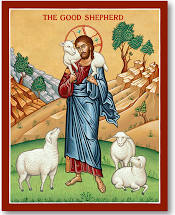
 The Lord is my shepherd; *
I shall not be in want.
 He makes me lie down in green pastures *
and leads me beside still waters.
 He revives my soul *
and guides me along right pathways for his Name's sake.
 Though I walk through the valley of the shadow of death,
I shall fear no evil; *
for you are with me;
your rod and your staff, they comfort me.
 You spread a table before me in the presence of those who trouble me; 
you have anointed my head with oil,
and my cup is running over.
 Surely your goodness and mercy shall follow me all the days of my life, 
and I will dwell in the house of the Lord for ever.

Reflection        No doubt the most beloved of the 150 psalms is the 23rd. Children and adults recall to heart the words, The Lord is my shepherd, I shall not want. And even though many folks choose the twenty third psalm for their memorial and celebration of life service, I believe it is a beautiful description of how we are to live our lives every day.

A shepherd cares for the safety and welfare of the sheep, even laying his life down for the good of them. When used as a metaphor for God, we understand God as a shepherd that is in charge of our lives and is committed to our safety, nourishment and thriving.

As our psalmist sings, with God as my shepherd, I shall not want. Wow. What a declaration of faith. With God I can lack nothing, not even in the midst of a coronavirus outbreak when it is nearly impossible to buy tuna fish or frozen dinners, hand sanitizer or toilet paper. Being with God I need nothing else.

The Lord is my shepherd…. I shall lack in nothing. No matter what is happening around me I shall lack nothing because with God I am calm,  God leads me to still waters and green pastures. I thrive. With God my soul is revived and even when I stumble through difficult times and feel afraid, being wrapped in God’s protection I am comforted.

When my mind races with grave imaginings that evil and enemies surround me, that dreadful things are happening everywhere I turn and the news is nothing but distressing, God blesses me with the holy oil of mercy and I am stunned by God’s extravagant love. 

Yes, God’s goodness and mercy follow me all the days of my life because God is faithful. But once again we are reminded that grace is not cheap. God’s blessing demands our faithful response. Every minute of every hour we must choose to “live in the house of the Lord for ever,” which is to say we must choose to live in faith, not fear.  God’s proverbial house is one of faith, hope and love. Not fear. The sure and certain way to live in God’s house of faith, hope and love is to claim with every ounce of our being, “The Lord is my shepherd, I shall not want.” “ I choose to live in the house of faith, hope and love. "

God’s goodness and mercy is with us as we tread the uncharted waters of the coronavirus and dramatic social and economic change. The Lord is our shepherd. We shall not be afraid because we choose to live in the house of faith, hope and love.


If you found this post to be meaningful please click on icons below to share. Thank you.

Friday, March 13, 2020

Hebrew Testament Text for 3rd Sunday in Lent, 15 March 2020


Exodus 17:1-7        From the wilderness of Sin the whole congregation of the Israelites journeyed by stages, as the Lord commanded. They camped at Rephidim, but there was no water for the people to drink. The people quarreled with Moses, and said, “Give us water to drink.” Moses said to them, “Why do you quarrel with me? Why do you test the Lord?” But the people thirsted there for water; and the people complained against Moses and said, “Why did you bring us out of Egypt, to kill us and our children and livestock with thirst?” So Moses cried out to the Lord, “What shall I do with this people? They are almost ready to stone me.” The Lord said to Moses, “Go on ahead of the people, and take some of the elders of Israel with you; take in your hand the staff with which you struck the Nile, and go. I will be standing there in front of you on the rock at Horeb. Strike the rock, and water will come out of it, so that the people may drink.” Moses did so, in the sight of the elders of Israel. He called the place Massah and Meribah, because the Israelites quarreled and tested the Lord, saying, “Is the Lord among us or not?”

Reflection        Is the Lord among us or not? As it was with our ancient Israelite ancestors, this seems to be the default question when we find ourselves wandering in the wilderness of Sin, when life tosses us a curve ball, or a coronavirus.

How do we proceed from COVID-19 to hope? How do we ride out a roller coaster stock market? How do we face armed guards in Walmart doling out toilet paper? How do we submit to social distancing? How do we brave the grave uncertainties of our time without succumbing to fear? In short, how do we endure?

Let me suggest, in this time of great unsettlement,  moment to moment we must choose in which direction we will walk.  Like Jesus, do we turn our face to Jerusalem, consent to our suffering and put our faith in God with us declaring, “Not what I want but what you want?” Or do we join the ancient people of God in the wilderness of Sin, anxious and testy, quarreling among ourselves, looking for someone to blame? 

Decades ago during a retreat with the late Thomas Keating, the Cistercian monk responsible for bringing the practice of Centering Prayer out of hallowed  monastery halls to the general public, I asked Keating about suffering. This gangly six foot six inch tall man threw back his awkward arms and exclaimed with the glee of a giggling two year old, “Welcome, welcome, welcome!” Keating taught, it is in welcoming our suffering that it is redeemed. **

We find the crowning example of welcoming or consenting to suffering on the night that Jesus shared his final Passover meal with the disciples. After supper Jesus took Peter, James and John with him to a place called Gethsemane, “Then he said to them, ‘I am deeply grieved, even to death; remain here, and stay awake with me.’ And going a little farther, he threw himself on the ground and prayed, ‘My Father, if it is possible, let this cup pass from me; yet not what I want but what you want.’” (Matt 26.38-39)

Many of us are “deeply grieved, even to death.” Anxiety pumps our blood and our imagination finds no place to rest. We want to throw ourselves onto the ground and plead, “O God, make this stop! I don’t want coronavirus. I don’t want my loved ones to contract COVID-19.” Of course we do not. But are we willing to stay with Jesus face down in the dirt?  Are we willing to go the next step and submit (which by the way, means endure) are we willing to consent with Jesus, “yet not what I want but what you want?”  

Ours is not a religion that promises if we follow the rules and do everything right, check all the boxes, pay our pledge and say the right prayers, nothing bad will happen to us. Frankly, that is magical thinking. Ours is a religion that asserts, bad things are likely to happen even to good people but do not be afraid because God is with us, right in the midst of our suffering. Knowing God is with us gives us the strength and courage to endure. And the place in which we are most likely to meet God is face down in the dirt when we surrender saying, “Not what I want but what you want.” Or in Thomas Keating’s words, “Welcome, welcome, welcome.”

Covid-19 is spreading. As of March 11th there are nine cases in Arizona. Mindful measures to stop its spread have cost many their hourly wages, have kept elders confined, students out of school and parents out of work. We are anxious, deeply grieved and must choose. Do we turn our face to Jerusalem, put our faith in God with us saying, “Not what I want but what you want?” or do we join the ancient people of God in the wilderness of Sin, anxious and testy, quarreling among ourselves, looking for someone to blame? 

** To learn more about Welcoming Prayer, a method of consenting to God’s presence and action in our lives,  click on

If you found this post to be meaningful please share by clicking on icons below. Thank you.


Friday, March 6, 2020

Hebrew Testament Text for 2nd Sunday in Lent 8 March 2020


Genesis 12:1-4a       The Lord said to Abram, “Go from your country and your kindred and your father’s house to the land that I will show you. I will make of you a great nation, and I will bless you, and make your name great, so that you will be a blessing. I will bless those who bless you, and the one who curses you I will curse; and in you all the families of the earth shall be blessed.”
So Abram went, as the Lord had told him; and Lot went with him.

Reflection   This wisdom tale, probably written about six hundred years before the current era, is the story of the first Jew, Abram, the father of Judaism, Christianity and Islam. Abram was part of a culture that found their identity in relation to the land on which they lived and the fathers and grandfathers and great-grand fathers from whom they were descended.

For Abram to leave his land and his father’s house was unimaginable. People of the ancient middle east did not immigrate from place to place. Not only were people tied to their land they depended on the local deities or gods for protection. Every aspect of their lives, food, fertility, culture and family welfare was linked to particular idols or gods which they took great pains never to offend. 

So how was Abram able to take the risk to go where he did not know and never be the same?

The oldest Torah, or Hebrew Testament commentary in existence, the Midrash Rabbah, written some two thousand years ago, has this to to say about Abram.

Abram’s family business was the making of idols. Having observed his father, grandfather and other relatives carve these local deities, even as a child Abram knew they could not speak and they were powerless.  So to walk away from the family business and risk offending gods or idols whom he knew had no power was really not earth shattering. But, to leave his place of origin to follow the voice of an invisible God and be a source of universal blessing, “blessings to all the families of the earth,” was unheard of.

Something inexplicable, something deep within Abram, enabled him to recognize the invisible voice of the One true God, the God of love on whom we can depend to bless us and make us a source of blessing. Abram’s is a story of faith. Which begs the question, What is faith? Faith is trusting or having confidence in someone or something without having concrete evidence. "Now faith is the substance of things hoped for, the evidence of things not seen" (Hebrews 11: 1). Faith is what connects us to the unborn, undying something more that we call God, HaShem, Allah.  Faith is what allows us to take risks because we put our faith in God with us.

When we hear the Divine invitation, “Go from your country your kindred and father’s house to a land that I will show you… and  I will bless you so that you will be a blessing to all the families of the earth,” we understand this is an invitation to evolve our faith, to move from a literal and mythic understanding of our relationship with God, take full possession of God’s blessing  and responsibility for delivering God’s blessing “to all the families of the earth.”

Abram’s story is a succinct synthesis of the journey of faith development, from the literal faith of a child to the all inclusive faith of a mature practitioner of Judaism, Christianity or Islam. As the father of all three great religious traditions Abram is a blessing to “all the families of the earth.” As children of Abram we are meant to continue the all inclusive journey of faith by opening our minds, and hearts and lives to be blessed and to pass on the blessing.  

Abram put his entire life on the line to follow God’s great calling. I believe he was able to take the risk because he trusted the voice of the invisible One that stirred something deep within his breast. Abram received God’s blessing which was sufficient for him to take the risk of ruin and ridicule by his neighbors who no doubt saw him as a crazy heathen.

Perhaps this is why the Presiding Bishop of the Episcopal Church, Michael Curry calls us to be Crazy Christians, people who refuse to be conformed to the world, instead people who choose to take the risk to step out of our comfortable ruts, allow our lives to be transformed so that we become the source of blessings for all the people on earth. 

If you found this post to be meaningful please share by clicking on icons below. Thank you.


Friday, February 28, 2020

Gospel Text for The First Sunday in Lent 1 March 2020

Matthew 4:1-11        Jesus was led up by the Spirit into the wilderness to be tempted by the devil. He fasted forty days and forty nights, and afterwards he was famished. The tempter came and said to him, “If you are the Son of God, command these stones to become loaves of bread.” But he answered, “It is written,
‘One does not live by bread alone,
but by every word that comes from the mouth of God.’”
Then the devil took him to the holy city and placed him on the pinnacle of the temple, saying to him, “If you are the Son of God, throw yourself down; for it is written,
‘He will command his angels concerning you,’ 
and ‘On their hands they will bear you up,
so that you will not dash your foot against a stone.’”
Jesus said to him, “Again it is written, ‘Do not put the Lord your God to the test.’”
Again, the devil took him to a very high mountain and showed him all the kingdoms of the world and their splendor; and he said to him, “All these I will give you, if you will fall down and worship me.” Jesus said to him, “Away with you, Satan! for it is written,
‘Worship the Lord your God, 
and serve only him.’”
Then the devil left him, and suddenly angels came and waited on him.

Reflection      It is important to remember what was going on with Jesus just before he “was led by the Spirit into the wilderness to be tempted by the devil.” Jesus came from Galilee to the Jordan river to be baptized by John. “And when Jesus had been baptized, just as he came up from the water, suddenly the heavens were opened to him and he saw the Spirit of God descending like a dove and alighting on him. And a voice from heaven said, ‘This is my Son, the Beloved, with whom I am well pleased.’ “ (Matt 3.16-17)

One moment the Spirit of God descends on Jesus like a dove and the next thing we know the Spirit leads him into the wilderness. A voice from heaven declares Jesus is beloved and the next voice he hears is that of temptation. Is this not precisely the way it works in our lives? One moment we delight in the glory of God and the next we are tempted to appropriate God’s glory as our own. We witness an extravagant sunrise, take a picture and assure ourselves we are great photographers.  We enjoy a sumptuous meal then assume our culinary artistry. We move across the country, switch careers, decide to marry, divorce or buy a house then give ourselves badges for our bravery. We take stock of our treasure and measure our stock then award ourselves a ribbon for wisdom, wit and hard work. 

The question before us is, to which voice will we listen? Will we listen to the voice of the hungry and homeless and take our place among the angels as messengers from God offering food and shelter? Or will we succumb to the voice of power and privilege seducing us with insurance for safety and security?  Will we listen to the cries of the meek and modest and take our place among the angels to wipe away their tears? Or will we place our pride with the self-possessed, assured of our superiority? Will we listen to the voice of God and put our faith in the One who promises to be with us every step of the way? Or will we be preoccupied with the matter of objects and comforts, assigning our faith to that which we can accumulate? 

Lent invites us to act decisively in response to the promise of God’s presence with us and decide to which voice we will listen.  I can think of no better way to respond  than to open our minds and hearts, our whole beings to God, to act deliberately to make room for God’s presence to grow and to glow through us so that we may act effectively as messengers from God. Please consider these questions. 
Do you think your time is precious? 
Are you careful how you spend it?
Do you think it is worth three minutes of your time each day to make room for God with you?
Are you willing to take your place in the company of angels?

If you said, “Yes, yes, yes, yes” then I invite you to join me making room for God in our minds and hearts and whole beings by praying together for one minute three times every day using three brief prayers for morning, midday and evening from John McQuiston II’s book “Always We Being Again.”

A Morning Prayer 

Grace to us and peace. We are given this day, and awareness of its colors and sounds; these and other gifts, too numerous to name and infinitely rare, are received. For these gifts we are thankful. 

We do not know what this day wiII bring - life is the great enigma; life is the great good; we expect good from this day. At all times and at this time we participate in the great Mystery. We acknowledge our contingent nature. We humble ourselves before that which we do not understand. When we consider the vast reaches of the cosmos, the incomprehensible forces at work in each moment, the numberless stories of each life, the millions of forgotten ancestors who preceded us, the untold acts of kindness which occur each day, we humble ourselves. We keep silence. 

Help us to save ourselves by forgetting ourselves. In every experience and thought bring us into the certain knowledge that we are children of the infinite. Assist us to envision life as an opportunity to share in the creation of a caring environment open our mind's eye to the knowledge that if we give love, nothing in life nor in death, nor things to come, nor things past can separate us from the state of grace. Help us this day both to receive grace and to give it. 

We believe that we are children of the unlimited and that we are enveloped in an unbounded network of friendships, affiliations, and relationships which are in time and beyond time. We believe in the ancient message that adopting an attitude of faith and hope toward this life and all that it brings will profoundly alter our lives and our universe. 

In our activities this day we ask for the power to be continuously thankful, not only in our words, but in our hearts; to give up concern for ourselves and thus to walk in perfect freedom. May the vast mystery beyond comprehension fill us with the joy and peace and hope this day and always. We lift up our hearts. 

In Christ we pray. Amen 


A Mid Day Prayer
We give thanks for our existence; we recognize that we rely on forces beyond our understanding. We trust what this life brings: we trust ourselves, we trust our friends, we trust our families, we trust life, and we trust the universe. 
We release our past to the past, we release our future to the future, and we accept our present. We give up our cares and fears. 

We abandon our illusions of control. We acknowledge our complete dependence on providence. We relinquish our apprehension. We rely on that which we do not understand. We have faith. We have courage. 

Keep us from fear today. Open our hearts to the gifts of this moment and bind us to the great unknown through complete trust. Assist us in forming a loving image of the ultimate mystery, to have faith, and the courage to give ourselves hope. 

In Christ we pray. Amen

An Evening Prayer 
Incomprehensible, unrevealed spirit of all that exists, the means of all relationships we confess that we have closed ourselves off from the full joy of existence. We confess that we have failed to open ourselves to a relationship of radical and complete trust with every person and experience of this life. We confess that we have failed to love our experience of the Infinite in this life by loving our neighbors as ourselves, and thus, in thought, word and deed we have lost the way to the only true security and peace. 
Therefore we renew our effort to have a sympathetic relationship with every person, to live in faith that an unfathomable, magnificent nature expresses itself in every moment and in every experience of our fleeting passage here. 
We Confess that we have been afraid we have been restless, we have been unhappy, we have been wanderers, lost in a garden we could not see. We regret our weaknesses, and we seek a new beginning, so that we may truly live this life in the full promise of our time. 

We know that there is an enormous power inherent in each of us, at every moment in time, to experience the unbounded love and deep joy which is potentially our inheritance. We remind ourselves that our experience of the infinite, the hidden and hallowed power, is through our experience of this creation, and in our relationship with our fellow beings, and that we have been granted the faculty to change our universe by changing our relationship with it. 
This is the great gift we have been granted· the potential to experience all that comes to us in this life in complete confidence, love and joy; to have the courage and strength to put aside fear and despair, and to live each day in unquestioning trust in the divine providence which has brought us into being. 

We humbly acknowledge that despite the magnitude of our fault, and the number of our failings, the inexplicable drive of creation, the sacred spirit manifest in all that is, continuously sustains us, and allows us to begin again at any time, infused with the might from which we can never be separated. 

In Christ we pray. Amen 

Blessings for a Holy Lent.

If you find this post to be meaningful please share by clicking on icons below. Thank you.