Showing posts with label God's faithfulness. Show all posts

Thursday, June 25, 2020

The Psalm and Gospel text for Sunday 29 June 2020


Psalm 89.1-4, 15-18
1 Your love, O Lord, for ever will I sing; *
from age to age my mouth will proclaim your faithfulness.
2 For I am persuaded that your love is established for ever; *
you have set your faithfulness firmly in the heavens.
3 "I have made a covenant with my chosen one; *
I have sworn an oath to David my servant:
4 'I will establish your line for ever, *
and preserve your throne for all generations.'"
15 Happy are the people who know the festal shout! *
they walk, O Lord, in the light of your presence.
16 They rejoice daily in your Name; *
they are jubilant in your righteousness.
17 For you are the glory of their strength, *
and by your favor our might is exalted.
18 Truly, the Lord is our ruler; *
the Holy One of Israel is our King.

Matthew 10:40-42
Jesus said, “Whoever welcomes you welcomes me, and whoever welcomes me welcomes the one who sent me. Whoever welcomes a prophet in the name of a prophet will receive a prophet's reward; and whoever welcomes a righteous person in the name of a righteous person will receive the reward of the righteous; and whoever gives even a cup of cold water to one of these little ones in the name of a disciple-- truly I tell you, none of these will lose their reward.”
Reflection          Today I want to tell the story of how the God of Surprises showed up for me wearing the brown skin and baggy jeans of three Native American teenagers some twenty years ago. During one of my several career incarnations I consulted with a program that provided an alternative to incarceration for adjudicated Native American sex offenders between the ages of thirteen and twenty-two. From time to time I would invite several of the group home residents to my office to check in on them and learn how their program was going.
When things were going well or if one of the residents was having a difficult time I would invite them to walk the arroyo with me (in Arizona these dry river beds are called washes) from my office to a downtown convenience store and treat them to a soft drink and a snack.  On the day in question we were anticipating the upcoming graduation of one of the three residents with whom I was meeting, so the spirit was light and playful. All the way to the convenience store we joked, teased and told stories. But leaving the convenience store everything was changed.
All three residents were, what they call, “talking shit,” looking down at the ground, and sneering at me. I stopped walking. “What is going on with you guys?” “Nothing.” “Don’t tell me nothing. It is as if some demon got into your skin. What is going on?” “That dude and the manager were mad doggin’ us. Followed us all over the store. Watched everything we did. They thought we were going to steal stuff, as if they have anything worth stealing.” 

I was stunned. I had not noticed a thing and I was not certainly not aware of being followed around the store. Something clicked inside me. “This is wrong.” Without thinking I said to the three residents, “Come on. We are going back to the store.” After a fair amount of push back with language I will not repeat, they grudgingly assented. 

Inside the store I asked the clerk to speak with his manager. When the manager asked if these “boys” (referring to my three residents) were giving me trouble, I assured him, “No, sir. My friends here are fine. But your clerk and you seem to have a problem. We were just in here purchasing soft drinks and snacks. The thing is, the whole time we were here you followed my friends around but you did not follow me. You were so busy mad doggin them I could have stolen anything I wanted. Would you please explain to my friends what you were doing?” 

After a long silence the manager muttered something about kids and trouble and having to take care. I looked the manager in the eye and assured him, “These young men are not trouble. But not to worry, none of us will darken the doorway of your store again.” Turning to the guys I said, “Let’s get out of here.”

The three residents were as shocked by what had just transpired as was I. 

The God of surprises opened my eyes to invisible injustice, that is, injustice that was invisible to me, but not to my three residents. The God of Surprises showed up and compelled me to step way outside my comfort zone. The God of surprises empowered me to act boldly on behalf three misjudged and mistreated young men, in Jesus words, “to offer a cup to…. these little ones.” And let me assure you. All that transpired was completely spontaneous and contrary to my preference to avoid confrontation. 

The question is, “Why are we surprised by God?” As I ponder this question the song of our psalmist rings through me. “Your love, O Lord, for ever will I sing; from age to age my mouth will proclaim your faithfulness. For I am persuaded that your love is established for ever; you have set your faithfulness firmly in the heavens.” I wonder if we are surprised by God because we forget God’s faithfulness? I wonder if we are surprised by God because we expect God to show up in a pressed suit,  yarmulke, thobe or alb speaking with authority from a temple, mosque or pulpit and instead God of Surprises  shows up as “one of these little ones,” the hungry, the thirsty, the misunderstood three young Native American men? 

Until the day I just described I had no idea it was my white privilege to go into a convenience store (or any other store for that matter) and not immediately be a subject of suspicion. Until that day I had no understanding of why my young Native American friends could instantly flip a switch, become sullen, affronted and spew obscenities about white folk or anyone in a position of power. Clearly this day I was surprised by God to feel anger and indignation with my three Native American friends. It not only drew me closer to them. It soundly convinced me of God’s faithfulness.

If you found this post to be meaningful please share by clicking on icons below. Thank you.


Friday, April 3, 2020

Psalm for Sunday of the Passion 5 April 2020


Psalm 31:9-16

Be gracious to me, O Lord, for I am in trouble;
   my eye wastes away from grief,
   my soul and body also. 
For my life is spent with sorrow,
   and my years with sighing;
my strength fails because of my misery,
   and my bones waste away. 

I am the scorn of all my adversaries,
   a horror to my neighbours,
an object of dread to my acquaintances;
   those who see me in the street flee from me. 
I have passed out of mind like one who is dead;
   I have become like a broken vessel. 
For I hear the whispering of many—
   terror all around!—
as they scheme together against me,
   as they plot to take my life. 

But I trust in you, O Lord;
   I say, ‘You are my God.’ 
My times are in your hand;
   deliver me from the hand of my enemies and persecutors. 
Let your face shine upon your servant;
   save me in your steadfast love.


Reflection       What makes you feel safe? A security system and camera on your doorbell? a face mask? a gun? What makes you feel secure?  A job? A good balance of stocks and bonds in your portfolio? A pantry bulging with garbanzo beans and toilet paper? What is your place of refuge? Your office? Your garden? Your addiction to food, alcohol, shopping, drugs, sex, gambling? 

In moments such as we face today our habitual strategies for safety, security and refuge  prove supremely insufficient to thwart the path of the dangerous interloper, Covid-19. Much as misinformation is spread by clandestine adversaries through social media gone viral, coronaviruses invade us through proteins on the surface of cells in our throat, lungs and intestinal tract. Once the hidden virus sneaks its genetic material into  a cell, as the geneticist Dr. Mendenhall writes, “the cell is duped into becoming a slave to the virus.”* 

A question we face today is “How have we been duped into becoming slaves to our personal strategies for safety, security and refuge?”

No amount of bleach, toilet paper or money can inoculate us against the ravages of life. We are fragile, vulnerable and intimately interconnected. When even a well intended handshake can deliver a deadly virus, we cannot comprehend the countless ways our mere presence on this planet can harm one another. 

What then will we do?

Will we go to our well stocked and electronically protected abodes, perseverate on the news, lick our wounds and look for someone or something to blame? Or will we take this time to pause and join our psalmist calling out to God, ““Have mercy on us, O Lord, for we are in trouble; * our eyes are consumed with sorrow, and also our throat and belly?” We are sick. We are dying. We are infected by mass marketing hype and poisoned by media’s misinformation. We have put our faith in consumptive strategies for safety, security and refuge and they are killing us.”

“O God, have mercy on us, for we are in trouble. Let our lives not be consumed by stuff that does not matter. Purify our hearts so that our neighbors will cease crossing the street to avoid us.  Rescue us from our toxic strategies for safety, security and refuge. Help us to make our sanctuary in you, our rock and our foundation.”

No amount of bleach, toilet paper or money can inoculate us against the ravages of life. We are fragile, vulnerable, intimately interconnected and utterly dependent on God and one another.  Let us put our times of social distancing and quarentine in the hands of our God and all of our faith in God’s faithfulness.


If you find this post to be meaningful please share by clicking on icons below. Thank you.

Thursday, March 19, 2020

Psalm for Fourth Sunday in Lent 22 March 2020

Psalm 23 
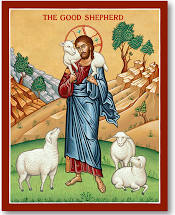
 The Lord is my shepherd; *
I shall not be in want.
 He makes me lie down in green pastures *
and leads me beside still waters.
 He revives my soul *
and guides me along right pathways for his Name's sake.
 Though I walk through the valley of the shadow of death,
I shall fear no evil; *
for you are with me;
your rod and your staff, they comfort me.
 You spread a table before me in the presence of those who trouble me; 
you have anointed my head with oil,
and my cup is running over.
 Surely your goodness and mercy shall follow me all the days of my life, 
and I will dwell in the house of the Lord for ever.

Reflection        No doubt the most beloved of the 150 psalms is the 23rd. Children and adults recall to heart the words, The Lord is my shepherd, I shall not want. And even though many folks choose the twenty third psalm for their memorial and celebration of life service, I believe it is a beautiful description of how we are to live our lives every day.

A shepherd cares for the safety and welfare of the sheep, even laying his life down for the good of them. When used as a metaphor for God, we understand God as a shepherd that is in charge of our lives and is committed to our safety, nourishment and thriving.

As our psalmist sings, with God as my shepherd, I shall not want. Wow. What a declaration of faith. With God I can lack nothing, not even in the midst of a coronavirus outbreak when it is nearly impossible to buy tuna fish or frozen dinners, hand sanitizer or toilet paper. Being with God I need nothing else.

The Lord is my shepherd…. I shall lack in nothing. No matter what is happening around me I shall lack nothing because with God I am calm,  God leads me to still waters and green pastures. I thrive. With God my soul is revived and even when I stumble through difficult times and feel afraid, being wrapped in God’s protection I am comforted.

When my mind races with grave imaginings that evil and enemies surround me, that dreadful things are happening everywhere I turn and the news is nothing but distressing, God blesses me with the holy oil of mercy and I am stunned by God’s extravagant love. 

Yes, God’s goodness and mercy follow me all the days of my life because God is faithful. But once again we are reminded that grace is not cheap. God’s blessing demands our faithful response. Every minute of every hour we must choose to “live in the house of the Lord for ever,” which is to say we must choose to live in faith, not fear.  God’s proverbial house is one of faith, hope and love. Not fear. The sure and certain way to live in God’s house of faith, hope and love is to claim with every ounce of our being, “The Lord is my shepherd, I shall not want.” “ I choose to live in the house of faith, hope and love. "

God’s goodness and mercy is with us as we tread the uncharted waters of the coronavirus and dramatic social and economic change. The Lord is our shepherd. We shall not be afraid because we choose to live in the house of faith, hope and love.


If you found this post to be meaningful please click on icons below to share. Thank you.

Saturday, September 9, 2017

Psalm text for Sunday 10 September, 2017

Psalm 119:33-40   The Message Version 

God, teach me lessons for living
    so I can stay the course.
Give me insight so I can do what you tell me—
    my whole life one long, obedient response.
Guide me down the road of your commandments;
    I love traveling this freeway!
Give me a bent for your words of wisdom,
    and not for piling up loot.
Divert my eyes from toys and trinkets,
    invigorate me on the pilgrim way.
Affirm your promises to me—
    promises made to all who fear you.
Deflect the harsh words of my critics—
    but what you say is always so good.
See how hungry I am for your counsel;
    preserve my life through your righteous ways!


Reflection       Who does not want to sustain a joyful and holy life? But this is easier said than done, which is why the eight verses in the fifth section of Psalm 119 are so important. Most theologians believe they are the words of King David, a prayer uttered by a man who succumbed to adultery and then murder for a cover-up. I believe these are the words of a man who has come face to face with his own weakness and vulnerability. These are the words of a man who has learned he must turn to something more than himself to sustain a joyful and holy life.

The psalm begins calling out to God because God alone can be our teacher. God alone awakens the Spirit of Wisdom in our hearts. Without listening to the Spirit of Wisdom in our hearts there is every chance we will depend on lesser teachers, misuse our intellect and reasonable faculties. When we fail to root our lives in the Spirit of Wisdom we will surely be distracted by “toys and trinkets, harsh words and critics." Once we turn in that direction we will find every reason to be afraid.

Better we should call to God and pray earnestly not only to know but also to apply God’s Wisdom in our lives, that we may “stay the course" and put our faith in God’s faithfulness. Insight or understanding are not enough. They must be fulfilled by our actions. And so we pray that we might also live every minute of every day doing what is good by the grace of God with us. Here again, we put our faith in God’s faithfulness rather than ourselves.  “Give me insight so I can do what you tell me, my whole life, one long, obedient response.” 

It does not end there. We must also pray to turn away from all those things that distract us from the Wisdom in our hearts; toys and trinkets and all that stuff we keep in the garage and storage sheds. Social, political, religious and economic conventions and rules about the rational course of action; all those things we store in our heads.  “Give me a bent for your words of wisdom…”

Still, this is not enough so we continue praying for the strength to be unmoved by “the harsh words of our critics.” Because we know the Wisdom of God is “always good,” we can depend on it, which is why we pause and pray and listen to the Wisdom in our hearts, no matter what the voices in our heads or the world around us are shouting.

The key to sustaining a joyful and holy life is to listen to the Wisdom of our hearts and to act with confidence in God’s faithfulness.


If you found this post to be meaningful please share by clicking on icons below.  Thank you. 

Friday, October 2, 2015

Hebrew Testament text for Sunday 4 October 2015

2015 10 01 Job 1.2, 2.1-10  God’s faith… 

Job 1:1; 2:1-10        There was once a man in the land of Uz whose name was Job. That man was blameless and upright, one who feared God and turned away from evil. One day the heavenly beings came to present themselves before the LORD, and Satan also came among them to present himself before the LORD. The LORD said to Satan, "Where have you come from?" Satan answered the LORD, "From going to and fro on the earth, and from walking up and down on it." The LORD said to Satan, "Have you considered my servant Job? There is no one like him on the earth, a blameless and upright man who fears God and turns away from evil. He still persists in his integrity, although you incited me against him, to destroy him for no reason." Then Satan answered the LORD, "Skin for skin! All that people have they will give to save their lives. But stretch out your hand now and touch his bone and his flesh, and he will curse you to your face." The LORD said to Satan, "Very well, he is in your power; only spare his life.”

So Satan went out from the presence of the LORD, and inflicted loathsome sores on Job from the sole of his foot to the crown of his head. Job took a potsherd with which to scrape himself, and sat among the ashes. Then his wife said to him, "Do you still persist in your integrity? Curse God, and die." But he said to her, "You speak as any foolish woman would speak. Shall we receive the good at the hand of God, and not receive the bad?" In all this Job did not sin with his lips.

Reflection      Why do bad things happen to good people? Why do good things happen to bad people? This question looms large among us as yet again we are confronted with the senseless violence expressed in the shooting of innocent people in Oregon on Thursday morning. 

The story of Job begins with a wager between God and the satan. Apparently God has a lot of faith in Job because God is essentially betting on Job’s faithfulness. God is betting that nothing the satan can do, that none of the circumstance that are part of every life on earth will be sufficient to turn Job away from God.

According to God Job was a good and faithful man. He was the richest man around. He owned lots of property, animals and businesses that not only supported his family of ten children and a wife, but also employed lots of people. He was well respected in the community, The people loved him because he treated them fairly and was generous and just. 

Nonetheless, Job's crops began to fail and his livestock died. He lost his property and businesses and with that, lost his status in the community. And if that was not enough, one at a time his ten children died, and then his wife. Suffering loss upon loss, Job then contracted an excruciating disease, boils all over his body, making him unclean and fit only to sit on the ashes in the dump. Life does not get much worse than that. 

Through all of this, Job never stopped calling out to God, demanding that God listen to him. Job pled his case of innocence… “I do not deserve this,” even when so called friends came to taunt him, “Surely you did something to cause all of this harm to befall you.” Job never lost faith in his own goodness and worth and never stopped calling out to God.  Which is to say, Job never lost faith in God's faithfulness. 

At the end of the day God was right to bet on Job’s faithfulness. You see, that is what faith is. Faith is stronger than any circumstance; loss of property or business, death of children or spouse, even sickness and living in pain and squalor. Faith is stronger than all of that. Faith is like a two edged sword that cuts through all that is impermanent to that which is permanent - God’s faithfulness to humankind. 


If you found this post to be meaningful, please share by clicking on the icons below. Thank you.