Showing posts with label Luke 13:10-17. Show all posts

Friday, August 23, 2019

Gospel text for Sunday 25 August 2019

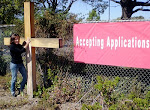
Asylum Seeking Families 
Welcomed to freedom and rest in Tuscon's new Casa Alitas Welcome Center

Luke 13:10-17        Now Jesus was teaching in one of the synagogues on the sabbath. And just then there appeared a woman with a spirit that had crippled her for eighteen years. She was bent over and was quite unable to stand up straight. When Jesus saw her, he called her over and said, "Woman, you are set free from your ailment." When he laid his hands on her, immediately she stood up straight and began praising God. But the leader of the synagogue, indignant because Jesus had cured on the sabbath, kept saying to the crowd, "There are six days on which work ought to be done; come on those days and be cured, and not on the sabbath day." But the Lord answered him and said, "You hypocrites! Does not each of you on the sabbath untie his ox or his donkey from the manger, and lead it away to give it water? And ought not this woman, a daughter of Abraham whom Satan bound for eighteen long years, be set free from this bondage on the sabbath day?" When he said this, all his opponents were put to shame; and the entire crowd was rejoicing at all the wonderful things that he was doing.

Reflection         Observe the sabbath day and keep it holy, as the Lord your God commanded you. For six days you shall labour and do all your work. But the seventh day is a sabbath to the Lord your God; you shall not do any work—you, or your son or your daughter, or your male or female slave, or your ox or your donkey, or any of your livestock, or the resident alien in your towns, so that your male and female slave may rest as well as you. Remember that you were a slave in the land of Egypt, and the Lord your God brought you out from there with a mighty hand and an outstretched arm; therefore the Lord your God commanded you to keep the sabbath day.” (Deuteronomy 5:12-15)

Keeping the Sabbath holy means extending freedom and compassion to all people and all creatures; ox, donkeys, livestock, resident aliens and slaves. No one is to be denied rest, peace, dignity and freedom, even if it is only temporary. Apparently Jesus felt an urgency to fulfill this God given mandate. Offering healing to the long suffering woman could not wait until Saturday night. Jesus is living according to the spirit of God’s law.

I suspect Jesus calls the leader of the synagogue a hypocrite because in the leader’s dogged adherence to the letter of the law he has lost sight of the spirit of the law. If the root of the law is affirmation of the holiness of life and that everyone deserves to be set free, then what possible justification could there be to allow anyone or anything to suffer by being bound, or tied, to the letter of the law? Sometimes we simply cannot wait to do what is right.

This week I received a letter from the Rev. Delle McCormick, retired UCC minister, describing her experience meeting one mother and her daughter at the Casa Alitas Welcome Center, the Tucson site for hosting the newest asylum seeking guests to our country. Rev. McCormick writes,  “The single mom from Guatemala had a college degree, a "good job" with the Ministry of Education. One day after work she was met getting off the bus by a person who ordered her to deliver two "packages." She declined, knowing the packages most likely contained drugs or weapons. The next day when she got off the bus, the same man handed her a picture of her 4 year-old daughter, and said the child would be dead the next day if she didn't deliver the packages. That night, the mom left her job, her bank account, her home, her family, her culture - her whole life, she said - and fled, taking three weeks to make her way with her daughter to the US border. Sitting before me was a person who, without notice, left her whole life behind for the sake of her daughter. Imagine.” *

Sometimes we simply cannot wait to do what is right.

This Guatemalan mother broke who knows how many laws, laws constructed with good intentions to support and protect people and nations.  Nonetheless, can you see Jesus reaching out to help this woman? Can you hear him saying to officials who are swift to remind him of all the laws she has broken and that he too is breaking the law by helping her, "You hypocrites! Would not each of you leave your career, your home, your bank account, your country, everything you know to save the life of your child? And ought not this woman, a daughter of Abraham whom Satan bound with threats to the life of her child, be set free from this bondage, on the sabbath or any other day of the week?”

Luke’s text invites us into a complicated conversation. A conversation with which we cannot cease to wrestle. How do we live between the letter and the spirit of the law? Which laws assist us in leading a Christian life? If we believe the root of the law is affirmation of the holiness of life and that everyone deserves to be set free, what actions shall we choose to put flesh on the bones of God’s law today? Compassion cannot wait. 

  • Visit ccs-soaz.org. for more information about Casa Alitas Shelter Programs


If you found this post to be meaningful please share by clicking on icons below. Thank you.

Saturday, August 20, 2016

Gospel text for Sunday 21 August 2016

Luke 13:10-17        Now Jesus was teaching in one of the synagogues on the sabbath. And just then there appeared a woman with a spirit that had crippled her for eighteen years. She was bent over and was quite unable to stand up straight. When Jesus saw her, he called her over and said, "Woman, you are set free from your ailment." When he laid his hands on her, immediately she stood up straight and began praising God. But the leader of the synagogue, indignant because Jesus had cured on the sabbath, kept saying to the crowd, "There are six days on which work ought to be done; come on those days and be cured, and not on the sabbath day." But the Lord answered him and said, "You hypocrites! Does not each of you on the sabbath untie his ox or his donkey from the manger, and lead it away to give it water? And ought not this woman, a daughter of Abraham whom Satan bound for eighteen long years, be set free from this bondage on the sabbath day?" When he said this, all his opponents were put to shame; and the entire crowd was rejoicing at all the wonderful things that he was doing.

Reflection    Twenty five years ago I swung my bruised body on my all too familiar crutches into my acupuncturist’s office. Being a whole person healer Dr. D began by listening attentively to my tale of woe; my head dive over a patch of ice, my frozen ski binding that provided the opportunity for my femur to release out the side of my leg, the head first toboggan ride down the ski mountain, the sea of faces in the chair lift line all silently praying, “Thank God that’s not me,” the medic gone rogue yanking my leg across the equator, the single minded orthopedic surgeon whose only answer was the knife, my stubborn refusal to submit to his plan, now, 10 days later, my crippled leg lay motionless on Dr. D’ acupuncture table.” Throughout my monologue Dr. D drivers spiked points of pain into my ankles, wrists, top of my head. When finally my words run dry Dr. D pauses, needle in midair and avers, “One day you will be grateful for all of the traumas and pain you have experienced,” which stung more grievously than the needle she promptly planted into my swollen knee. 

Suffering happens. The weight of suffering is integral to the constitution of life. In the words of the old Rolling Stones song, “No, you can't always get what you want. You can't always get what you want. You can't always get what you want. But if you try sometime you find. You get what you need.” 

Thich Nhat Hanh refers to this attitude of consenting and welcoming the present moment as mindfulness. In an interview with Krista Tippett the Vietnamese monk explains. “Mindfulness is assent to life as it is. Look at a flower and see that it is on its way to be garbage. Look at garbage and see it is on its way to be a flower.”+ In the same way we may experience suffering as being on the way to compassion. And of course, when we experience compassion we are on the way to experience suffering with others.

What does all of this have to do with the woman who was “bent over and quiet unable to stand up straight?” Everything. We have no idea what ails her but we do know this. Two thousand years ago if she had scoliosis, not only would she suffer the physical pain associated with the condition, but her neighbors would see her as a sinner who must have done something wrong to bring this grievous state upon herself, the religious leaders would consider her doubly unclean (woman and diseased) which  would foster oppressive feelings of guilt and unworthiness and eject this woman into exile.

Then Jesus arrives and turns the proverbial temple tables upside down. In direct violation of social norms and temple law, Jesus looks at the woman and calls her to him, he calls her to return from exile. Then he speaks directly to her, "Woman, you are set free from your ailment." and lays his hands on her. Jesus sees the woman exactly as she is. He not only acknowledges her existence he affirms her dignity and worth by touching her. And the healing is this. The woman is set free from the social, emotional and religious conditions that have oppressed her for eighteen years and her relationship with God is restored. “Immediately she stood up straight and began praising God.”

We are all bent beneath the weight of something. And, if we are not now, just wait a minute. Jesus shows us the way of living freely; refusing to be oppressed by physical, social, emotional or religious conditions; look into the face of suffering, consent to the present moment and discover God with you, no matter what.

+To hear Thich Nhat Hanh’s entire interview, click on this link       http://www.onbeing.org/program/thich-nhat-hanh-cheri-maples-and-larry-ward-being-peace-in-a-world-of-trauma/74 accessed August 20, 2016.

If you found this post to be meaningful, please share by clicking on the icons below. Thank you. 


Tuesday, August 20, 2013

Gospel text for Sunday 25 August 2013


Luke 13:10-17
Now Jesus was teaching in one of the synagogues on the sabbath. And just then there appeared a woman with a spirit that had crippled her for eighteen years. She was bent over and was quite unable to stand up straight. When Jesus saw her, he called her over and said, "Woman, you are set free from your ailment." When he laid his hands on her, immediately she stood up straight and began praising God. But the leader of the synagogue, indignant because Jesus had cured on the sabbath, kept saying to the crowd, "There are six days on which work ought to be done; come on those days and be cured, and not on the sabbath day." But the Lord answered him and said, "You hypocrites! Does not each of you on the sabbath untie his ox or his donkey from the manger, and lead it away to give it water? And ought not this woman, a daughter of Abraham whom Satan bound for eighteen long years, be set free from this bondage on the sabbath day?" When he said this, all his opponents were put to shame; and the entire crowd was rejoicing at all the wonderful things that he was doing.
Reflection     What is truth? I ask that question because unless I know what is truth how will I know how to live? For the religious leader in Luke’s text truth was revealed in the Bible and involved lots of rules about purity, fasting and sabbath. According to his version of truth, a view he shared with the Jewish religious authorities of his time, in order to live a good, right and holy life one had to obey the rules, the religious codes as written in Liviticus and interpreted by religious officials. Then along came Jesus for whom truth had a somewhat different flavor. 
Every time Jesus turned around he managed to break the rules and offend the authorities. He hung out with (even shared meals with) the wrong people, he ate the wrong foods without washing his hands, and he dared to cure people on the sabbbath. Jesus’ actions suggest that he was not bound by the priests’ elaborate holiness codes that originated some 600 years earlier in the temple in Jerusalem.  In fact, when some of the Pharisees (religious officials) asked, “Why are you doing what is not lawful to do on the sabbath?” (Luke 6.2) Jesus answered, “The son of man is Lord of the sabbath.” I read that as an ancient way of saying, “Your rules, your customs, have nothing to do with me when they prevent me from being merciful as my Father is merciful.”
Apparently Jesus understood truth to be a matter of perspective. Was the bent over woman a sociallly unacceptable cripple or a daughter of Abraham and full member of God’s family? Is the sabbath a day for withholding goodness or a day when even ox and donkeys require care? What is truth? 
Humanity in the early stages of social and spiritual development needs straight lines drawn in the sand; e.g. This is  black, this is white. This is left, this is right. We know which side we stand on and have little tolerance for the other. This perspective works fairly well with children and mathmatics; fire burns therefore do not put your hand in it, five plus seven is eleven. Things are either correct or incorrect. Dualistic thinking is helpful... for a season. And then there is wisdom.
For everything there is a season, and a time for every matter under heaven:
a time to be born, and a time to die;
a time to plant, and a time to pluck up what is planted;
a time to kill, and a time to heal;
a time to break down, and a time to build up;
a time to weep, and a time to laugh;
a time to mourn, and a time to dance;
a time to throw away stones, and a time to gather stones together;
a time to embrace, and a time to refrain from embracing;
a time to seek, and a time to lose;
a time to keep, and a time to throw away;
a time to tear, and a time to sew;
a time to keep silence, and a time to speak;
a time to love, and a time to hate;
a time for war, and a time for peace.
“(Ecclesiastes 3.1-9)
Jesus embodies the inclusive wisdom of Ecclesiastes. The more simple, dualistic, externally oriented perspective of the religious officials may be a helpful starting place but was not sufficient for Jesus and is not sufficient for maturing Christians In our complex and rapidly changing world today. Jesus reminds us that the question we must ask is, “For whom is this true? “
Is the sabbath holy for a woman considered unclean and cast out of her community? Is the sabbath holy for a homeless family? For a high school student whose parents illegally entered the country when she was seven years old? For an elder person unable to receive adequate care? Is the sabbath holy for those who mourn? Those who are hated? Those whom we call enemy?
For Jesus truth is interior, personal and not relative. “Do to others as you would have them do to you... But love your enemies, do good, and lend, expecting nothing in return. Your reward will be great, and you will be children of the Most High; for he is kind to the ungrateful and the wicked. Be merciful, just as your Father is merciful.” (Luke 6,31,35-6) As Jesus did so must we dare to think differently about the world and our place in it. To do so we must stand on the shoulders of biblical revelation and reason and stretch into the unside-down world perspective modeled for us by Jesus.

If this message touches your imagination, please share it by clicking on any of the tabs below... 
twitter, Facebook, google+   Thank you.

Monday, August 16, 2010

Gospel Text for Sunday, August 22nd

Luke 13:10-17

Now he was teaching in one of the synagogues on the sabbath. And just then there appeared a woman with a spirit that had crippled her for eighteen years. She was bent over and was quite unable to stand up straight. When Jesus saw her, he called her over and said, "Woman, you are set free from your ailment." When he laid his hands on her, immediately she stood up straight and began praising God. But the leader of the synagogue, indignant because Jesus had cured on the sabbath, kept saying to the crowd, "There are six days on which work ought to be done; come on those days and be cured, and not on the sabbath day." But the Lord answered him and said, "You hypocrites! Does not each of you on the sabbath untie his ox or his donkey from the manger, and lead it away to give it water? And ought not this woman, a daughter of Abraham whom Satan bound for eighteen long years, be set free from this bondage on the sabbath day?" When he said this, all his opponents were put to shame; and the entire crowd was rejoicing at all the wonderful things that he was doing.

Questions for engaging the text:

- What do I observe" What am I seeing" Does this passage raise questions for me?
- Is anything attracting me, drawing my attention, or repulsing me?
-What response is emerging within me? What is my response to what is attracting me?***
-In what ways might I specifically act on my insights in the world
I really want to hear from you. Thank you for clicking on "Comments" below and adding your responses.
Grace and Peace, Debra

*** 1st three questions taken from The Art of Engaging Holy Scripture curriculum (see resources)