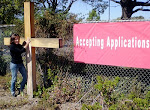
Saturday, April 16, 2022

Gospel text for the Great Vigil of Easter 16 April 2022


Luke 24.1-12        On the first day of the week, at early dawn, the women who had come with Jesus from Galilee came to the tomb, taking the spices that they had prepared. They found the stone rolled away from the tomb, but when they went in, they did not find the body. While they were perplexed about this, suddenly two men in dazzling clothes stood beside them. The women were terrified and bowed their faces to the ground, but the men said to them, "Why do you look for the living among the dead? He is not here, but has risen. Remember how he told you, while he was still in Galilee, that the Son of Man must be handed over to sinners, and be crucified, and on the third day rise again." Then they remembered his words, and returning from the tomb, they told all this to the eleven and to all the rest. Now it was Mary Magdalene, Joanna, Mary the mother of James, and the other women with them who told this to the apostles. But these words seemed to them an idle tale, and they did not believe them. But Peter got up and ran to the tomb; stooping and looking in, he saw the linen cloths by themselves; then he went home, amazed at what had happened.


Reflection        No eloquent words nor finely formed images can  begin to help us wrap our minds around resurrection. Frankly this was an enormous stumbling block for me years ago as I was discerning my call to the priesthood.  What am I to think about resurrection? It is the hallmark of Christian faith and I am not sure I can swallow it? Surely I cannot preach it. I wrestled. I prayed. I waited. And then something happened. 


It was an unremarkable day during which I was having an unremarkable meditation when suddenly I had an experience of Jesus that was more real than anything I have ever seen with my eyes or touched with my hands. It captivated all of my senses and hung a lamp in my heart that remains undimmed.


With no apparent previous cause, in the silence of my heart  I heard Jesus say, “Follow me.” Do not ask me how I knew it was Jesus. I just did, with absolute certainty. I knew it like I know my own name and that I am standing here speaking with you. And I felt my self step behind him. Jesus said, “Come closer.” I did. And he said, “Closer.” Feeling hesitant and awkward I answered, “If I come any closer I will step on your heels.” And he said “Closer.” Ever so tentatively I stepped into his heel and vanished, except I was not gone. What was gone was my sense of separation. I could not see him. I had no sense of where I ended and he began. I just knew that he was closer to me than my own breath and that I was so close to him that there was nothing between us.


Every cell and every space of my being glimmered with knowing, “This is true.” Though I have rarely shared this story, the experience remains as real for me today as it was seventeen years ago. Unlike seventeen years ago I am no longer afraid to share this story, a story I have come to understand as an experience of death and resurrection. Death of my belief in my sole and separate self and resurrection in union and unity with Divine Presence that Christians recognize as the Christ. St. Paul explains it this way to the Galatians. “It is no longer I who live but Christ who lives in me.” Death and resurrection. The only thing lost in death is the belief in separation. Everything is gained. This is resurrection.


Two thousand years ago Mary Magdalene, Joanna, Mary the mother of James, and the other women followed Jesus. They heard the authority in his words. They felt the healing power of his touch. They grew weary walking with him from Galilee to Jerusalem. They watched and were horrified as their teacher, their friend was beaten, nailed to a cross and died. They saw Jospeh of Arimithea take Jesus’ body down from the cross, wrap it in linen and place it in a new stone tomb. Regardless of the circumstance, the women never stopped following Jesus. 


It is no wonder that when the first glimmer of light pierces the frightful night following Jesus’ crucifixion the women, exhausted and rapt in the aroma of anticipation,  immediately returned to Jesus’ tomb where they have a mystical encounter with Divine Presence.


When Mary Magdalene, Joanna, Mary the mother of James, and the other women look into the place of death they see it is not empty and with every cell and every space of their being they know that the words of the two men with dazzling clothes they mysteriously encountered in the tomb are true. Jesus is not to be found among the dead. Jesus’ place is with the living. Jesus’ place is in the hearts and minds and lives of the living who follow him. 


Here is the thing. Mary Magdalene, Joanna, Mary the mother of James and the other women expected resurrection but it was not supposed to happen now!  They brought fresh herbs and spices to Jesus’ tomb believing the ritual of preparation was essential to properly prepare a person’s body so that it could begin its long journey toward a far distant resurrection.  The women went to the tomb expecting to minister to the dead. They had absolutely no idea that resurrection is now. Resurrection is for the living, living in union and unity with Divine Presence, the Christ, right here, right now. 


This is the wonder of the Easter story. NOW is the moment of resurrection. NOW is the moment of new life in union and unity with the risen Christ, living, breathing and loving through each of us right here, right now. 


IF you find this post to be meaningful please share by clicking on icons below. Thank You. 


Friday, April 15, 2022

Passion Narrative for Good Friday 15 April 2022


Link to Passion Narrative according to John   John 18:1-19:42 


Reflection        Each tentative step I had to pause, adjust the heft of the rough hewn cross on my shoulder as I made my halting way to the altar steps and there laid down the burden of the awkward Good Friday cross. Having completed my part of the liturgy, I sat down in the chancel facing the church half full of people.


One by one folks left their pew to wait in line to touch, bow before, kiss or weep over the stark symbol of suffering. It was not long before hot tears dripped like blood from my chin, painting dark stains on my mourning cassock as I watched the people wait in somber silence for their turn at the cross. Without favor my river of tears accompanied the wealthy, poor, elders and teens, beautiful and bent until the eyes of my heart rested on a person whom I always judged as having the perfect blessed life, and like lightening I “knew” with my heart what my head could not fathom. 


With the scales on my eyes washed away by my tears I “saw” the river of humanity flowing up the church aisle to reverence the Good Friday cross as one, one intimate and holy communion in suffering. Suffering, a great equalizer. Suffering cutting through every strand of diversity, born in the hearts of all human beings. 


Suffering is suffering. It is not better. It is not worse. It is not more and it is not less. Suffering is suffering. Great riches do not protect us from suffering. Neither does brilliance or poverty, good judgement or folly make our suffering less. In suffering we all participate. In suffering we all belong. This truth is stamped on my heart forever. In suffering we are all one holy communion.


Perhaps that is the good part of Good Friday. We cannot and we will not suffer alone. This night we weep the tears of the powerful and the poor, the dying and the to be born, the pious and pretentious, the murdered innocents and their perpetrators. This night we are one, one holy communion joined in suffering, suffering with God.


If you find this post to be meaningful please share by clicking on icons below. Thank you. 

Gospel text for Maundy Thursday, 14 April 2022


John 13:1-17, 31b-35        Now before the festival of the Passover, Jesus knew that his hour had come to depart from this world and go to the Father. Having loved his own who were in the world, he loved them to the end. The devil had already put it into the heart of Judas son of Simon Iscariot to betray him. And during supper Jesus, knowing that the Father had given all things into his hands, and that he had come from God and was going to God, got up from the table, took off his outer robe, and tied a towel around himself. Then he poured water into a basin and began to wash the disciples' feet and to wipe them with the towel that was tied around him. He came to Simon Peter, who said to him, "Lord, are you going to wash my feet?" Jesus answered, "You do not know now what I am doing, but later you will understand." Peter said to him, "You will never wash my feet." Jesus answered, "Unless I wash you, you have no share with me." Simon Peter said to him, "Lord, not my feet only but also my hands and my head!" Jesus said to him, "One who has bathed does not need to wash, except for the feet, but is entirely clean. And you are clean, though not all of you." For he knew who was to betray him; for this reason he said, "Not all of you are clean.”


After he had washed their feet, had put on his robe, and had returned to the table, he said to them, "Do you know what I have done to you? You call me Teacher and Lord--and you are right, for that is what I am. So if I, your Lord and Teacher, have washed your feet, you also ought to wash one another's feet. For I have set you an example, that you also should do as I have done to you. Very truly, I tell you, servants are not greater than their master, nor are messengers greater than the one who sent them. If you know these things, you are blessed if you do them.


"Now the Son of Man has been glorified, and God has been glorified in him. If God has been glorified in him, God will also glorify him in himself and will glorify him at once. Little children, I am with you only a little longer. You will look for me; and as I said to the Jews so now I say to you, `Where I am going, you cannot come.' I give you a new commandment, that you love one another. Just as I have loved you, you also should love one another. By this everyone will know that you are my disciples, if you have love for one another.”


Reflection        Knowing that his time on earth is coming to an end, Jesus does what many of us might do, host a dinner party with our closest friends because we love them, even to the end, even those ones who have disappointed or betrayed us.  The odd thing is, at dinner parties generally the host takes the place of honor and perhaps Jesus does while serving barley bread, goat cheese, olives, dried fruit and wine. But on this night Jesus also does something extraordinarily unconventional. 


Jesus steps away from his place of honor as host and teacher. He gets up “from the table, takes off his outer robe, ties a towel around himself…” pours water into a basin then kneels in front of each guest, washing their feet and drying them with a towel.” We commiserate when Peter blurts out precisely what we are all thinking, “I am not comfortable with this. I do not want you to wash my feet!”


Here is a bit of context about the tradition of foot washing during Jesus time. Temple priests were not permitted to minister unless they washed their own feet twice. (Zeb 17b) In ancient Israel as a sign of hospitality a host would offer water to a guest and invite them to wash their own feet. (Gen. 18:4)  It is no wonder Peter is appalled when Jesus kneels to wash his feet.  A good host will offer their guests water to wash their own feet. Even temple priests wash their own feet. For a friend, a teacher to wash your feet, this is unheard of.


Which of course begs the question. Why in the world would Jesus do such an outrageous thing? And why on earth do Christians across the globe on this night get on their knees to wash the feet of friends and strangers?


I believe that at some unspeakably deep level we understand that love is more than an interior experience of excitement and attraction. Love is what we actually do to express our care and desire for the good of other people. Jesus puts it this way, “No one has greater love than this, to lay down one’s life for one’s friends.” (John 15.13)  I would add, love means setting aside our pride and preoccupation with our self. Love is about making our selves less and elevating the other.


Still, we protest.   “Let’s shake hands or have a polite hug, but  I don’t want you to see my gnarly toes and touch them. And Jesus, I do not want to wash your dusty feet either.”


And Jesus says, “I have seen you. I have heard your. I have felt you. I have touched you. I have cared for you as your servant. I have held nothing back from you because I love you as God the Creator loves me. I love you as God the Redeemer loves me. I love you as God the Source of all being loves me. Now, do likewise.” 

Jesus is showing the disciples and us what love really looks like. It is passing on God’s care and loving kindness.  Later in John’s gospel Jesus says, “I have loved you the way my Father has loved me. Make yourselves at home in my love… this is my commandment. Love one another the way I have loved you. This is the very best way to love, put your life on the line for your friends.” (John 15.9,10,12)

Let me be crystal clear. Jesus is not promoting masochism nor being a doormat. He is showing us the way of extravagant love that holds nothing back. Extravagant love for the good of others, love poured out without measure for the good of friends and strangers. Whose feet do you need to wash? Who will you let wash your feet? Amen. 

If you find this post to be meaningful please share by clicking on icons below. Thank you.


Saturday, April 9, 2022

Passion Narrative for the Sunday of the Passion 10 April 2022


Following is the link for The Passion Narrative according to Luke. The link is provided given the great length of the narrative. 


http://www.oremus.org/liturgy/lhwe/luke.html


Reflection        The church was an ultramodern building nestled in a sumptuous Marin County residential setting.  Passing through lush gardens, mesmerized by a stone fountain’s water music mingled with the fragrance of perennial  blossoms I was stopped dead in my tracks as I passed through the sanctuary doors and came face to face with a twenty foot contemporary painted wood sculpture of a Mexican/Spanish styled Jesus nailed to a cross, hanging high above the altar. Thankfully no one else was present as my gasp was audible.


“Oh dear. How can I be in this place? How can I gaze at this enormous dead Jesus every week?” And so began my first parish field education assignment as a brand new seminarian.


It took several months before I screwed up the courage to ask Mark, the rector, how he could live with the daunting sculpture of dead Jesus reigning above his head? He paused  before responding. “Hanging there above us is a constant reminder of what we humans are capable of at our worst. We should never forget our potential for evil, how every day we destroy innocents by our actions and inactions.” Something raw and ignoble clicked inside me. My mind and my heart beat a quick about face. 


We are not worshipping the institution’s graven image of the mangled body of Jesus and thereby violating the first commandment given to us in the Hebrew Scripture, “You shall not make for yourself an idol.” (Ex 20.4) The crucifix is radical social commentary. We contemplate the unsettling sculpture of an innocent man nailed to a cross to remind ourselves how easily we turn away from good, misuse our position, power or privilege, then willfully or unwittingly execute evil and elevate our actions to regal heights. 


It is no wonder we resist looking at the vexing sculpture of an innocent man nailed to a cross. It brings us face to face with this inconvenient truth. We are among the crowds of people who follow Jesus,  religious leaders, public officials and ordinary folks who ever so swiftly are swept into the emotion of the moment. Forgetting who and whose we are we turn away from good to execute even the most innocent among us. 


This week, this Holy Week, let us look at the image of an innocent man hanging on a cross and admit all the ways in which we am culpable for pounding nails into the hands and hope of humanity by our actions… and inaction. Let us look at the crucifix and see the homeless man we drove past without stopping to encourage, babes in the arms of their migrant mothers with no place to lay them down, terror in the eyes of a pregnant teenager,  a single mother’s distress as she leaves her sick child home alone to go to work and not lose her job,  destitute people lined up at food banks, social security offices and border crossings, buildings and bodies senselessly shattered from the US Capital to Ukraine. This week let us admit we are all part of the crowd at Jesus’ trial before Pilate shouting, “Crucify him. Crucify him.”


If you find this post to be meaningful please share by clicking on icons below. Thank you.


Saturday, March 26, 2022

Gospel of Life Sunday 27 March 2022


Text this week is the Gospel of Life, living in the present moment.


Reflection        Waiting for the BART yellow line to San Francisco, chill wind whipped hair into my eyes while the screaming thunder of the approaching train signaled my senses, “Be on guard.” Minding my posture as well as the gap, I settled into the welcome warmth of the less than half occupied car. Unwashed train windows were fitting backdrop for the long winded woman who joined us at the first stop.


It took me awhile to figure out that the wired woman was pontificating to London Breed, the mayor of San Francisco. Words were lost in the river of her emotion as she balanced her bulging backpack on the seat, leaving scarce room for her to sit while reaching into a tattered sack to retrieve a can of beer. I resumed my vigil surveilling fly by cardboard villages buried beneath overpasses and caravans of dilapidated vehicles parked nose to tail along their curbside home. Gazing through dirt stained windows tears caught my throat and blurred my vision.


Screeching to the next jarring halt, like a neglected proscenium the train doors part revealing a mammoth man squeezed and restrained in a wheelchair, a ghoulish red haired doll strapped to his shoulder as a disheveled caretaker bumps, bangs and locks the scene in place. Within a matter of seconds London Breed’s provocateur renews her protestations, the wheelchair man’s head falls forward and we dive to one hundred and thirty five feet below the San Francisco bay. 


Now staring straight into oblivion, the damn in my blurry eyes bursts as a fiery tong pierces my  heart. “Oh my God, such anguish and adversity, such misery and misfortune. And here I sit on my way to sip wine and slurp oysters. I am so blessed, so incredibly blessed. I could be barely surviving entombed beneath train tracks or restrained in a wheelchair with a diabolical doll strapped to my shoulder.” Then something broke open and it occurred to me. I am. 


I am not other than London Breed’s agent provocateur. I am not other than wheelchair man or the dispossessed box dwellers. 


When Moses asks God for God’s name, God answers, I AM. (Exodus 3.13) I AM is that which we all are, made in the image and likeness of the One, Holy and Living I AM.  We are One I AM.  When we allow ourselves to settle into the fullness and messiness, the wounds and the wonder of every stinking real life moment we not only find our selves, we also find God in the faces of every I AM. 


If you find this post to be meaningful please share by clicking on icons below. Thank you.


Tuesday, March 15, 2022

Hebrew Testament Text for Sunday 20 March 2022


Exodus 3:1-15        Moses was keeping the flock of his father-in-law Jethro, the priest of Midian; he led his flock beyond the wilderness, and came to Horeb, the mountain of God. There the angel of the Lord appeared to him in a flame of fire out of a bush; he looked, and the bush was blazing, yet it was not consumed. Then Moses said, “I must turn aside and look at this great sight, and see why the bush is not burned up.” When the Lord saw that he had turned aside to see, God called to him out of the bush, “Moses, Moses!” And he said, “Here I am.” Then he said, “Come no closer! Remove the sandals from your feet, for the place on which you are standing is holy ground.” He said further, “I am the God of your father, the God of Abraham, the God of Isaac, and the God of Jacob.” And Moses hid his face, for he was afraid to look at God.


Then the Lord said, “I have observed the misery of my people who are in Egypt; I have heard their cry on account of their taskmasters. Indeed, I know their sufferings, and I have come down to deliver them from the Egyptians, and to bring them up out of that land to a good and broad land, a land flowing with milk and honey, to the country of the Canaanites, the Hittites, the Amorites, the Perizzites, the Hivites, and the Jebusites. The cry of the Israelites has now come to me; I have also seen how the Egyptians oppress them. So come, I will send you to Pharaoh to bring my people, the Israelites, out of Egypt.” But Moses said to God, “Who am I that I should go to Pharaoh, and bring the Israelites out of Egypt?” He said, “I will be with you; and this shall be the sign for you that it is I who sent you: when you have brought the people out of Egypt, you shall worship God on this mountain.”

But Moses said to God, “If I come to the Israelites and say to them, 'The God of your ancestors has sent me to you,' and they ask me, 'What is his name?' what shall I say to them?” God said to Moses, “I am who I am.” He said further, “Thus you shall say to the Israelites, 'I am has sent me to you.'” God also said to Moses, “Thus you shall say to the Israelites, 'The Lord, the God of your ancestors, the God of Abraham, the God of Isaac, and the God of Jacob, has sent me to you’: This is my name forever,

and this my title for all generations.”


Reflection       What is burning inside you today? The cries of the millions of Ukrainians being driven into exile if not killed? The fear of the Russian people oppressed by their Stalin-esque president? The prospect of a madman deploying weapons of mass destruction? Shall we pause and wonder how  God's fire might be speaking to us? Are we willing to listen to the cries of the people and let the course of our lives be changed?  Are we willing to step out of our comfortable ruts, planting our heads in our hearts and acting decisively to alleviate the misery of  God’s people today? 


It may surprise you that that most scholars agree, Moses, a prophet important in Christianity, Judaism, Islam and Ba’hai, is not an historical figure.    Which begs the question, “What is the purpose of this mythic tale?” Let me suggest this is a spiritual journey story, a story that can help us navigate the lonely, arid and volatile desert we find ourselves navigating today. 


The wind blows, the dust  moves, the smell of creosote tantalizes and out of the corner of his eye Moses notices something he cannot explain, a bush that is burning but not consumed.  How can this be? The desert represents Moses’ interior journey; seeking understanding in the inhospitable vastness  of  the desert.  Here we join Moses following the mystery of a burning bush from his head into his heart to discern if it is real or a mirage.


 “Then Moses said, ‘I must turn aside and look at this great (amazing (CJB), marvelous (JSB), remarkable (NAB)) sight, and see why the bush is not burned up.’” Confronted by something that made no sense to him,  Moses stops what he is doing, turns aside and allows himself to stay with the unsettling experience, a non-consuming fire. This is the way our spiritual journeys progress. In the presence of mystery we turn our heads to our hearts, making ourselves available to discern God’s  (The Mystery's) real presence in our lives.


It seems God was waiting to discover how Moses would respond to the fire before proceeding; “When the Lord saw that he had turned aside to see,  God called to him out of the bush, ‘Moses, Moses!’ Moses responds  ‘Here I am.’” God and Moses enter into conversation, and by implication, relationship. Moses’ willingness to engage the mysterious fire by turning his head to his heart opens the way for him to be in relationship with God.                                                  


God says,“Come no closer! Remove the sandals from your feet, for the place on which you are standing is holy ground,”   then proceeds to identify God’s own self, “’I am the God of your father, the God of Abraham, the God of Isaac, and the God of Jacob.’”  As Moses approaches, God establishes parameters for their relationship, providing Moses with a way to participate in the revelatory event.  Removing his sandals Moses embodies the holiness of this encounter.                                                                                                                            


What does the tale of Moses talking to a burning bush have to do with us? That depends entirely on how we choose to engage it. If we read this scripture briskly noting, ‘I’ve heard this story a million times,” we can walk right past the mystery, no effect. There is every reason to believe that Moses could have done just that.


Being a shepherd Moses had a job to do and could easily have justified sticking to his job and continuing on his way. No story. But, when Moses experiences the burning bush (in other words, feels the fire of wonder inside) he pauses to ponder the mystery. Paying attention to the incomprehensible mystery Moses is available to encounter, experience and answer God’s call . 


What is burning inside you today? The cries of the millions of Ukrainians being driven into exile if not killed? The fear of the Russian people oppressed by their Stalin-esque president? The prospect of a madman deploying weapons of mass destruction? Shall we pause and wonder how  God's fire might be speaking to us? Are we willing to listen to the cries of the people and let the course of your life be changed?  Are we willing to step out of your comfortable ruts, planting your head in our heart and acting decisively to alleviate the misery of  God’s people today? 


If you find this post to be meaningful please share by clicking on icons below. Thank you.


.


Friday, March 11, 2022

Psalm for 2nd Sunday of Lent 20 March 2022


 Psalm 27 v 1-12, 18

1 The Lord is my light and my salvation;

whom then shall I fear? *

the Lord is the strength of my life;

of whom then shall I be afraid?

2 When evildoers came upon me to eat up my flesh, *

it was they, my foes and my adversaries, who 

stumbled and fell.

3 Though an army should encamp against me, *

yet my heart shall not be afraid;

4 And though war should rise up against me, *

yet will I put my trust in him.

5 One thing have I asked of the Lord;

one thing I seek; *

that I may dwell in the house of the Lord all the days of my life;

6 To behold the fair beauty of the Lord *

and to seek him in his temple.

7 For in the day of trouble he shall keep me safe 

in his shelter; *

he shall hide me in the secrecy of his dwelling

and set me high upon a rock.

8 Even now he lifts up my head *

above my enemies round about me.

9 Therefore I will offer in his dwelling an oblation

with sounds of great gladness; *

I will sing and make music to the Lord.

10 Hearken to my voice, O Lord, when I call; *

have mercy on me and answer me.

11 You speak in my heart and say, "Seek my face." *

Your face, Lord, will I seek.

12 Hide not your face from me, *

nor turn away your servant in displeasure.

18 O tarry and await the Lord's pleasure;

be strong, and he shall comfort your heart; *

wait patiently for the Lord.


Reflection        How do we breathe beneath the threat of nuclear disaster? How do we stand in the ashes of bombed homes and hospitals? How do we to live with our heads above ground and our hearts unbound when images of disaster bombard us? How do we trust the premise that there is a solution to every problem if only the people at the top “get it right?”


I don’t know. Which is why I turn to the psalms, ancient scripts for how we humans navigate the unbearable. When the gravel in my belly grinds with fear of nuclear disaster I borrow the psalmists words, “The Lord is my light and my salvation; whom then shall I fear? the Lord is the strength of my life; of whom then shall I be afraid?” When images of mangled buildings and injured babies follow me to bed and bombard my dreams, I lean into the Israelite’s song, “Though an army should encamp against me, yet my heart shall not be afraid…”


When I am tempted to bury my head in the sand; taking a pill, making a purchase or planning another adventure vacation, I recall to heart the promise,  “Even now (God) lifts up my head above my enemies round about me… And though war should rise up against me, yet will I put my trust in him.”  And there we have it. 


For as long as we put our trust in the presumptive people at the top “to get it right,” we miscarry the war laden moment by failing to allow God’s mystery to unfold within us. But when we choose to put our heads in our hearts, there we “behold the beauty of our Lord,” tasting peace in the promise, “For in the day of trouble he shall keep me safe in his shelter; he shall hide me in the secrecy of his dwelling and set me high upon a rock.” 


This is not wishful thinking nor magical intervention. Washed in the river of our tears and hidden beneath the rubble of our fears we hear, “You speak in my heart and say, "Seek my face." Your face, Lord, will I seek. Hide not your face from me, nor turn away your servant in displeasure.” The voiceless voice of the only One in whom we dare put our trust and find our peace calls us from the inside to be transformed into the peace that is not contingent upon the rampant wiles of circumstance and unholy men. 


Therefore, even though we find ourselves short of breath beneath the threat of nuclear disaster and squirming in the ashes of bombed homes and hospitals, we put our heads into our hearts and offer God “an oblation with sounds of great gladness…” because nothing can annihilate the peace we find in God. Nothing can touch us where I AM. 


If you find this post to be meaningful please share by clicking on icons below. Thank you.