Wednesday, December 26, 2012

Gospel text for Sunday 30 December 2012


John 1:1-18 In the beginning was the Word, and the Word was with God, and the Word was God. He was in the beginning with God. All things came into being through him, and without him not one thing came into being. What has come into being in him was life, and the life was the light of all people. The light shines in the darkness, and the darkness did not overcome it.
There was a man sent from God, whose name was John. He came as a witness to testify to the light, so that all might believe through him. He himself was not the light, but he came to testify to the light. The true light, which enlightens everyone, was coming into the world.
He was in the world, and the world came into being through him; yet the world did not know him. He came to what was his own, and his own people did not accept him. But to all who received him, who believed in his name, he gave power to become children of God, who were born, not of blood or of the will of the flesh or of the will of man, but of God.
And the Word became flesh and lived among us, and we have seen his glory, the glory as of a father's only son, full of grace and truth. (John testified to him and cried out, "This was he of whom I said, 'He who comes after me ranks ahead of me because he was before me.'") From his fullness we have all received, grace upon grace. The law indeed was given through Moses; grace and truth came through Jesus Christ. No one has ever seen God. It is God the only Son, who is close to the Father's heart, who has made him known.
Reflection     This is the first Sunday in Christmas. Just a few days ago we received (yet again) the Word that enlightens all people. With the creating power of the Word born again in our hearts we cry Abba, Father, because we understand that we really are children of God and as children of God we embody God’s presence right here, right now, on earth. 

We are not waiting for deferred salvation. Salvation is in the sanctuary of our transformed hearts and minds. And as we are changed, so is our world.  Through us God is, right here, right now. As we allow our hearts and minds to be transformed we are compelled to action because we cannot contain God. Just as it is a property of light to shine and illumine the surfaces around it, so too is it a property of the Word God to be expressed and enlighten all people. 

The Word God enters the world through us as we sing, give thanks and worship God. But the Word God does not stop there.  The Word speaks through us to illume the value and dignity of all human beings because it is the Word that enlightens all people. Still, the Word God does not stop there. God’s joy and delight in all of creation is declared through us as we call for the care of creation, of all that God calls good. 

As the Word God is born in us it transforms us and the world in three ways. The Word God inspires us to give praise and thanks to God. The Word God energizes us to dignify all of humanity.  And finally the Word God compels us to care for our environment. With every choice we make we have the opportunity to embody the creating power of the Word that is God with us.  With every decision that we make we can allow the Word that is God with us to call for the transformation of the world we live in. 

The Word God enters the world through us to illumine a world full of broken hearts and crushed dreams. The Word God compells us to offer comfort, encouragement and support to a world full of disease and isolation, of fear, bitterness and marginalization. The Word God energizes us to speak into the darkness, to embody God’s delight in creation and to reveal the promise of new life to friends and neighbors and strangers who feel alienated from God.

The Word God is what makes Christianity unique. It is the promise that ordinary things like bread and wine and our little lives and this fragil earth  - and words - that all things can be holy. This is our work, to speak the Word that enightens all people and makes all things holy.

Monday, December 17, 2012

Gospel text for Sunday 23 December 2012


Luke 1:39-45      In those days Mary set out and went with haste to a Judean town in the hill country, where she entered the house of Zechariah and greeted Elizabeth. When Elizabeth heard Mary's greeting, the child leaped in her womb. And Elizabeth was filled with the Holy Spirit and exclaimed with a loud cry, "Blessed are you among women, and blessed is the fruit of your womb. And why has this happened to me, that the mother of my Lord comes to me? For as soon as I heard the sound of your greeting, the child in my womb leaped for joy. And blessed is she who believed that there would be a fulfillment of what was spoken to her by the Lord."
Reflection      What does it mean to be blessed? In this context it means to be favored by God, which is how the angel Gabriel greeted Mary before she left to visit her pregnant cousin Elizabeth, “Greetings favored one. The Lord is with you!” What a fantastic announcement. And it was not long thereafter that Mary received essentially the same message from Elizabeth, “Blessed are you...(favored are you),” and “blessed is the fruit of your womb,” (the Lord is with you). It’s no wonder Mary believed that she was blessed and with the Lord. Not only did she receive the message from an angelic messenger she also heard it from the lips of her kinswoman. 
Here is the thing about being blessed. Blessing is not fulfilled unless it is believed. When we believe something we accept that it is true, we have confidence in it. But it does not stop there. Mary “...believed that there would be a fulfillment of what was spoken to her by the Lord,” and acted on it. She believed the angel’s claim that her elderly cousin Elizabeth was six months pregnant and so went quickly to Judea to be with her. It seems Mary believed the divine declaration, “For nothing will be impossible with God” (Lk 1.37) and it set her in motion.
The angel Gabriel didn’t do something to Mary. The angel did not impose the will of God upon Mary. Mary did something. She chose to believe. And that is the essence of faith. Faith is not the particular doctrine or theological perspective that we adopt in an attempt to explain the inexplicable (pregnancies). Faith is not the explanations and justifications of our behavior. Faith is our intellectual consent to what we cannot understand or explain. Faith is our decision to believe the angel’s message that along with Mary and Elizabeth we are blessed and the Lord is with us. 
In the wake of the tragic shootings in Newtown, Connecticut, we desperately need to hear the angel’s good news. “Blessed are you. The Lord is with you.” And perhaps even more than that we need to choose to believe that even in the midst of the debacle at Sandy Hook school, we are blessed. God is with us and something good that we cannot begin to explain or even imagine will rise from the ashes of this tragedy because “nothing will be impossible with God.” May we, like Mary, act such that it be so.

Tuesday, December 11, 2012

Gospel text Sunday 16 December 2012


Luke 3:7-18          John said to the crowds that came out to be baptized by him, "You brood of vipers! Who warned you to flee from the wrath to come? Bear fruits worthy of repentance. Do not begin to say to yourselves, 'We have Abraham as our ancestor'; for I tell you, God is able from these stones to raise up children to Abraham. Even now the ax is lying at the root of the trees; every tree therefore that does not bear good fruit is cut down and thrown into the fire."
And the crowds asked him, "What then should we do?" In reply he said to them, "Whoever has two coats must share with anyone who has none; and whoever has food must do likewise." Even tax collectors came to be baptized, and they asked him, "Teacher, what should we do?" He said to them, "Collect no more than the amount prescribed for you." Soldiers also asked him, "And we, what should we do?" He said to them, "Do not extort money from anyone by threats or false accusation, and be satisfied with your wages."
As the people were filled with expectation, and all were questioning in their hearts concerning John, whether he might be the Messiah, John answered all of them by saying, "I baptize you with water; but one who is more powerful than I is coming; I am not worthy to untie the thong of his sandals. He will baptize you with the Holy Spirit and fire. His winnowing fork is in his hand, to clear his threshing floor and to gather the wheat into his granary; but the chaff he will burn with unquenchable fire."
So, with many other exhortations, he proclaimed the good news to the people.
Reflection            “What then should we do?” I believe we need to join the disquieted crowds in Luke’s gospel and respond to the gnarly prophet John’s indictment that “every tree that does not bear good fruit is cut down and thrown into the fire” asking, “What should we do? How are we to bear good fruit?”
We are three weeks into the season of Advent. We are “filled with expectation” as we await the coming of new light and life in the birth of Jesus the Christ and the question in our hearts ought to be, “How are we to prepare our hearts and minds to receive the Chirst? Said another way, “How are we to prepare the Way of the Lord?”
The prophet John is unequivocal. Bear good fruit. Share your resources. Treat others with compassion and justice. Don’t be greedy. Be satisfied with what you have. In so doing you prepare yourselves to be revelations of the Light of Christ born again. It is simple and straighforward. The Way of the Lord is the Way of compassion and justice. And, the Way of the Lord is not all warm and fuzzy. The Way of the Lord is swaddled in danger and risk. There are trials and consequences along the Way.
What is not compassionate and just, what is not good fruit, will be thrown into the refiners fire because the innocent babe in the manger, the fragil light of new life, will grow up to be a radical, subversive, firey presence who initiates a movement that changes history. That tiny light becomes the refiner’s fire that settles for nothing less than transformed lives.  But even though the prophet’s words may sound harsh they are not about punishment. They are about transformation. You see the refiner’s fire is not out of control and destructive. The refiner’s fire is controlled fire. It extracts the gold from the ore, it plies metal into exquisite creations, it culls followers from among the crowds and produces good fruit. The refiner’s fire transforms our frightened, selfish, greedy creatureliness into the image of the Chirst born again in our hearts. It is for this that we await, filled with expectation.
May the refining fire of Advent give birth to a deeper and more refined experience of God’s Presence in your heart, in your mind and in all of your relations.

Monday, December 3, 2012

Gospel text for Sunday, 9 December 2012


Luke 3:1-6         In the fifteenth year of the reign of Emperor Tiberius, when Pontius Pilate was governor of Judea, and Herod was ruler of Galilee, and his brother Philip ruler of the region of Ituraea and Trachonitis, and Lysanias ruler of Abilene, during the high priesthood of Annas and Caiaphas, the word of God came to John son of Zechariah in the wilderness. He went into all the region around the Jordan, proclaiming a baptism of repentance for the forgiveness of sins, as it is written in the book of the words of the prophet Isaiah,
"The voice of one crying out in the wilderness:
'Prepare the way of the Lord,
make his paths straight.
Every valley shall be filled,
and every mountain and hill shall be made low,
and the crooked shall be made straight,
and the rough ways made smooth;
and all flesh shall see the salvation of God.'"

Reflection          “....all flesh shall see the salvation of God.” Wow! Isaiah’s unequivocal, all inclusive assurance precedes by about two thousand years another prophet’s words, “And all shall be well, all shall be well, all manner of things shall be well.” Born in England in the middle of the fourteenth century the mystic Dame Julian of Norwich was the first woman to write a book in the English language.   Like Isaiah, Julian turns away from obsession with sickness, corruption and sinfulness and experiences gratitude and joy in God’s unlimited forgiveness and assurance that “...all shall be well.”
What if we really believed the words of Julian and Isaiah? What if we looked at the world and the people of the twenty first century through the eyes of these ancient and medieval prophets who also lived in violent,  corrupt, disease plagued and morally bankrupt times yet did not let their hearts be hardened? Regardless of their circumstance, inside and out, Julian and Isaiah never stopped recognizing God’s compassionate Presence. Might we too encounter God’s limitless compassion and love in the ceaseless suffering of humanity?

When I ask myself, “what keeps me from “seeing” the way Julian and Isaiah see?” the painful truth is this. Judgement. I look at the world around me and I see what is wrong rather than what is well. My heart is hardened and the judgement of my mind says, “We’re going to hell in a handbasket.” And that makes me anxious and so I contract, begin to build walls to keep the world out except my walls bump into your walls and then we have to battle over property rights and human rights, which executes our humanity because we see each other as threats rather than the vulnerable creatures created in the image and likeness of God that we are. On guard rather than in God. 

Oh to see with the eyes of the prophet who looks into the face of corruption and calamity and experiences God’s limitless compassion. In the wilderness of our lives the prophet assures us that everything that is crooked will be made straight, whatever is rough will be made smooth, “all flesh shall see the salvation of God.” This is how I choose to be, in God rather than on guard. "And all shall be well, all shall be well, all manner of things shall be well."

Monday, November 26, 2012

Gospel text for 2 December 2012


 Luke 21:25-36       Jesus said, "There will be signs in the sun, the moon, and the stars, and on the earth distress among nations confused by the roaring of the sea and the waves. People will faint from fear and foreboding of what is coming upon the world, for the powers of the heavens will be shaken. Then they will see 'the Son of Man coming in a cloud' with power and great glory. Now when these things begin to take place, stand up and raise your heads, because your redemption is drawing near."
Then he told them a parable: "Look at the fig tree and all the trees; as soon as they sprout leaves you can see for yourselves and know that summer is already near. So also, when you see these things taking place, you know that the kingdom of God is near. Truly I tell you, this generation will not pass away until all things have taken place. Heaven and earth will pass away, but my words will not pass away.
"Be on guard so that your hearts are not weighed down with dissipation and drunkenness and the worries of this life, and that day catch you unexpectedly, like a trap. For it will come upon all who live on the face of the whole earth. Be alert at all times, praying that you may have the strength to escape all these things that will take place, and to stand before the Son of Man."
Reflection           Pothos (longing) and Himeros (desire) were sons of the Greek God Eros (love). Whereas Himeros desired that which is humanly possible to acquire, Pothos longed for that which is beyond human reach. As we enter this Advent season of anticipation and expectation I find myself standing between the brothers Pothos and Himeros. I desire the things of the world be made well, I long for union in my God, and I wonder if either is possible? But as I look around and see wars exploding across the globe, economies faltering, pillars of society falling; as I experience my neighbor’s fear and my own trepidation, Jesus’ warning to , “be on guard...not let your heart be weighed down,” cuts to my core, it rings true. With Pothos on my right side and Himeros on my left I must “stand up and raise my head.” I dare not fear that my desire and longing will not be satisfied. 
When in all of history have human lives not been fraught with times of trial? Not a single epoch I’ve read about lacks the “distress among nations,” and “people fainting from fear and foreboding” that Jesus talks about. I guess that’s why Jesus taught his friends (and us) to pray.... “save us from the times of trial.” It seems the inevitable earthly times of trial are the very ground from which springs our desire for a more whole and holy world. When all the signs point to a world shaken and in distress, we are to turn around, “to stand before the Son of Man,” the only One who may satisfy the deepest longing of our souls. We are to pray, to stay in relationship with God.
On the subject of desire, longing and prayers St. Augustine wrote, “Thy desire is thy prayers; and if thy desire is without ceasing, thy prayer will also be without ceasing. The continuance of your longing is the continuance of your prayer.”
Advent is a season of desire and longing, longing for what is and for what is to come. Perhaps another way to say that is, Advent is a season of preparing our hearts with prayer to receive what is and what is to come.

Image above is skopas' Pothos; the lyre is a modern addition, the head - with the features of Alexander - is an ancient restoration (Archaeological Museum of Naples)

Monday, November 12, 2012

Gospel text for Sunday, 18 November 2012


Mark 13:1-8      As Jesus came out of the temple, one of his disciples said to him, "Look, Teacher, what large stones and what large buildings!" Then Jesus asked him, "Do you see these great buildings? Not one stone will be left here upon another; all will be thrown down."
When he was sitting on the Mount of Olives opposite the temple, Peter, James, John, and Andrew asked him privately, "Tell us, when will this be, and what will be the sign that all these things are about to be accomplished?" Then Jesus began to say to them, "Beware that no one leads you astray. Many will come in my name and say, `I am he!’ and they will lead many astray. When you hear of wars and rumors of wars, do not be alarmed; this must take place, but the end is still to come. For nation will rise against nation, and kingdom against kingdom; there will be earthquakes in various places; there will be famines. This is but the beginning of the birthpangs."
Reflection   A little more than three weeks ago the news was flodded with images of Hurricane Sandy’s effects . But when I saw one photographer’s still photo of New York’s shadowy skyline it stole my breath, and like NYC I was stopped in my tracks. This grand edifice, the economic center of the world, a beacon of Western civilization and culture, stuttered in shades of pale and grey. From Staten Island to Yonkers the lights were out. The great buildings were dark. Jesus’ words echoed in my heart, “Do you see these great buildings? Not one stone will be left upon another...” But is that the end of the story? I don’t think so. 
Jesus said, “This is but he beginning of the birthpangs.” This is not the end. It is meaningful anguish and suffering. It is productive labor. And this is a lynchin of Christian faith. We understand that anguish and suffering need not be pointless or futile. In God’s economy anguish and suffering are the productive labor that leads to new life. But what are we to do?

I imagine that is the very question millions of folks in the northeast were, and still are, asking. What are we to do in the wake of hurricane Sandy? And they dug in. Shoveling away tons of sand, cutting up fallen trees, inviting strangers into their homes, feeding them, giving them clothes and a warm dry place to stay. Because anguish and suffering are not the end. They are the beginning of productive labor.

Since the Age of the Enlightenment western civilization has elevated the status of the individual, individual rights, privilege and entitlement. We’ve all heard the mantra, “It’s all about me.” In the wake of a storm such as Sandy those words dissolve like dust in a hurricane as millions of people are stopped in their tracks with the realization that, “It’s all about US. Not only are we inextricably interconnected, we are also utterly interdependent.” Of course some people take more kindly to the news than others, but none can escape the fact. We are in this thing, this life, together.

The blistering winds and raging waters of hurricane Sandy were the beginning of the birthpangs, the productive labor that gave birth to kindness and generosity among strangers, to mass efforts to kindle new light and life in the midst of anguish, suffering and loss. Now, if only we would not forget and would continue to live our lives “provok(ing) one another to love and good deeds, not neglecting to meet together... and encouraging one another.”


Monday, November 5, 2012

Gospel Test for Sunday 11 November 2012


Mark 12:38-44       Teaching in the temple, Jesus said, "Beware of the scribes, who like to walk around in long robes, and to be greeted with respect in the marketplaces, and to have the best seats in the synagogues and places of honor at banquets! They devour widows' houses and for the sake of appearance say long prayers. They will receive the greater condemnation."
He sat down opposite the treasury, and watched the crowd putting money into the treasury. Many rich people put in large sums. A poor widow came and put in two small copper coins, which are worth a penny. Then he called his disciples and said to them, "Truly I tell you, this poor widow has put in more than all those who are contributing to the treasury. For all of them have contributed out of their abundance; but she out of her poverty has put in everything she had, all she had to live on."
Reflection
Wow! Jesus is bold. While standing in the temple and teaching he publicly insults the scribes, the very people whose job is to record and sustain temple tradition. He accuses them of being hypocrites, taking money from the most vulnerable (widows) who are required to pay for prayers and using that money to elevate their position of honor. It makes me think of a true story Bishop Kirk Smith told last Sunday during his stewardship sermon. I shall paraphrase.

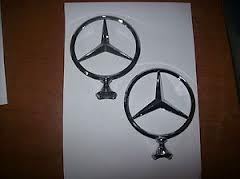
When parishioners were invited to respond to God’s generosity in their offerings of financial pledges one man told the priest that his economic situation was difficult, that he did not have enough, and he would not be able to make a pledge that year. A week or so later the man bought a  pair of “his and her" mercedes for his wife and himself. The thing is, as I thought about the story it occurred to me that the person in Bishop Smith’s story who was the most vulnerable, the most spiritually impoverished was the man with two mercedes. 

I am willing to speculate that no matter how much he had, the man with two mercedes did not believe he had enough. The man with two mercedes had no idea that everything he had was gift - every breath, every beat of his heart, every stitch of clothes, every cent of his wealth. I believe the man with two mercedes was telling the priest his truth when he told the priest that he did not have enough. He did not have enough gratitude for the abundance in his life. He did not have enough humility to know that all that he had was gift. He did not have enough faith to know that the God who had provided for him would continue to do so. Much like the scribes in Jesus’ parable who fluanted their long robes and took the took the seats of honor, the man with two mercedes flaunted his riches and exposed his spiritual impoverishment.