Showing posts with label Mark 12:38-44. Show all posts

Friday, November 9, 2018

Gospel text for Sunday 11 November 2018


Mark 12:38-44        As Jesus taught, he said, “Beware of the scribes, who like to walk around in long robes, and to be greeted with respect in the marketplaces, and to have the best seats in the synagogues and places of honor at banquets! They devour widows’ houses and for the sake of appearance say long prayers. They will receive the greater condemnation.”

He sat down opposite the treasury, and watched the crowd putting money into the treasury. Many rich people put in large sums. A poor widow came and put in two small copper coins, which are worth a penny. Then he called his disciples and said to them, “Truly I tell you, this poor widow has put in more than all those who are contributing to the treasury. For all of them have contributed out of their abundance; but she out of her poverty has put in everything she had, all she had to live on.”

Reflection        Did you know that according to a report released by the Pew Research Center in 2017, ninety one percent of the members of Congress identify themselves as Christian? * That being the case, we should be a nation above reproach; people imbued with the Spirit of God working together for the common good? With ninety one percent of the members of Congress identifying themselves as Christian, surely they affirm the fundamental Christian belief that we are all made in the image of God which means we understand all people to be good and therefore treat one another with dignity and respect? Of course we welcome strangers, for we never know, we could be entertaining angels? We share our resources to insure that all of our sisters and brothers have access to decent lives?       How are we doing?

I do not recall anything in Jesus’ teaching about the virtue of amassing wealth and shoring  up power. But today, like the scribes of old who walk around in long robes, demanding respect and seats of honor at elite banquets,  many of the most vocal purveyors of Christian righteousness have sold their moral high ground for financial gain and a place at the table of power. They quote scripture and put on bombastic displays while “devouring widows houses” and turning their backs on the most vulnerable.

Here is the thing. “From the beginning we have misused our freedom and made wrong choices” by “putting ourselves in the place of God.” (bcp 845) That  is  what caused our ancestors Adam and Eve to trip and fall out of the garden, misusing their freedom and making the choice to eat the one and only thing they were told not to touch. And that is what trips us up today, “putting ourselves in the place of God.”

As people of God we have free will to turn toward or away from God. As people of God it is our commission to believe and trust in God, to love our neighbors as ourselves and do to them as we wish them to do to us.” (bcp 848) There it is.  Christians love God and love their neighbors. The purview of sorting and judging people belongs to God - not us.

This is a really high standard; value and dignify all people and leave the judging to God. The cost of being a true Christian is enormous, and frankly, there is only one way we can do it. It is by remembering the New Commandment given to us by Jesus, “Love one another as I have loved you.” We do not have to rely on ourselves to muster up love out of thin air because we are already full of love, love born and blooming within us as the Spirit of God with us. 

Six hundred years before Jesus the prophet Jeremiah foretold of this, “The days are surely coming, says the Lord, when I will make a new covenant with the house of Israel and the house of Judah… says the Lord: I will put my law within them, and I will write it on their hearts; and I will be their God, and they shall be my people. (Jer 31.31,33) Jeremiah’s promise is fulfilled when Jesus gives this parting gift to his friends, “I give you a new commandment, that you love one another. Just as I have loved you, you also should love one another” (John 13.34) and then he promises, “I will not leave you orphaned; I am coming to you… but the Advocate, the Holy Spirit, whom the Father will send in my name, will teach you everything, and remind you of all that I have said to you.” (John 14.18,25) 

We are not left on our own to conjure up love for all people. The law of love is written on our hearts. We no longer have to depend on ourselves to generate love because the Spirit of God rises in our hearts and pours through us to love one another. This is what makes it possible for us to stretch to the high standard of valuing and dignifying all people and leave the judging to God.

Etched on the stone of our hearts is God’s law of love. The challenge is to remember and rely on it and let God’s law of love dictate our decisive actions. If we deign to identify ourselves as Christian then it is incumbent upon us to verify our claim by our decisive actions; loving one another as God loves us. Nothing more and nothing less. 


If you found this post to be meaningful please share by clicking on icons below. Thank you.

*http://assets.pewresearch.org/wp-content/uploads/sites/11/2017/01/19161723/Member-affiliations-for-web.pdf
bcp refers to The Episcopal Church  Book of Common Prayer

Friday, November 6, 2015

Gospel text for Sunday 8 November 2015


Mark 12:38-44        Teaching in the temple, Jesus said, "Beware of the scribes, who like to walk around in long robes, and to be greeted with respect in the marketplaces, and to have the best seats in the synagogues and places of honor at banquets! They devour widows' houses and for the sake of appearance say long prayers. They will receive the greater condemnation."
He sat down opposite the treasury, and watched the crowd putting money into the treasury. Many rich people put in large sums. A poor widow came and put in two small copper coins, which are worth a penny. Then he called his disciples and said to them, "Truly I tell you, this poor widow has put in more than all those who are contributing to the treasury. For all of them have contributed out of their abundance; but she out of her poverty has put in everything she had, all she had to live on.”


Reflection             Please imagine with me; we are looking through a wide angle lens at a rolling French countryside. It is 1959. Winter grey is melting as the camera zooms in to view a sluggish French village, then wisks us along a cobbled rue, across the plaza and into a stained stone church. Inside drowsy congregants nod as the young preacher utters with no note of conviction, “The season of Lent is upon us. It is a time of abstinence, reflection and penitence…”  It will be awhile before we discover the hard-hearted historian and mayor of the village actually writes the preacher’s sermons to insure the village culture of torpor and tranquilite’ is maintained to his benefit. 

Meanwhile, a strong north wind is blowing. Clad in brilliant red capes the winsome Vienne and her young daughter are literally blown into town where they rent the Patisserie and open a Chocolat shop.  The charismatic Vienne offers extravagant hospitality to the outcasts, sweets to the bitter, comfort to the disconsolate and bountiful food to the hungry. This of course puts her cross-ways with the preening mayor who insists the people keep a strict Lenten fast. But the comfort of chocolat and the promise of delight attracts the people to Vienne. In the end, even the major is overcome by his desire for comfort and chocolat.

Much as the scribes in today’s gospel text, “…who like to walk around in long robes, and to be greeted with respect in the marketplaces…” and  “devour widows' houses…” the mayor in Chocolat exercised power over the people and “devoured their houses” by oppressing them and stripping them of joy. Like Jesus, Vienne blows into town and turns the status quo upside down by offering the people an alternate reality; the gratuitous experience of hospitality, healing and joy given to any and everyone, unconditionally.

I believe this is the kind of “turning the world upside down” about which our new Presiding Bishop Michael Curry (PB) preached at his installation on November 1st.  Curry bellows from the pulpit, “The Way of Jesus turns the world upside down, which is actually right side up.” He continues; and the way to turn the world upside down is for each of us to live the world shaking Way of Jesus, which means, love God and love our neighbors. No fluff. No doctrine. No equivocation, Curry underscores his point. “If it is not about love it is not about God.”  Which makes me think that our new PB and the heroine of Chocolat are two flavors of a single slice of Chocolat.

If you found this post to be meaningful, please share by clicking on icons below. Thank You. 

Monday, November 5, 2012

Gospel Test for Sunday 11 November 2012


Mark 12:38-44       Teaching in the temple, Jesus said, "Beware of the scribes, who like to walk around in long robes, and to be greeted with respect in the marketplaces, and to have the best seats in the synagogues and places of honor at banquets! They devour widows' houses and for the sake of appearance say long prayers. They will receive the greater condemnation."
He sat down opposite the treasury, and watched the crowd putting money into the treasury. Many rich people put in large sums. A poor widow came and put in two small copper coins, which are worth a penny. Then he called his disciples and said to them, "Truly I tell you, this poor widow has put in more than all those who are contributing to the treasury. For all of them have contributed out of their abundance; but she out of her poverty has put in everything she had, all she had to live on."
Reflection
Wow! Jesus is bold. While standing in the temple and teaching he publicly insults the scribes, the very people whose job is to record and sustain temple tradition. He accuses them of being hypocrites, taking money from the most vulnerable (widows) who are required to pay for prayers and using that money to elevate their position of honor. It makes me think of a true story Bishop Kirk Smith told last Sunday during his stewardship sermon. I shall paraphrase.

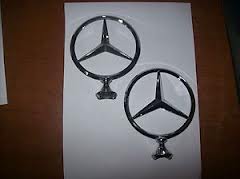
When parishioners were invited to respond to God’s generosity in their offerings of financial pledges one man told the priest that his economic situation was difficult, that he did not have enough, and he would not be able to make a pledge that year. A week or so later the man bought a  pair of “his and her" mercedes for his wife and himself. The thing is, as I thought about the story it occurred to me that the person in Bishop Smith’s story who was the most vulnerable, the most spiritually impoverished was the man with two mercedes. 

I am willing to speculate that no matter how much he had, the man with two mercedes did not believe he had enough. The man with two mercedes had no idea that everything he had was gift - every breath, every beat of his heart, every stitch of clothes, every cent of his wealth. I believe the man with two mercedes was telling the priest his truth when he told the priest that he did not have enough. He did not have enough gratitude for the abundance in his life. He did not have enough humility to know that all that he had was gift. He did not have enough faith to know that the God who had provided for him would continue to do so. Much like the scribes in Jesus’ parable who fluanted their long robes and took the took the seats of honor, the man with two mercedes flaunted his riches and exposed his spiritual impoverishment.