Showing posts with label humanity. Show all posts

Saturday, October 8, 2022


Luke 17:11-19        On the way to Jerusalem Jesus was going through the region between Samaria and Galilee. As he entered a village, ten lepers approached him. Keeping their distance, they called out, saying, "Jesus, Master, have mercy on us!" When he saw them, he said to them, "Go and show yourselves to the priests." And as they went, they were made clean. Then one of them, when he saw that he was healed, turned back, praising God with a loud voice. He prostrated himself at Jesus' feet and thanked him. And he was a Samaritan. Then Jesus asked, "Were not ten made clean? But the other nine, where are they? Was none of them found to return and give praise to God except this foreigner?" Then he said to him, "Get up and go on your way; your faith has made you well.”


Reflection There is an uncharted strangeness to borderlands. They hide and hold the fractious edge between native and other. When contrasting customs, language and beliefs collide, folks on both sides feel vulnerable and strive for protection by building walls both real and in our hearts. The problem is, no matter how ominous our walls, we still feel vulnerable. 


Therein lies the conundrum. For as long as we look through jaundiced eyes and hardened hearts we will be contemptuous of ‘those people,’ the in crowd, the out crowd, brown, black or white, for as long as we hold to us and them distinction we will feel vulnerable because we are fracturing what is meant to be one, whole and holy humanity. 


When Jesus arrives at “a (borderland) village, and, keeping the prescribed distance, ten lepers approach him, asking for mercy,”  he does not ask for their passports, “Are you a Jew or a Gentile?” He does not try to figure out who has leprosy and who has a minor skin rash. Jesus looks at them (and here I believe “look” means more than seeing the condition of their skin or physical appearance), Jesus really looks at them and sees their humanity.  Jesus sees people of God who have been separated from their communities and God. (It is helpful to remember that, unlike today, two thousand years ago people did not have a personal, private relationship with God. God was present with people in community which means, if you are cast out of your community you are separated from God.) Therefore healing means being restored to your place in the community with God. 


“God is with and for all people, regardless of which side of the border they live,” because people are not defined by geography, ethnicity, religion or disease. People find their identity in relationship with God therefore, all people are one and all deserve mercy.


Walking in the borderlands, the in between places, Jesus affirms the humanity of outcasts. As a devout Jew Jesus  knows the Hebrew scripture and acts precisely as  prescribed in the fourth book of the Torah, Leviticus. “ When a person has on the skin of his body a swelling or an eruption or a spot, and it turns into a leprous disease on the skin of his body, he shall be brought to Aaron the priest or to one of his sons the priests. The priest shall examine the disease on the skin of his body…” (Lev 13.2-3) and determine whether or not the person may be received back in the community, worthy of being in the presence of God.  


Following accepted religious practice Jesus sends the ten lepers to the priests who will examine them to determine who is in and who is out. But, something more is going on in this parable. As soon as the ten lepers accept Jesus’ instruction to “Go and show (themselves) to the priests,” they are “made clean,” fit to return to their community.  I believe what we are meant to understand here is, as soon as the ten lepers turn toward God and ask for mercy, as soon as they acknowledge their dependence on something more than themselves, they are restored to relationship with their community and God. Nine of the ten lepers run off to the temple to receive the priest’s stamp of approval and return to life as they know it.


Turns out, one of the lepers is a Samaritan. A bit of background. Samaritans are half-Jew and half-Gentile. You have heard of the twelve tribes of Israel? When the northern kingdom of Israel was captured by Assyria in 721BCE the Assyrians dispersed the ten Northern tribes. A fragment of the ten tribes that remained in the Northern kingdom became the Samaritans, people who lived among and intermarried with the Assyrians, producing the Samaritans, half-Jew, half-Gentile. 


Two of the twelve tribes of Israel never left the southern kingdom. These were the tribes of Judah and Benjamin. They remained pure Jews and wanted  nothing to do with the mixed breed Samaritans. Another case of us and them. 


There is no point in the Samaritan leper going to the priests of the Southern kingdom because with or without leprosy no priest will stamp his proverbial documents and he will not be welcomed into the temple community. Overwhelmed with gratitude the healed Samaritan leper turns around “praising God with a loud voice.”  He has been transformed by the grace of Jesus’ mercy. There we have it. From the depths of his transformed heart the Samaritan claims his true identity, identity found in relationship with God, in the unity of all humanity, the relationship that transcends all borders, inside and out. This is his healing.


Here is the thing. Nine of the lepers know the rules and know their place. They keep their distance when Jesus arrives, they follow the prescribed order to return to the priests and look forward to leaping back into life as they have known it. But the tenth leper who was an outsider even before contracting the ostracizing skin disease is transformed by the grace of Jesus’ mercy. 


On the way to Jerusalem we are confronted by important questions. ”Like the nine lepers, is it sufficient for us to follow the rules, know our place, stick with our tribe, get our passports stamped and continue life as we know it? Or, is it time for us to see the people we treat as lepers, foreigners, strangers, ‘those people,’ through Jesus’ merciful eyes? Is it time for us to stop fracturing the community of God and restore the one, whole and holy body of humanity by seeing with the merciful eyes of Jesus?  


If you find this post to be meaningful please share by clicking on icons below. Thank you.


Saturday, April 24, 2021

Gospel text for Sunday 25 April 2021


John 10:11-18        Jesus said, “I am the good shepherd. The good shepherd lays down his life for the sheep. The hired hand, who is not the shepherd and does not own the sheep, sees the wolf coming and leaves the sheep and runs away—and the wolf snatches them and scatters them. The hired hand runs away because a hired hand does not care for the sheep. I am the good shepherd. I know my own and my own know me, just as the Father knows me and I know the Father. And I lay down my life for the sheep. I have other sheep that do not belong to this fold. I must bring them also, and they will listen to my voice. So there will be one flock, one shepherd. For this reason the Father loves me, because I lay down my life in order to take it up again. No one takes it from me, but I lay it down of my own accord. I have power to lay it down, and I have power to take it up again. I have received this command from my Father.”


Reflection       How are we to respond to Jesus’ willingness to lay down his life so that we all may be one? How are we to respond to a leader who does not run away or toss us under the bus when all hell breaks loose and life erupts out of control? I believe the answer is simple (not easy). We must do everything we possibly can to affirm our unity with all people.


Doing everything we possibly can begins with remembering who and whose we are. We understand that all people “are made in the image of God,”  and that “we are free to make choices: to love, to create, to reason, and to live in harmony with creation and with God.” (BCP 845)  Like the Good Shepherd we “have the power to lay our lives down… by our own accord.” In other words, we are free to care for one another. 


Doing everything we possibly can means we respond to Jesus’ call “that we all may be one” by respecting the dignity of every human being and loving our neighbor as ourself. It means we erase the redlines and remove the fences that falsely separate us.  It means doing whatever it takes to insure the assumptions and actions that deny the shared humanity of George Floyd and Dereck Chauvin are dismantled. 


Here I must confess I did not celebrate when I heard the news of Mr. Chauvin’s conviction because one man is dead and another man’s life is destroyed, two families are devastated and our country is divided over who is the trespasser and who the trespassed. 


Yes. Holding a man to account for his actions is imperative and it is not enough to allay the fear of fathers giving their black sons ‘the talk’ about how to protect themselves when confronted by white authority. It is not enough to  quiet the fear of mothers teaching their white daughters how to walk through parking lots and certain places and not be seen as vulnerable. Holding a man to account for his behavior is necessary and not sufficient to transform the consciousness of people who experience one another as threats. 


Secular law holds us accountable for wrongful social behavior.  It judges our up close, personal, blow by blow actions and their consequence. Secular law responds with equivalent retaliation, tit for tat, an eye for an eye.  By contrast, God’s law assumes a hundred thousand feet above the ground perspective. It disarms every appearance of division to declare our shared humanity. In the words of the parable of the Good Shepherd, “so there will be one flock, one shepherd.” 


God’s law demands a reckoning for Mr. Floyd’s killing and Mr. Chauvin’s conviction.  This has nothing to do with counting coup or political advantage. God’s law requires nothing less than the transformation of our individual and collective consciousness.


When we set aside our pride, politics and opinions we are free to rise to the God’s eye point of view.  From the hundred thousand feet above the ground perspective we see that we are “one flock, one shepherd.” With our minds risen to the heights of our hearts we naturally choose to use our freedom to love and live in harmony.  This is the transformation of consciousness God’s law demands as a reckoning for Mr. Floyd’s killing and Mr. Chauvin’s conviction. We must do everything we possibly can to affirm our unity with all people.


If you found this post to be meaningful please share by clicking on icons  below. Thank you.


Friday, February 26, 2021

Gospel text for Sunday 28 February 2021


 Mark 8:31-38        Jesus began to teach his disciples that the Son of Man must undergo great suffering, and be rejected by the elders, the chief priests, and the scribes, and be killed, and after three days rise again. He said all this quite openly. And Peter took him aside and began to rebuke him. But turning and looking at his disciples, he rebuked Peter and said, “Get behind me, Satan! For you are setting your mind not on divine things but on human things.”

He called the crowd with his disciples, and said to them, “If any want to become my followers, let them deny themselves and take up their cross and follow me. For those who want to save their life will lose it, and those who lose their life for my sake, and for the sake of the gospel, will save it. For what will it profit them to gain the whole world and forfeit their life? Indeed, what can they give in return for their life? Those who are ashamed of me and of my words in this adulterous and sinful generation, of them the Son of Man will also be ashamed when he comes in the glory of his Father with the holy angels.”


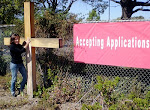
Reflection        Who wants to hear the teacher’s instruction, “Take up your cross and follow me?” And what in the world does it mean to, “Take up your cross” anyway? Throughout the years I have stumbled  over a variety of possible explanations. Today I believe twenty first century Jesus might express it this way, “Consent to your humanity as I do.” Why do I think this? 


Mark’s gospel begins with the acclamation, “The beginning of the good news of Jesus the Christ, the Son of God.” (1.1) Ten verses later at Jesus’ baptism  “a voice came from heaven, ‘You are my Son, the Beloved; with you I am well pleased.” (1.11) Twice identified as Son of God nonetheless Jesus calls himself Son of Man. What is this about?


I believe in calling himself Son of Man Jesus is consenting to his human condition; subject to every emotion, challenge, conflict, suffering, benediction and finally to his mortality. Although Jesus finds his spiritual identity in God as affirmed in his baptism, he also recognizes his corporeal identity in his humanity. The cross stands for the coherence of the spiritual and corporeal; humanity (our fickle human condition) represented by the horizontal beam fastened to our trustworthy vertical stanchion, identity in God.


Jesus is the Son of God and also the Son of Man, which thankfully establishes Jesus as one of us. As beloved sons and daughters who from the very beginning are made in the image and likeness of God we too must consent to our fickle humanity as well as our trustworthy identity as daughters and sons of God. We too must take up the cross, following the way of Jesus.


Like Jesus we find our identity in God as affirmed in our baptism, but that does not procure for us a “get out of jail free” card. (Clearly that did not work for Jesus!)  Even though we are daughters and sons of God we must also consent to our temperamental human condition, subject to every emotion, challenge, conflict, suffering, benediction and finally to our mortality. The way of the cross is the way of life grounded in God and subject to the volatile human condition. 


If you found this post to be meaningful please share by clicking on icons below. Thank you. 


Friday, October 11, 2019


Luke 17:11-19        On the way to Jerusalem Jesus was going through the region between Samaria and Galilee. As he entered a village, ten lepers approached him. Keeping their distance, they called out, saying, "Jesus, Master, have mercy on us!" When he saw them, he said to them, "Go and show yourselves to the priests." And as they went, they were made clean. Then one of them, when he saw that he was healed, turned back, praising God with a loud voice. He prostrated himself at Jesus' feet and thanked him. And he was a Samaritan. Then Jesus asked, "Were not ten made clean? But the other nine, where are they? Was none of them found to return and give praise to God except this foreigner?" Then he said to him, "Get up and go on your way; your faith has made you well.”

Reflection        Today we find ourselves walking with Jesus along the border between Samaria and Galilee. Walking between the land of the Jews and the land of the Gentiles and in his proverbial back pack Jesus carries a message, “God is with and for all people, regardless on which side of the border they live.” For Jesus, people are not identified by their geography, ethnicity, or religion. For Jesus, all people are identified as people of God. 

But, then and now borders are troublesome places. They mark the edge of this and that, they are the sites of controversy and  roiling conflict. I suspect this is because when we arrive at our edges, our borders, we rub shoulder to shoulder with people and customs, languages and beliefs different than our own. When confronted with the stranger or the unknown, we feel vulnerable. Not wanting to feel vulnerable we build barriers to protect ourselves. The problem is, no matter how massive the barriers, we still feel vulnerable. 

Therein lies the conundrum. For as long as we look around us, identify people as Samaritans or Jews, the in crowd, the out crowd, good or bad, brown or white, us or them, for as long as we insist on discriminating between “us and them” we will always feel vulnerable.  Which brings us to Luke’s text.

Passing through the borderland place of outcasts, Jesus does not ask the lepers, “Are you a Jew or a Gentile?”  He does not try to figure out who has leprosy and who has a minor skin rash. Jesus looks at them (and here I believe “looks” means more than seeing the condition of their skin with his physical eyes), Jesus looks at them and sees their shared humanity. Jesus sees people of God who have been separated from their communities and their God. (It is helpful to remember that, unlike today,  two thousand years ago people did not have personal, private relationships with God. God was present with people in community which means, if you are cast out of your community you are separated from God.) 

Following accepted religious practice Jesus sends the lepers to the priests who will examine the disease on their skin and determine whether or not they may be received back into the community. (Lev 13,2-3) But, something more is going on in this parable. As soon as the ten lepers accept Jesus’ instruction to “Go and show (themselves) to the priests,” they are “made clean,” fit to return to their community.  I believe what we are meant to understand here is, as soon as the ten lepers turn toward God and ask for mercy, as soon as they acknowledge their dependence on something more than themselves, they are restored to relationship with their community and God. Nine of the ten lepers run off to the temple to receive the priest’s stamp of approval and return to life as they know it.

But the tenth leper, a Samaritan who was an outsider even before he was cast out for having a skin disease, is transformed by receiving the grace of Jesus’ mercy. Praising God the Samaritan claims his true identity in relationship with God, the relationship that transcends all borders, inside and out.

Today we are invited to ask ourselves,”Like the nine lepers, is it sufficient for us to follow the rules, know our place, get our passports stamped and continue life as we know it? Or, is it time for us to see the people we treat as lepers through Jesus’ merciful eyes? Is it time for us to join Jesus and the Samaritan praising God and proclaiming, “God is with and for all people, regardless on which side of the border they live?”

If you found this post to be meaningful please share by clicking on icons below. Thank you.


Saturday, January 7, 2017

Gospel text for Feast of the Epiphany, Sunday 8 January 2017

Matthew 2.1-12        In the time of King Herod, after Jesus was born in Bethlehem of Judea, wise men from the East came to Jerusalem, asking, "Where is the child who has been born king of the Jews? For we observed his star at its rising, and have come to pay him homage." When King Herod heard this, he was frightened, and all Jerusalem with him; and calling together all the chief priests and scribes of the people, he inquired of them where the Messiah was to be born. They told him, "In Bethlehem of Judea; for so it has been written by the prophet: `And you, Bethlehem, in the land of Judah, are by no means least among the rulers of Judah; for from you shall come a ruler who is to shepherd my people Israel.’"

Then Herod secretly called for the wise men and learned from them the exact time when the star had appeared. Then he sent them to Bethlehem, saying, "Go and search diligently for the child; and when you have found him, bring me word so that I may also go and pay him homage." When they had heard the king, they set out; and there, ahead of them, went the star that they had seen at its rising, until it stopped over the place where the child was. When they saw that the star had stopped, they were overwhelmed with joy. On entering the house, they saw the child with Mary his mother; and they knelt down and paid him homage. Then, opening their treasure chests, they offered him gifts of gold, frankincense, and myrrh. And having been warned in a dream not to return to Herod, they left for their own country by another road.
Reflection       “Why do we give one another gifts?” Habit? Duty? Obligation? Guilt? Manipulation? I believe gifts given in the genuine sense of giving are the outward and visible sign of our interior state, our intrinsic good will. Some gifts reveal our sense of gratitude, some extend healing, others communicate our inner desire for reconciliation, still others express our interior state of reverence or love. Given this way, gifts are means by which we make visible our hidden or invisible thoughts and emotions. When we choose the so called perfect gift for someone we are communicating by our choice that we know and value them as the unique person they are. 

Which leads us to the wise men in today’s teaching story. Finding the child Jesus they are “overwhelmed with joy,” they open their treasure chests (their hearts?) and carefully choose the perfect gifts for the infant Jesus, gifts that reveal they know and value the unique person Jesus. The wisdom of the wise is to look beyond appearances of  destitute Jewish parents with a newborn lying in an animal feeding trough, and see a human being, a divine being, a fragile being destined to die.  

As with all good teaching stories, the wisdom is hidden between the lines.  The wisdom of the wise men is hidden in the gifts they bring. Gold represents humanity. Frankincense represents divinity and myrrh is used when preparing bodies for burial. The wise men’s gifts are the outward and visible signs of their interior understanding of the true nature of this child, Jesus. Human, divine and destined to die.

The wise mens’ well chosen gifts communicate, “We see you for who you truly are.” Like the brightness of a star that illumines the entire world, the foreigners’ perspicuity  elevates the exchange of gifts from expressions of mass marketing or mad materialism to a spiritual transaction. 

Celebrating the Feast of the Epiphany we receive the incomprehensible gift given to all of humanity; the revelation that like our brother Jesus we are human beings, divine beings and fragile beings destined to die. There are no foreigners, there are no strangers. There are no “others.” Receiving this news we join the wise men, overwhelmed with joy and reaching into our hearts we search for the perfect gift to communicate we know and value each person we meet for who they uniquely are; human, divine and utterly fragile.

If you found this post to be meaningful please share by clicking on icons below. Thank you. 


Saturday, July 19, 2014

Gospel text for Feast of St. Mary Magdalene, 20 July 2013

John 20:11-18        Mary stood weeping outside the tomb. As she wept, she bent over to look into the tomb; and she saw two angels in white, sitting where the body of Jesus had been lying, one at the head and the other at the feet. They said to her, "Woman, why are you weeping?" She said to them, "They have taken away my Lord, and I do not know where they have laid him." When she had said this, she turned around and saw Jesus standing there, but she did not know that it was Jesus. Jesus said to her, "Woman, why are you weeping? Whom are you looking for?" Supposing him to be the gardener, she said to him, "Sir, if you have carried him away, tell me where you have laid him, and I will take him away." Jesus said to her, "Mary!" She turned and said to him in Hebrew, "Rabbouni!" (which means Teacher). Jesus said to her, "Do not hold on to me, because I have not yet ascended to the Father. But go to my brothers and say to them, `I am ascending to my Father and your Father, to my God and your God.'" Mary Magdalene went and announced to the disciples, "I have seen the Lord"; and she told them that he had said these things to her.

Reflection        Once upon a time there was a couple. From the instant they met something stirred inside each of them. They tenderly touched fingers to fingers, looked into each other’s eyes, told stories and laughed. When it rained they huddled close in the still protection of a cave and waited for the sun to return. One day an official arrived and said, “I have a book you must read. It tells you everything you need to know about love and relationships. It will tell you when it is proper for you to touch your fingers together, when you should look into each other’s eyes and when you should look away. It will tell you how to build a proper house. Everything you need to know about love and life is in this book. 

Being in love or learning about love? Being in love transforms us. Learning about love informs us. I believe the task of the 21st century is to move beyond this dichotomy or dualistic way of thinking and being. We are growing into non-dual consciousness as we recognize that we are people of mind and soul, body and spirit, science and religion. All of it is informed and transformed in God. We human beings are most fully alive when we welcome the paradox, live into the contradictions and refuse to be prisioners of judgement; good feeling - bad feeling; right thinking - wrong thinking; subject - object; other - self;  dead - alive. Non-dual consciousness emerges as humanity steps beyond a world divided into two camps into an awareness that embraces all that is. 
This is what Jesus was talking about when the Jews were questioning whether he was the messiah and he unequivocally declared,  “The father and I are one” (John 10.30). It was a radical statement of non-dual consciousness and it nearly got Jesus stoned. Then there was Jesus praying for the disciples,  another example of non-dual consciousness. “The glory that you have given me I have given them, so that they may be one, as we are one, I in them and you in me, that they may become completely one..” (John 17.22-23). 
All things are by God and with God and in God. No thing is outside of God, which is to say, all that is is of God. Non-dual consciousness apprehends there is only God; unborn and undying, being and nonbeing, always and everywhere, beyond all names and within all names. Paul’s counsel to the Romans, “Though we are many, we are one body,” (Ro 12.5) is yet another expression of the inclusivity of non-dual consciousness. Humanity and divinity are not apart from each other. As Jesus said, “The Father and I are one.”
I believe Mary Magdalene was the first person in Western spirituality following Jesus to experience and express non-dual consciousness. I believe that is how she recognized the resurrected Jesus. I believe that is why she is the apostle to the apostles. I believe that is why more and more people are fascinated by her presence in the Christian narrative. I believe that is why we observe the Feast of St. Mary Magdalene. 
If you found this post to be meaningful, please share it with friends by clicking on the icons below. Thank you. 

Tuesday, January 14, 2014

Gospel text for Sunday 19 January 2014

John 1:29-42        John saw Jesus coming toward him and declared, "Behold the Lamb of God who takes away the sin of the world! This is he of whom I said, `After me comes a man who ranks ahead of me because he was before me.' I myself did not know him; but I came baptizing with water for this reason, that he might be revealed to Israel." And John testified, "I saw the Spirit descending from heaven like a dove, and it remained on him. I myself did not know him, but the one who sent me to baptize with water said to me, `He on whom you see the Spirit descend and remain is the one who baptizes with the Holy Spirit.' And I myself have seen and have testified that this is the Son of God."
The next day John again was standing with two of his disciples, and as he watched Jesus walk by, he exclaimed, "Behold, here is the Lamb of God!" The two disciples heard him say this, and they followed Jesus. When Jesus turned and saw them following, he said to them, "What are you looking for?" They said to him, "Rabbi" (which translated means Teacher), "where are you staying?" He said to them, "Come and see." They came and saw where he was staying, and they remained with him that day. It was about four o'clock in the afternoon. One of the two who heard John speak and followed him was Andrew, Simon Peter's brother. He first found his brother Simon and said to him, "We have found the Messiah" (which is translated Anointed). He brought Simon to Jesus, who looked at him and said, "You are Simon son of John. You are to be called Cephas" (which is translated Peter). 
Reflection          In his novel, Stranger in a Strange Land, the writer Robert Heinlein coined the term “grok” which in common parlance means to intuitively grasp or understand, to be in rapport with the object of perception. But in his science fiction tale Heinlein’s usage of the word “grok” meant something more. Grok was the word used by Heinlein’s martians to describe the transcending experience of the ‘gorker’ and the ‘groked.’ The martians explain, as water becomes part of the drinker so does the drinker become part of the water. The sum of the two is greater than the individual parts and their realities are integral. “Behold...” There is something more.

John the Baptizer admits that even though he had been baptizing in anticipation of the one, the Messiah, who would come after him, “he did not know” who Jesus really was until he saw Jesus’ post baptism experience as an affirmation of his own conversation with God in which God told him, “He on whom you see the Spirit descend and remain is the one who baptizes with the Holy Spirit.” John “saw” something more, he groked the deeper meaning and recognized Jesus as “the Son of God.” Following his insight John’s preconceived notions of what a proper Messiah or Annointed One would look like fell away. Once the impediments to his vision were removed it was time for John to pass on his wisdom (and his followers) and so he instructs the two disciples, “Behold, here is the Lamb of God.” Pay attention. Things are not as they seem, the Messiah does not look like a regally clad king. There is more than meets the eye here. 

The two disciples must have groked something more as well because when they “heard” Jesus they followed him. We will never know what Jesus said to attract their attention, but Jesus’ subsequent invitation to “come and see” resounds throughout the generations.

What does it mean to come and see? I believe “coming” means showing up, allowing ourselves to be present to the people or situation in which we are standing. “Seeing” is more than visual perception of persons or objects. It is penetrating to the meaning of or recognizing the identity of that which we perceive. In a sense, true seeing is not unlike Heinlein’s martians’ usage of the word “grok.” When we really “see” someone we experience rapport with them, an affinity that bespeaks our fundamental bond. When we grok someone we recognize there is something more than meets the eye and we experience a taste of the interconnected web of being.

From one person to another, the identity of Jesus, the revelation of God with us, is passed on until the interconnected web of humanity is fully illumined, which is to say, until every human being groks their union and unity in something more. Returning to the martians’ understanding of reality, the sum of the two is greater than the individual parts and their realities are integral. “Behold...” There is something more.


If you found this post meaningful please share it with friends by clicking on the icons below. Thank you.