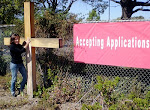
Showing posts with label Mark 8:27-38. Show all posts

Saturday, September 11, 2021

Gospel text for Sunday 12 September 2021


Mark 8:27-38        Jesus went on with his disciples to the villages of Caesarea Philippi; and on the way he asked his disciples, “Who do people say that I am?” And they answered him, “John the Baptist; and others, Elijah; and still others, one of the prophets.” He asked them, “But who do you say that I am?” Peter answered him, “You are the Messiah.” And he sternly ordered them not to tell anyone about him.


Then he began to teach them that the Son of Man must undergo great suffering, and be rejected by the elders, the chief priests, and the scribes, and be killed, and after three days rise again. He said all this quite openly. And Peter took him aside and began to rebuke him. But turning and looking at his disciples, he rebuked Peter and said, “Get behind me, Satan! For you are setting your mind not on divine things but on human things.”


He called the crowd with his disciples, and said to them, “If any want to become my followers, let them deny themselves and take up their cross and follow me. For those who want to save their life will lose it, and those who lose their life for my sake, and for the sake of the gospel, will save it. For what will it profit them to gain the whole world and forfeit their life? Indeed, what can they give in return for their life? Those who are ashamed of me and of my words in this adulterous and sinful generation, of them the Son of Man will also be ashamed when he comes in the glory of his Father with the holy angels.”


Reflection       No Lord, how can this be? People conspiring to commit federal hate crimes. Unprovoked stabbing of a black man. Countless people losing their homes to fire, flood and plague. Memories of the 9/11 debacle and twenty years under the authority of fear, war, politic, hatred and tragedy.  No Lord. How can this be? And there we stand right next to Peter with our minds closed to reality as it is, which sets us crosswise with all that is Divine because Divinity is a choice for the present moment. 


Reading the sentence, “Then he (Jesus)  began to teach them that the Son of Man must undergo great suffering, and be rejected by the elders, the chief priests, and the scribes, and be killed, and after three days rise again,” it is easy to be seized by emotion and shout, “No Lord, how can this be?”  And we miss a very important point.  The writer of the Markan text refers to Jesus as the Son of Man, which is to say, the Son of Humanity. I believe this not only annunciates Jesus as one who lives in accord with God and humanity but also every one of us who claim to follow Jesus and live in accord with God and humanity.  


We are Daughters and Sons of Humanity. When we choose to follow the law of the Lord, “Love one another (no exceptions, no conditions) and do to others as you would have them do to you,”  we set ourselves apart from the social, political and religious elite who set their minds on human things;  fostering fear rather than love to promote their positions, using their power for personal gain regardless of the cost to others, stopping at nothing to be first, great, pad their purses and save their own lives. This is the way of setting our minds on human things.


By contrast, when we choose to get behind Jesus we decidedly set our minds on divine things. This is the way of being divinely human; living with courage by faith, humbly using our power for the good of others, serving rather than being served, sacrificing our personal gain for the common good. This is not only difficult, it is dangerous because it puts us crosswise with the keepers of the status quo who persecute and try to annihilate anyone who challenges their authority. In fact, even some of our friends will call us crazy!


Still, “Wisdom cries out from the street,” “Love one another. Do to others as you would have them do to you.”  Are we listening? Are we scoffers? Do we hate knowledge and ignore Divine counsel? Do we lose faith and capitulate to fear? Do we succumb to the poison pen of the keepers of the status quo? Or, do we consent to be the Daughters and Sons of Divine Humanity even when it means laying down our lives for others? 


If you find this post to be meaningful please share by clicking on icons below. Thank you. 


Ephaphata - be opened. What if we were open to the Law of Lord? the statutes of the Lord? What if we were open to the wisdom of the Lord crying out in the streets. Can you hear it?

how long will you mutter scathing words and scorn the stranger?

how long will you hate knowledge and refuse God’s call? 

Love one another. Do to others what you would have them do to you.


When calamity strikes and we are drenched in anguish, then we reach out to our neighbors and call upon God.

Oh God, this cannot be….


7 The law of the Lord is perfect

and revives the soul; *

the testimony of the Lord is sure

and gives wisdom to the innocent.

8 The statutes of the Lord are just

and rejoice the heart; *

the commandment of the Lord is clear

and gives light to the eyes.

9 The fear of the Lord is clean


Then he began to teach them that the Son of Man must undergo great suffering, and be rejected by the elders, the chief priests, and the scribes, and be killed, and after three days rise again. He said all this quite openly. And Peter took him aside and began to rebuke him. But turning and looking at his disciples, he rebuked Peter and said, “Get behind me, Satan! For you are setting your mind not on divine things but on human things.”


Gary Norman Beeler

24 August 1941 - 10 September 2021


 there is no better way to flood life with meaning than to have lifted others and helped them to a greatness they never knew they had; to have together with others righted some of the wrongs of this injured earth and its creatures; to have acted rather than waited for others to act, and to have brought others with you, for the greatest leader on earth or in heaven cannot lead alone.


Frankly I only stumbled across the new liturgical Season of Creation this week so turned to TEC website and read, “The Season of Creation, September 1st through October 43rd, is celebrated by Christians around the world as a time for renewing, repairing and restoring our relationship to God, one another, and all of creation. The Episcopal Church joins this international effort for prayer and action for climate justice and an end to environmental racism and ecological destruction. This year’s theme is A home for all? Renewing the Oikos of God. In celebrating the Season, we are invited to consider anew our ecological, economic, and political ways of living.” 


I have no idea how we will go about this but I trust we will figure it out together. 


I completed the circle of my sabbatical where it began, in my back yard. 


Morning’s dove sits vigil on my heart hatches me to see

the glories of purple petals and sunflower paint


How infinite the consciousness of woman, of man

flocking falling stars and pinecones.


Surely we are meant to be and be held 

in the grandeur of God flaming out like shook foil

in every distant chink and present chip with palatial praise. 


William O Douglas, Thurgood Marshall, William Brennan and Potter Stewart.

I don’t remember the cases I argued. They were insignificant. I was a rookie in the justice department who was given either sure winners or sure losers to argue. But I especially recall Douglas, who had recently suffered a stroke and was in obvious discomfort, looking sharply at me as I made my arguments.

I was awed. Here was the justice who wrote the 1965 decision in Griswold v Connecticut, finding that a constitutional right to privacy forbids states from banning contraception. The man who argued the Vietnam war was illegal and issued an order that temporarily blocked sending Army reservists to Vietnam. The justice who wrote in the 1972 case Sierra Club v Morton that any part of nature feeling the destructive pressure of modern technology should have standing to sue in court – including rivers, lakes, trees and even the air – because if corporations (which are legal fictions) have standing, shouldn’t the natural world?


https://www.theguardian.com/commentisfree/2021/sep/02/us-supreme-court-texas-abortion-law-cruel-partisan    

Thursday, September 10, 2015

Gospel text for Sunday 13 September 2015


Mark 8:27-38        Jesus went on with his disciples to the villages of Caesarea Philippi; and on the way he asked his disciples, "Who do people say that I am?" And they answered him, "John the Baptist; and others, Elijah; and still others, one of the prophets." He asked them, "But who do you say that I am?" Peter answered him, "You are the Messiah." And he sternly ordered them not to tell anyone about him.
Then he began to teach them that the Son of Man must undergo great suffering, and be rejected by the elders, the chief priests, and the scribes, and be killed, and after three days rise again. He said all this quite openly. And Peter took him aside and began to rebuke him. But turning and looking at his disciples, he rebuked Peter and said, "Get behind me, Satan! For you are setting your mind not on divine things but on human things."
He called the crowd with his disciples, and said to them, "If any want to become my followers, let them deny themselves and take up their cross and follow me. For those who want to save their life will lose it, and those who lose their life for my sake, and for the sake of the gospel, will save it. For what will it profit them to gain the whole world and forfeit their life? Indeed, what can they give in return for their life? Those who are ashamed of me and of my words in this adulterous and sinful generation, of them the Son of Man will also be ashamed when he comes in the glory of his Father with the holy angels.”

Reflection        This is one of those times when Malina and Rohrbaugh’s “Social Science Commentary” leaps to mind with its apt explanation of the difference between ancient Middle Eastern and 18-20th century Western civilization’s response to Jesus’ question, “Who do people say that I am?” In his honor/shame society Jesus is asking this question to locate his position of power and status in the collective, which is the source of his identity because his was a group-oriented society. A person knew themselves via their connections, relationships and responsibilities to their socio/cultural/religious group. (eg The Christian Testament speaks of Paul of Tarsus, Mary of Magdela). The value is for the collective good.

The Age of Enlightenment gave birth to  a different perspective, individualism, that understood human persons to have individual God given liberties and rights. This view arose in the late 17th-early 18th through 20th century and underlies the psychological perspective that individual persons live primarily of themselves and for themselves.  Identity is singular, derived from the individual’s particular needs, desires and ambitions.  The value is for independence over against the collective good. 

When Jesus asks, “Who do you or who do the people say that I am?” he is asking “How am I located in the complex web of relationships that constitutes humanity?” Jesus is not testing the disciples and Peter to find out if they recognize his particular psychological constitution. He is asking the people, the source of his identity, to tell him what his position of honor or shame (power) is among the people. How then can we relate to Jesus’ question of identity today?

In his Integral Theory the contemporary philosopher Ken Wilber suggests a four part model for understanding who a person is. It includes the interior subjective world of the individual, the individual’s cultural/collective background, the objective situation exterior to the individual and how the individual fits in the collective.* Wilber offers a way to move beyond a preference for either the collective or the individual and embrace a 21st century nondual perspective that integrates the values of both. The lens through which we 21st century Westerners look back at Mark’s gospel cannot escape projecting our psychological perspective on it. In fact, that is what keeps the Word alive and relevant for us. However, we must also bring forward the context and wisdom of the collective seeking the survival of the group.

I wonder if the current great divide between Republicans and Democrats may in some way be explained by a preference for either Ancient Middle Eastern or Eighteenth Century Enlightenment perspectives? I wonder if it is time for us to set down the pundits’ rusty swords and bridge the gap between the rights of the individual (insulated and unconnected to others) and the priority for group survival (at the expense of personal privilege)?** I wonder if it is time to adopt a perspective that ascribes value to both the individual and the collective and stretches toward the transpersonal to exceed the limits of both?

Copy and paste either citation in your browser to read more.
*Wilber, Ken. "AQAL Glossary," "Introduction to Integral Theory and Practice: IOS Basic and the AQAL Map," Vol. 1, No. 3. Retrieved on September 7, 2015.


If you found this post to be meaningful, please share by clicking on icons below. Thank You. 


Monday, September 10, 2012

Gospel text for Sunday 16 September 2012


Mark 8:27-38

Jesus went on with his disciples to the villages of Caesarea Philippi; and on the way he asked his disciples, "Who do people say that I am?" And they answered him, "John the Baptist; and others, Elijah; and still others, one of the prophets." He asked them, "But who do you say that I am?" Peter answered him, "You are the Messiah." And he sternly ordered them not to tell anyone about him.
Then he began to teach them that the Son of Man must undergo great suffering, and be rejected by the elders, the chief priests, and the scribes, and be killed, and after three days rise again. He said all this quite openly. And Peter took him aside and began to rebuke him. But turning and looking at his disciples, he rebuked Peter and said, "Get behind me, Satan! For you are setting your mind not on divine things but on human things."
He called the crowd with his disciples, and said to them, "If any want to become my followers, let them deny themselves and take up their cross and follow me. For those who want to save their life will lose it, and those who lose their life for my sake, and for the sake of the gospel, will save it. For what will it profit them to gain the whole world and forfeit their life? Indeed, what can they give in return for their life? Those who are ashamed of me and of my words in this adulterous and sinful generation, of them the Son of Man will also be ashamed when he comes in the glory of his Father with the holy angels
 
Reflection
“Who do people say that I (Jesus) am?” Subversive? Liberal? Progressive? Regressive? Orthodox? Heretical? Blasphemer? Possessed – by a demon? By the Spirit of God? It depends on who answers the question. Jesus’ family think he is out of his mind. The religious officials declare he is a heretic. Possessed by Beelzebul  is what the Scribes decide. Herod figures Jesus is John the Baptist returned from the dead to get him back for cutting off his head. The masses are not quite sure what to make of this Jesus;  teacher, healer, exorcist, magician, a prophet like Moses or Elijah. It’s hard to tuck Jesus into neat little categories and groups.

Jesus asks Peter, ““Who do you say that I am?” Peter answers, “You are the messiah.”” OK then, that clears it up  - as long as we know what “messiah” means.  Peter thought he did. Messiah is the person for whom the people of God have been waiting for a very long time. Messiah is the one who bursts onto the scene and ends suffering and injustice. But Jesus doesn’t understand “messiah” that way.
 
Jesus launches into a terribly problematic teaching. Messiah is “… the Son of Man (and) must undergo great suffering, and be rejected by the elders, the chief priests, and the scribes and be killed and after three days rise again.” First problem. Jesus calls himself the Son of Man. That must mean that somehow messiah is associated with or finds identity in humankind. Messiah is not some supernatural force that is going to break in and create a happily ever after life. Second problem.  Messiah is supposed to end suffering, not be subjected to it, and certainly not be rejected and killed. What good is a dead messiah? Third problem. “After three days rise again.” What does that mean? And even if he is killed and comes back to life he will just be a dead man walking. How is that going to out my enemies and secure my life?
 
I’m afraid I am right there with Peter. I don’t want to hear what Jesus is saying. I want my messiah to make my life better, and that would be according to my definition of better. But Jesus makes himself painfully clear. All the things of the world that I seek (end of suffering, security, justice) are about enhancing my situation or status. And I will lose them. End of story. Or is it?
 
Following Jesus means dying to the self-focused way I (and the culture around me) see things. Because when I decide to ally myself with Jesus and act to spread God’s all inclusive love rather than to secure my share and keep everyone else a safe distance away, I will infuriate the people around me. My family, my friends, the religious and government officials will not like it one bit. And I will be persecuted, even killed. That’s what Jesus tells the crowds, disciples and us. But - and this is a big but - when I make my choices in alliance with God's purpose and in solidarity with God's people, I find my identity in God.  The little me with my meager wants to have it my way dies, and I rise again in the Christ.
 

Find the story that accompanies the image

  “ Muslims in Pakistan, show compassion and justice” at http://edition.cnn.com/2012/08/26/opinion/rauf-christian-girl-pakistan/index.html