
Friday, October 5, 2018

Hebrew Testament text for Sunday 7 October 2018


Job 1:1; 2:1-10        There was once a man in the land of Uz whose name was Job. That man was blameless and upright, one who feared God and turned away from evil.

One day the heavenly beings came to present themselves before the Lord, and Satan also came among them to present himself before the Lord. The Lord said to Satan, “Where have you come from?” Satan answered the Lord, “From going to and fro on the earth, and from walking up and down on it.” The Lord said to Satan, “Have you considered my servant Job? There is no one like him on the earth, a blameless and upright man who fears God and turns away from evil. He still persists in his integrity, although you incited me against him, to destroy him for no reason.” Then Satan answered the Lord, “Skin for skin! All that people have they will give to save their lives. But stretch out your hand now and touch his bone and his flesh, and he will curse you to your face.” The Lord said to Satan, “Very well, he is in your power; only spare his life.”

So Satan went out from the presence of the Lord, and inflicted loathsome sores on Job from the sole of his foot to the crown of his head. Job took a potsherd with which to scrape himself, and sat among the ashes. Then his wife said to him, “Do you still persist in your integrity? Curse God, and die.” But he said to her, “You speak as any foolish woman would speak. Shall we receive the good at the hand of God, and not receive the bad?” In all this Job did not sin with his lips.

Reflection      Job is a man of grand slam success and insistent faithfulness. We meet him at the heels of a wager between God and Satan. All of his livestock are destroyed, his servants are carried away, his business decimated. A great wind collapses the house in which his sons and daughters are eating and all ten of them are killed.  “(Despite) all of this, Job did not sin or charge God with wrongdoing.” (Job 1.22) God wins the wager. Job remains faithful in the face of unrelenting loss, a fact God loses no time pointing out to the Satan.  “(Job) still persists in his integrity, though you (Satan) incited me against him, to destroy him for no reason.” 

Furious the adversary ups the ante. “People will give up anything to save their own life…” Again, God,  betting Job will persist in his integrity, accepts the second wager and empowers the Satan to inflict unspeakable physical suffering on Job.  And indeed, though his body is covered with oozing boils and Job sends himself into exile sitting on an ash heap, when his wife confronts him saying, “Do you still persist in your integrity? Curse God and die,” Job endures saying to his maligned wife, “Shall we receive the good at the hand of God and not receive the bad?” 

This is integrity. No matter what happens to us on the outside, our interior values, our moral principles, what we know to be true, must continue to determine how we behave. Which is to say,  our values are revealed in our daily actions. The quality of our actions bespeak the authenticity of our faith. Integrity. 

Job’s faith is established through his acceptance of blessing as well as suffering which is not to say, Job liked his suffering nor did he think he deserved it. In fact, for the next twenty-nine chapters of the Book of Job, he never stops calling out to God, asserting his innocence, despising his condition and demanding God’s attention. And therein lies the key. Job never stops calling out to God because he sees God’s hand in the good as well as in the bad. 

This melodramatic tale of enduring faithfulness and resolute integrity has much to say to us today. As we navigate our troubled times, like Job we will do well to put our confidence in God with us regardless of the raging tides of our circumstance. Like Job we must act with integrity making our daily actions line up with our hearts values; receiving blessing as well as suffering. Rather than asking, “Who is to blame?” better we should ask, “Where is God in this?” 


If you found this post to be meaningful please share by clicking on icons below. Thank you. 

Friday, September 28, 2018

Gospel text for Sunday 30 September 2018


Mark 9:38-50        John said to Jesus, “Teacher, we saw someone casting out demons in your name, and we tried to stop him, because he was not following us.” But Jesus said, “Do not stop him; for no one who does a deed of power in my name will be able soon afterward to speak evil of me. Whoever is not against us is for us. For truly I tell you, whoever gives you a cup of water to drink because you bear the name of Christ will by no means lose the reward.

“If any of you put a stumbling block before one of these little ones who believe in me, it would be better for you if a great millstone were hung around your neck and you were thrown into the sea. If your hand causes you to stumble, cut it off; it is better for you to enter life maimed than to have two hands and to go to hell, to the unquenchable fire. And if your foot causes you to stumble, cut it off; it is better for you to enter life lame than to have two feet and to be thrown into hell. And if your eye causes you to stumble, tear it out; it is better for you to enter the kingdom of God with one eye than to have two eyes and to be thrown into hell, where their worm never dies, and the fire is never quenched.

“For everyone will be salted with fire. Salt is good; but if salt has lost its saltiness, how can you season it? Have salt in yourselves, and be at peace with one another.”

Reflection  Recently a group of parishioners joined me to Pray for Peace with a diverse group of folks at the Muslim Community Center. Following the evening call to prayer we were served tea and Noah’s pudding. This simple act of hospitality is as much a revelation of God’s presence and action on earth as any Christian teaching, preaching or healing. In fact I would argue that the sweet and savory flavors of Noah’s pudding articulate an unsurpassed theology of union without uniformity, communion without conformity. Affixed to the cover of each container of Noah’s pudding was this message. 

“When Noah’s ark came to rest on Mt Ararat, Noah’s family celebrated with a special dish. SInce their supplies were nearly exhausted, what was left was cooked together to form a pudding, what is now called ashure. Ashure is a holiday celebrated annually in Turkey. It signifies many events for Muslims, among the most significant being Noah’s ark set on dry land. The month long festivities center on promoting friendhship, good relations between neighbors and universal peace and understanding.” In other words, Noah’s pudding is made of left overs, things that folks usually do not put together, just like the Presbyterian, Lutheran, Sikh, Roman Catholic, LDS, Muslim and Episcopalian folks, all mixed together in prayer for the sweet hope of peace.

Though we may not describe a cup of water or Noah’s pudding as acts of great power, we certainly see them as acts of love. And frankly, if our eyes are dim and our hearts hardened such that we fail to apprehend these gestures of hospitality as a revelation of God’s love then we may as well tie an enormous weight around our necks and be thrown into the sea. 

What is the point of proclaiming the Kingdom of God for all people if we step on or over one another? Better we should cut off our feet. What is the point of proclaiming God’s presence and action on earth is we fail to see simple acts of generosity as revelations of God’s presence and action among us? Better we should tear out our eyes. 

Jesus extends the endowment of his love to transform the lives of ordinary people, one person at a time. He welcomes a shunned man disfigured with leprosy (Mark 1:40–45), he forgives a man who is paralyzed by sin (Mark 2:1–12), he breaks Sabbath law to heal a man with a withered hand (Mark 3:1–6), he violates just about every religious custom by healing a hemorrhaging woman (Mark 5:25–34), he raises a religious official’s daughter from the dead, (Mark 5:21–42)  heals a deaf mute (Mark 7:31–37) and restores sight to a blind man at Bethsaida (Mark 8:22–25).

Jesus is also the consummate host, multiplying loaves and fish to feed crowds of four and five thousand people (Mark 8.1-10, Mark 6.30-44). Who knows why this crowd feeding story is told twice in Mark’s gospel? It may have been rerun to make the point to people who would hear, not read, the gospel. Even the least bit of hospitality, a few loaves of bread and a couple of fish, is sufficient to feed and transform the hearts and the minds of the masses. In the Episcopal Church we embody this wisdom every Sunday in our Eucharist. 

A tiny bit of bread, the smallest gluten free wafers known to humankind, yet this simple act of hospitality offered to anyone who extends their hands in humble supplication has the power to transform lives. And the same is so for the mere sip of wine. From the first time I served as a lay eucharistic minister offering the chalice to the people, I witnessed the depth and breadth of humanity in the eyes of the people. Brimming with tears of joy, loss and fear, squeezed shut in deep concentration, wide in wonder, drawn in consternation, staring far away. Then the singular word of assent, sometimes barely audible, others with a nod, or like one person whom I will always hear, two distinct syllables, said with the full force of her being. Ah - men. Derived from the Hebrew āmēn, which means certainty, truly, it is so.

One at a time we receive the body and blood of Christ, we accept the presence of God into whatever state we bring to the table; blind, mute, deaf, hard of heart, paralyzed by illness, possessed by demons, obcessed with addictions, drenched in fear or full of joy and gratitude. God meets us one on one, exactly as we are, offering the simplest gesture of hospitality, a bit of bread, a sip of wine.  All that is left for us to do is avow its veracity saying, “Amen, it is so.”


If you found this post meaningful please share by clicking on icons below. Thank you.

Friday, September 21, 2018

Gospel text for Sunday 23 September 2018


Mark 9:30-37        Jesus and his disciples passed through Galilee. He did not want anyone to know it; for he was teaching his disciples, saying to them, “The Son of Man is to be betrayed into human hands, and they will kill him, and three days after being killed, he will rise again.” But they did not understand what he was saying and were afraid to ask him.

Then they came to Capernaum; and when he was in the house he asked them, “What were you arguing about on the way?” But they were silent, for on the way they had argued with one another who was the greatest. He sat down, called the twelve, and said to them, “Whoever wants to be first must be last of all and servant of all.” Then he took a little child and put it among them; and taking it in his arms, he said to them, “Whoever welcomes one such child in my name welcomes me, and whoever welcomes me welcomes not me but the one who sent me.”

Reflection       Last Tuesday evening I attended the Yom Kippur service with Rabbi Helen Cohn’s congregation. Yom Kippur, the highest and holiest day of the year, marks the end of the Jewish people’s ten days of penitence in preparation for their New Year. During her rabbinic reflection Rabbi Helen spoke about “sacred uncertainty,”  explicating an attitude of humility we are meant to bring to our relationships with God and one another. She counseled, “Do not to look at other people as incompetent versions of yourselves.” Hidden in the rabbi’s wisdom I heard Paul’s instruction to the Philippians,  “Let the same mind be in you that was in Christ Jesus…” (Phil 2.5)

What if we took this counsel to heart and began to frame our questions from a humble  non-dualistic perspective? What if rather than regarding ourselves as equal with God, judging people and putting them in pigeonholes, good, bad, right, wrong, what if we adopted an attitude of “sacred uncertainty?”   What if we began to think with the Mind of Christ, as servants of humanity looking for connections rather than distinctions? 

Several months ago I encountered a person in a leadership role whom I was not able to  assign to a particular gender identity. At first I found this disconcerting. As I struggled to put this person in one box or another it occurred to me that I was asking the wrong question. The question is not, “Was this person born a biological male or female?” Nor is it, “In what gender role am I supposed to identify them?” The question is, “How am I connected with this person? What does this person have to say to me?” Which catapulted me out of the tension between this or that, male or female. When I let go of my dualistic way of looking at this person, I was able to experience them in relationship with me. 

“How am I connected with them?” In the deepest desires of our hearts; to be treated with respect,  to have access to decent lives and thereby experience meaning and value. I am connected with this person in our shared humanity and divinity and we both chose to be in this place this day.

Jesus, the Son of Humanity, the Son of God, is praised as King yet arrives in Jerusalem riding on an ass, presides at the Passover banquet then washes his guests feet. Jesus is haled as king of the chosen and executed as a criminal. Jesus is the embodiment of both-and, non-dual consciousness. This is the picture painted for us by Mark’s narrative and it raises some important questions.

What kind of mind set is this gospel inviting us to adopt? What might it look like if individually and as One Body we break out of our pigeon-holing boxes, stop asking questions that demand unproductive dualistic responses?  What if we fervently prayed to embody a both-and life of “sacred uncertainty/“ What if we put on the humble, nonpartisan Mind of Christ?

* Please listen to James Finley’s reflection on Thomas Merton’s teachings about the realization of uncertainty by clicking on image at the upper right of this post.


If you found this post to be meaningful please share by clicking on the icons below. Thank you.

Friday, September 14, 2018

Gospel text for Sunday 16 September 2018


Mark 8.27-38    Jesus went on with his disciples to the villages of Caesarea Philippi; and on the way he asked his disciples, “Who do people say that I am?” And they answered him, “John the Baptist; and others, Elijah; and still others, one of the prophets.” He asked them, “But who do you say that I am?” Peter answered him, “You are the Messiah.” And he sternly ordered them not to tell anyone about him.

Then he began to teach them that the Son of Man must undergo great suffering, and be rejected by the elders, the chief priests, and the scribes, and be killed, and after three days rise again. He said all this quite openly. And Peter took him aside and began to rebuke him. But turning and looking at his disciples, he rebuked Peter and said, “Get behind me, Satan! For you are setting your mind not on divine things but on human things.”

He called the crowd with his disciples, and said to them, “If any want to become my followers, let them deny themselves and take up their cross and follow me. For those who want to save their life will lose it, and those who lose their life for my sake, and for the sake of the gospel, will save it. For what will it profit them to gain the whole world and forfeit their life? Indeed, what can they give in return for their life? Those who are ashamed of me and of my words in this adulterous and sinful generation, of them the Son of Man will also be ashamed when he comes in the glory of his Father with the holy angels.”

Reflection        Peter identifies Jesus as Messiah. Jesus shusses him and proceeds to call himself  “Son of Man.” Here’s the thing. The Jews have been waiting for a Messiah to come and rescue them from their suffering. In the Hebrew Testament ‘Messiah’ refers to kings, prophets or priests who are anointed with oil and set apart or consecrated for special missions or callings as chosen for them by God. 
When Peter identifies Jesus as ‘the Messiah’ he is only partially correct. As we saw at his baptism, Jesus is anointed and consecrated, he is favored by God. But, Jesus is more than that. He has not come to overthrow the Romans, rescue the Jews and establish a new political kingdom on earth. Jesus ministry is intended to reveal life on this earth lived in solidarity with God and with all people. 

The Jews hoped for a Messiah who would conquer their Roman oppressors so that they would be the ones in charge. But Jesus calls himself the ‘Son of Man.’ He embodies a new understanding of the relationship between God and humankind.

Jesus proceeds to teach that the Son of Man is not going to conquer the Romans nor be welcomed with open arms. Rather, he will suffer and be rejected by the religious officials. In fact, he will be killed, but, he will not be overcome, which is what, “in three days he will rise again” alludes to. Clearly this does not comport with the generally understood meaning of Messiah. Messiah is supposed to be hero, planting his victory banner on the mountaintop. Messiah is not supposed to suffer and be killed. Peter does not want to hear this, so much so that he basically says to Jesus, “Can we have a word?” Then takes him aside and rebukes his teacher. Jesus returns the favor telling Peter, “Get behind me.” 

Jesus embodies a new consciousness along with an invitation to a new earthly kingdom, an upside down kingdom wherein those who want to follow Jesus must lose life as they know it order to be restored to new life in right relationship with God and all people. Participating in this new kingdom means setting our minds on divine things - love, joy, peace, patience, kindness, gentleness, faithfulness and self-control rather than on human things - pride, greed, lust, envy, gluttony, anger and laziness. 

The question is, which kingdom are we making now?

Rabbi Jonathan Sacks has done a multi part series on Morality in the 21st Century. To hear the first program, please click on the image in the upper right corner of your screen. 

If you found this post to be meaningful please share by clicking on icons below. Thank you.




Friday, September 7, 2018

Gospel Text for Sunday 9 September 2018


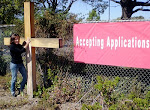
Matthew 25.35

Mark 7:24-37        Jesus set out and went away to the region of Tyre. He entered a house and did not want anyone to know he was there. Yet he could not escape notice, but a woman whose little daughter had an unclean spirit immediately heard about him, and she came and bowed down at his feet. Now the woman was a Gentile, of Syrophoenician origin. She begged him to cast the demon out of her daughter. He said to her, “Let the children be fed first, for it is not fair to take the children’s food and throw it to the dogs.” But she answered him, “Sir, even the dogs under the table eat the children’s crumbs.” Then he said to her, “For saying that, you may go—the demon has left your daughter.” So she went home, found the child lying on the bed, and the demon gone.

Then he returned from the region of Tyre, and went by way of Sidon towards the Sea of Galilee, in the region of the Decapolis. They brought to him a deaf man who had an impediment in his speech; and they begged him to lay his hand on him. He took him aside in private, away from the crowd, and put his fingers into his ears, and he spat and touched his tongue. Then looking up to heaven, he sighed and said to him, “Ephphatha,” that is, “Be opened.” And immediately his ears were opened, his tongue was released, and he spoke plainly. Then Jesus ordered them to tell no one; but the more he ordered them, the more zealously they proclaimed it. They were astounded beyond measure, saying, “He has done everything well; he even makes the deaf to hear and the mute to speak.”

Reflection        It is in the nature of the human condition to protect ourselves from what or who ever is unknown or unfamiliar because we are not sure that we are safe. It is in the nature of the human condition to hold onto what we have because we fear if we give some away we may not have enough. So, like Jesus, our knee-jerk reaction is to malign the person begging for our assistance and bark, “No, I cannot help you.” This is the first consolation I find in Mark’s text; our self-protective gut reactions are just like Jesus.

The second consolation is this, we need not be bound by our involuntary impulses.  There is no way of knowing what went on inside Jesus between his callous rejection of the mother’s first request that Jesus heal her daughter and her second pitch pleading for favor, but Jesus’ impulsive “no” became an accomplished “yes.” Jesus broke through the limiting ideas of who or how or what he was supposed to be and extended his mercy to a stranger. 

I was a Transitional Deacon serving at St. Mark’s in Berkeley. The rector of seventeen years tenure had retired and an interim had not yet been found. It was the first day I was the only clergy person present for the Wednesday morning Eucharist, the first day I was responsible for this big, beautiful church campus and I felt the full weight of the keys in my cassock.  

A new woman joined the Wednesday regulars for worship. Following the service I welcomed her then showed her the convoluted way through the sanctuary to the enclosed side courtyard leading to the underground parking garage. As we stood chatting I noticed a youngish black man, disheveled dreadlocks, white tee shirt, thick metal chain looped from his hip standing across the courtyard. I nodded to acknowledge him, continued my conversation with the new woman all the while wondering how this man got into the courtyard. 

Being an urban setting with a handful of homeless folk living in the church garage, the entryways to the courtyard were locked, as were all of the church doors.  After unlocking the gate to allow the woman to descend to the parking garage, I turned to face the man in the courtyard. As we approached each other I was wretchedly aware that not another soul breathed on the campus. When face to face I smiled, introduced myself and asked the stranger, “What may I do for you?” He answered, “I want to pray.” I replied, “Shall we sit on this bench?” “No, I want to pray in the church.” 

I would be lying if I did not admit that I was alarmed. “This is the first day I am responsible for the church. What if he destroys it?  won’t leave? attacks me?” At the same time I frantically implored, “God, this is your church and he must be one of your people.” So I led the stranger into the sanctuary, up the steps to the chancel. He sat and closed his eyes. I did likewise. Eight or ten minutes passed in silence, notwithstanding my racing mind,  “Debra, why are you anxious about this man yet did not have a second thought about the new woman - both are strangers? Why are you partial? What is wrong with you?” Eventually I asked again, “What may I do for you?” The man opened his eyes, looked at me and quietly said, “I just want to pray.” 

I began to relax, be still and present. I have no idea how much time passed before I heard him stir, and opened my eyes. He stood up, looked me straight in the eyes and said “Thank you.” I stood up, looked back and asked, “What is your name?” “Jesus.” My tears erupted. He said no more as I walked with him to the door. I have no idea how he exited the locked courtyard. 

Like Jesus with the Gentile mother, my involuntary impulse was to malign the stranger as  a scavenger or enemy harboring ill intentions.  Like Jesus I wanted to withhold God’s blessing. Much as the persistent mother refused to be turned away, the man on the St. Mark’s courtyard prevailed, turning my fear into humble supplication and transforming my heart from stone to tears. 

If you found this post to be meaningful please share by clicking on the icons below. Thank you.


Saturday, September 1, 2018

Hebrew and Gospel Texts for Sunday 2 September 2018


Song of Solomon 2:8-13
The voice of my beloved!
Look, he comes,
leaping upon the mountains,
bounding over the hills.
My beloved is like a gazelle
or a young stag.
Look, there he stands
behind our wall,
gazing in at the windows,
looking through the lattice.
My beloved speaks and says to me:
"Arise, my love, my fair one,
and come away;
for now the winter is past,
the rain is over and gone.
The flowers appear on the earth;
the time of singing has come,
and the voice of the turtledove
is heard in our land.
The fig tree puts forth its figs,
and the vines are in blossom; 
they give forth fragrance.
Arise, my love, my fair one,
and come away.”

Mark 7:1-8, 14-15, 21-23 When the Pharisees and some of the scribes who had come from Jerusalem gathered around him, they noticed that some of his disciples were eating with defiled hands, that is, without washing them. (For the Pharisees, and all the Jews, do not eat unless they thoroughly wash their hands, thus observing the tradition of the elders; and they do not eat anything from the market unless they wash it; and there are also many other traditions that they observe, the washing of cups, pots, and bronze kettles.) So the Pharisees and the scribes asked him, “Why do your disciples not live according to the tradition of the elders, but eat with defiled hands?” He said to them, “Isaiah prophesied rightly about you hypocrites, as it is written, ‘This people honors me with their lips, but their hearts are far from me; in vain do they worship me,
teaching human precepts as doctrines.’ You abandon the commandment of God and hold to human tradition.”

Then he called the crowd again and said to them, “Listen to me, all of you, and understand: there is nothing outside a person that by going in can defile, but the things that come out are what defile.” For it is from within, from the human heart, that evil intentions come: fornication, theft, murder, adultery, avarice, wickedness, deceit, licentiousness, envy, slander, pride, folly. All these evil things come from within, and they defile a person.”

Reflection        This morning I joined millions of people, physically and virtually, worshipping in thanksgiving for and celebration of the life of Senator John Sidney McCain III at the National Cathedral in Washington, DC. Family, friends and political figures representing every star and every stripe of humanity;  Orthodox Jew and Jesuit, Republican and Democrat, everyday human and president, all gathered to pay tribute to a man who “embodied the best in humanity.” 

The Democrat turned Independent Joseph Liberman described Republican McCain as a “defender of dignity of all human beings,” and declared, “the actions of man are the sources of hope for people.” The controversial elder statesman and former National Security Advisor and Secretary of State Henry Kissinger paid tribute to McCain as a man of honor, explaining, “Honor is an inward compulsion free of self interest,” and it was honor that compelled McCain to action intended to assure “decency and freedom for all.” 

Republican President George W. Bush characterized McCain as “a model of the combination of courage and decency.” Democratic President Barack Obama said, notwithstanding their myriad disagreements, McCain “embodied the best,” because, “McCain was committed to something bigger than himself.”

In the eulogy that began the service and perhaps should have been its capstone, McCain’s  daughter Meghan stated, “John McCain was not defined by prison, by the navy, by the Senate, by the Republican party or any one of the deeds in his life. John McCain was defined by love.”

As the heart felt tributes proceeded a distinct theme emerged, a theme captured in a quote from John McCain’s favorite book, Ernest Hemingway’s For Whom the Bell Tolls. “Today is only one day in all the days that will ever be. But what will happen in all the other days that ever come can depend on what you do today.” The theme is action. Everything depends on what we choose to do. Which brings us to our Biblical texts.

“Listen to me, all of you, and understand,” God wants our hearts. That’s what Jesus is telling the self-righteous keepers of the law who keep pestering him with divisive issues of who has proper eating habits who does not, who is worthy who is not, who is in who is out.

God desires us as individuals as well as a community and proposes that we come away from our habitual ways of fighting for security, safety, esteem, power and control.  Come away from our zero sum mentality that in order for you to have more I must have less. Come away from our inordinate desire to win.  Come away… to a new life committed to something more than ourselves, love of God and one another.

Like any proposal, ”Will you marry me? Will you apply for this position? Will you volunteer for this ministry? Will you seek dignity and decent lives for all people? Will you come away with me?” there are two parts; the invitation and the response. “Arise, my love, and come away….” In other words, don’t just sit there and wonder, “Is this real or true? Do I deserve it? How can little me possibly do this?”  Stand up and step away from your incarcerating thoughts and self defeating habits.  Act now and commit to something bigger than yourself because love is realized in actions.

By all accounts the late Senator John Sidney McCain III’s life was defined by love, love that compelled him to commit and act for something greater than himself. I believe John McCain accepted God’s proposal and “embodied the best in humanity.” His life and all of ours are better for it. Dare we choose to act likewise? 


If you found this post to be meaningful please share by clicking on icons below. thank you. 

Friday, August 24, 2018

Christian Testament Text for Sunday 26 August 2018


Ephesians 6:10-20        Be strong in the Lord and in the strength of his power. Put on the whole armor of God, so that you may be able to stand against the wiles of the devil. For our struggle is not against enemies of blood and flesh, but against the rulers, against the authorities, against the cosmic powers of this present darkness, against the spiritual forces of evil in the heavenly places. Therefore take up the whole armor of God, so that you may be able to withstand on that evil day, and having done everything, to stand firm. Stand therefore, and fasten the belt of truth around your waist, and put on the breastplate of righteousness. As shoes for your feet put on whatever will make you ready to proclaim the gospel of peace. With all of these, take the shield of faith, with which you will be able to quench all the flaming arrows of the evil one. Take the helmet of salvation, and the sword of the Spirit, which is the word of God.

Pray in the Spirit at all times in every prayer and supplication. To that end keep alert and always persevere in supplication for all the saints. Pray also for me, so that when I speak, a message may be given to me to make known with boldness the mystery of the gospel, for which I am an ambassador in chains. Pray that I may declare it boldly, as I must speak.

Reflection      In the spring of 1963 following much nonproductive discourse, civil and otherwise, the Southern Christian Leadership Conference organized one of the most influential campaigns of the Civil Rights Movement, the Birmingham Campaign. It involved a series of lunch counter sit-ins, marches on City Hall and boycotts on downtown merchants to protest segregation laws in the city of Birmingham. These peaceful demonstrations were responded to by violent attacks involving fire hoses and police dogs. Ultimately President John F. Kennedy wrote,  "The events in Birmingham... have so increased the cries for equality that no city or state or legislative body can prudently choose to ignore them." This was a turning point in the Civil Rights Movement and there is no question, embodying this new reality required engaging in more than polite conversation. It required courage, persistence and peaceful action.

Writing from his cell in the Birmingham jail The Rev. Dr. Martin Luther King, Jr. observed, “I have almost reached the regrettable conclusion that the Negro’s great stumbling block in his stride toward freedom is not the White Citizen’s Counciler or the Ku Klux Klanner, but the white moderate, who is more devoted to ‘order’ than to justice.”

I believe this is our culture’s great failing. Most of us are the moderates and we are conflict averse. We do not want to step on anybodies toes and we do not want to compromise our privileged positions.  We prefer to sit in a shallow spool than swim upstream. Perhaps it is because we forget Paul’s admonition to the Ephesians, “Put on the whole armor of God, so that you may be able to stand against the wiles of the devil. For our struggle is not against enemies of blood and flesh, but against the rulers, against the authorities, against the cosmic powers of this present darkness…”  In other words, our struggle is against the keepers of the status quo. Who better than Paul, the reformed persecutor of Jesus’ followers, knows how our struggles to embody the alternate reality of Jesus are condemned and thwarted by the rulers and authorities protecting the current order? 

To embody the alternate reality of Jesus is disruptive because Jesus is a revelation of how God is present and acting in the world; healing the sick, comforting the afflicted…. and…. this is the part we prefer to overlook…. afflicting the comforted. Jesus is a thorn in the side of government and religious officials. He upsets anyone who is inclined to protect the current order at the expense of justice. 

I believe Jesus has the courage to persist with healing the sick, comforting the afflicted and afflicting the comforted in the face of pervasive opposition because he finds his strength and power with God.  Empowered with God, Jesus puts on the “whole armor of God,” speaks truth out loud, demands fairness and respect, seeks reconciliation, and “with all of these, (takes) the shield of faith”

“Taking the shield of faith,” means standing in the conviction that God is with us rather than wallowing with uncertainty and cowering in fear of those that resist change. You see, when we put our faith in God with us rather than in our uncertain selves, we have the courage to embody Jesus’ alternate reality; healing the sick, comforting the afflicted and afflicting the comforted.

History reminds us that change comes as a result of unsettling the status quo and that tends to require more than persuasive civil discourse. But the majority of folks are indifferent, if not overtly hostile, to conversations about change. Rather than slaving for persuasive civil discourse, perhaps it is time for us to take seriously Jesus’ revelation that actions are more powerful than words. Let me be clear. Jesus is not a proponent of violence. Rather, he exemplifies living for an alternate reality that begets dignity, respect and access to decent lives for all people. 

How can we embody the alternate reality of Jesus? This week we can take time to learn about the candidates running in the primaries. Find out how their behaviors line up with the behaviors exemplified by Jesus; healing the sick, comforting the afflicted and afflicting the comforted. Then vote for the candidates we believe best represent Jesus’ values - regardless of whether they are Republican, Democrat, Independent or Green. Rather than capitulate to partisan politics, let us have the courage to live Jesus’ alternate reality using actions that are stronger than words; healing the sick, comforting the afflicted and, yes, when necessary afflicting the comforted. 

If you found this post to be meaningful please share by clicking on icons below. Thank you.