Saturday, September 5, 2015

Gospel text for Sunday 6 September 2015

Mark 7:24-37          Jesus set out and went away to the region of Tyre. He entered a house and did not want anyone to know he was there. Yet he could not escape notice, but a woman whose little daughter had an unclean spirit immediately heard about him, and she came and bowed down at his feet. Now the woman was a Gentile, of Syrophoenician origin. She begged him to cast the demon out of her daughter. He said to her, "Let the children be fed first, for it is not fair to take the children's food and throw it to the dogs." But she answered him, "Sir, even the dogs under the table eat the children's crumbs." Then he said to her, "For saying that, you may go-- the demon has left your daughter." So she went home, found the child lying on the bed, and the demon gone.

Then he returned from the region of Tyre, and went by way of Sidon towards the Sea of Galilee, in the region of the Decapolis. They brought to him a deaf man who had an impediment in his speech; and they begged him to lay his hand on him. He took him aside in private, away from the crowd, and put his fingers into his ears, and he spat and touched his tongue. Then looking up to heaven, he sighed and said to him, "Ephphatha," that is, "Be opened." And immediately his ears were opened, his tongue was released, and he spoke plainly. Then Jesus ordered them to tell no one; but the more he ordered them, the more zealously they proclaimed it. They were astounded beyond measure, saying, "He has done everything well; he even makes the deaf to hear and the mute to speak.”


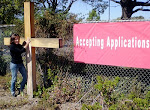
Reflection         I wonder if when Jesus said to the deaf man, “Ephphatha … be open,” I wonder if Jesus was also speaking to himself?  Having just walked away from his heart and mind opening encounter with the Syrophoenician mother, might Jesus have also been coaching himself? “Be thou open, Don’t let there be any boundaries or borders between yourself and others.  Eschew any line of demarcation between humanity and divinity.” 

That last would be the border crossing that got Jesus in the most trouble, acting on behalf of God, incarnating the will and the way of God, teaching, healing and forgiving sin. That is why the religious and political officials had to execute Jesus. It was their job to draw and protect the borders and boundaries of their laws. Today we call it gerrymandering, defining borders or boundaries to establish advantage for a particular group. And Jesus crossed the line. He refused to be bound by social, political or religious borders.

Jesus says, “Ephphatha… be open.” Any boundary or border that diminishes the humanity of another human being is to be transgressed. This is the will and the way of God; to be open to comfort, care for and heal every human being, especially the most vulnerable. The question before us today is, what borders or boundaries must we cross to be open, “Ephphatha…” to be open as was Jesus? What Maginot lines have we drawn imagining we can protect our privilege by keeping others at bay?


When Jesus invites us to “Follow me,” he might well add, “Ephphatha… be open. Put on the hands and feet and skin of God. Dare to cross borders to care for and comfort, teach, heal and forgive the sin of others. Refuse to be bound by borders and boundaries that diminish the humanity of another human being, that diminish the humanity of your true self. 

If you found this post to be meaningful please share by clicking on icons below.  Thank you!

Sunday, August 30, 2015

Hebrew Testament Text for 30 August 2015


Song of Songs 2.8-13   
The voice of my beloved!
Look, he comes,
leaping upon the mountains,
bounding over the hills.
My beloved is like a gazelle
or a young stag.
Look, there he stands
behind our wall,
gazing in at the windows,
looking through the lattice.
My beloved speaks and says to me:

“Arise, my love, my fair one,
and come away;
for now the winter is past,
the rain is over and gone.
The flowers appear on the earth;
the time of singing has come,
and the voice of the turtledove
is heard in our land.
The fig tree puts forth its figs,
and the vines are in blossom;
they give forth fragrance.
Arise, my love, my fair one,
and come away.”   


Reflection        Unlike most of the rest of the Bible, nearly seventy-five percent of the words spoken in the Song of Songs are the woman’s voice. This poetic call to love with its references to mountains and hills, a gazelle and a stag, fchanging seasons, verdant vines and fragrant blossoms locates human love in the context of the garden, and associates human love with all that is good in creation.  This offers an alternative view to the longstanding historical interpretation of the woman in the Song (not to mention many other parts of the Bible) as the adulterous, betraying woman who represents Israel’s idolatry or sinful woman, the church, who has lost her way. These interpretations of women have had a far ranging effect particularly as they are promoted in commentaries on the most widely published book in the world, the Bible with more than 5 billion copies printed since 1815.

We live in a time wherein many women are bought, sold, abused and exploited. Across the globe women are discounted, disrespected and held in contempt. The outrageous fact is, in many places the status of women has not much improved in the twenty-six hundred years since the Song of Songs was written. That said, we need to hear the Song of Songs because it reminds us of what love can be. The Song is a finger pointing beyond the edifice of human codes and concepts, interpretations, traditions and doctrines that separate us from the love of God and our neighbor. The Song of Songs is an invitation to acknowledge our deepest desires and longing and accept the invitation to live fully and freely rooted in the commandment to love. 

Of course we can extrapolate from the dramatic poem and offer theological reflections on God’s love of God’s people and Jesus’ love of the Church. But we must be careful “Not to teach human precepts as doctrines,”(Mk 7.8) in other words,  not to ignore God’s commandments and hold onto human tradition.  We must be careful not to slip into dualistic thinking, creating codes and characterizing love as human versus divine.  When one of the scribes asked Jesus, “Which commandment is the first of all?” Jesus answered, “The first is, ‘Hear, O Israel: the Lord our God, the Lord is one;  you shall love the Lord your God with all your heart, and with all your soul, and with all your mind, and with all your strength.’ The second is this, ‘You shall love your neighbor as yourself.’ There is no other commandment greater than these.” (Mk 12.28-31) 

When a  scribe asks Jesus  for the singular decisive commandment, Jesus’ non-dualistic response, love God with all your heart AND soul, mind AND strength, And love your neighbor AS your self, refuses to be constrained in a container of singular certainty. Both Jesus and the unknown writer of the Song of Songs shows us what love looks like. Fully human and fully divine, freely given and joyfully received. Amen. 

If you found this post to be meaningful, please share by clicking on the icons below. Thank you.


Tuesday, August 25, 2015

Hebrew Testament Text for Sunday 30 August 2015


Song of Songs 2.8-13   
The voice of my beloved!
Look, he comes,
leaping upon the mountains,
bounding over the hills.
My beloved is like a gazelle
or a young stag.
Look, there he stands
behind our wall,
gazing in at the windows,
looking through the lattice.
My beloved speaks and says to me:

“Arise, my love, my fair one,
and come away;
for now the winter is past,
the rain is over and gone.
The flowers appear on the earth;
the time of singing has come,
and the voice of the turtledove
is heard in our land.
The fig tree puts forth its figs,
and the vines are in blossom;
they give forth fragrance.
Arise, my love, my fair one,
and come away.”   


Reflection        Unlike most of the rest of the Bible, nearly seventy-five percent of the words spoken in the Song of Songs are the woman’s voice. This poetic call to love with its references to mountains and hills, a gazelle and a stag, flowers, changing seasons, verdant vines and fragrant blossoms locates human love in the context of the garden, and associates human love with all that is good in creation.  This offers an alternative view to the longstanding historical interpretation of the woman in the Song as the adulterous woman who represents Israel’s idolatry or the Church that has lost her way.

We live in a time wherein many women are bought, sold, abused and exploited. Across the globe women are discounted, disrespected and held in contempt. The outrageous fact is, in many places the status of women has not much improved in the twenty-six hundred years since the Song of Songs was written. That said, we need to hear the Song of Songs. We need to hear and we need to see revelations of love, longing and desire, invitations offered and invitations accepted as reminders of what love can be; a mutuality of desire and consent, joyful relationship in accord with the goodness of creation.

The Song of Songs reminds us of what love can be. The Song of Songs is a finger pointing beyond the edifice of human codes and concepts, traditions and doctrines that separate us from the love of God and one another. The Song of Songs is an invitation to acknowledge our deepest desires and longing and accept the invitation to live fully and freely rooted in the commandment to love. 

Of course we can extrapolate from the dramatic poem and offer theological reflections on God’s love of God’s people and Jesus’ love of the Church. But we must be careful “Not to teach human precepts as doctrines,”(Mk 7.8) in other words,  not to ignore God’s commandments and hold onto human tradition.  We must be careful not to slip into dualistic thinking creating codes and characterizing love as human versus divine.  When one of the scribes asked Jesus, “Which commandment is the first of all?” Jesus answered, “The first is, ‘Hear, O Israel: the Lord our God, the Lord is one;  you shall love the Lord your God with all your heart, and with all your soul, and with all your mind, and with all your strength.’ The second is this, ‘You shall love your neighbor as yourself.’ There is no other commandment greater than these.” (Mk 12.28-31) And the unknown writer of the Song of Songs shows us what love looks like. Fully human and fully divine, freely given and joyfully received. Amen. 


If you found this post to be meaningful, please share by clicking on the icons below. Thank you.

Friday, August 21, 2015

Christian Testament Text for Sunday 23 August 2015

Ephesians 6:10-20   Be strong in the Lord and in the strength of his power. Put on the whole armor of God, so that you may be able to stand against the wiles of the devil. For our struggle is not against enemies of blood and flesh, but against the rulers, against the authorities, against the cosmic powers of this present darkness, against the spiritual forces of evil in the heavenly places. Therefore take up the whole armor of God, so that you may be able to withstand on that evil day, and having done everything, to stand firm. Stand therefore, and fasten the belt of truth around your waist, and put on the breastplate of righteousness. As shoes for your feet put on whatever will make you ready to proclaim the gospel of peace. With all of these, take the shield of faith, with which you will be able to quench all the flaming arrows of the evil one. Take the helmet of salvation, and the sword of the Spirit, which is the word of God.

Pray in the Spirit at all times in every prayer and supplication. To that end keep alert and always persevere in supplication for all the saints. Pray also for me, so that when I speak, a message may be given to me to make known with boldness the mystery of the gospel, for which I am an ambassador in chains. Pray that I may declare it boldly, as I must speak.

Reflection Sitting with a group of folks who come together every Thursday afternoon to ask questions of meaning and value, this week a woman asked, “How are we to live, to be, in the presence of all the disasters and chaos in our world today?  From brutal politics to starving children, dying whales to worldwide economic unrest, poisoned water to no water at all, I just don’t know …” She was visibly frustrated, distressed, at a loss. 

“Take up the whole armor of God so that you may be able to withstand that evil day…. to stand firm.” That is Paul’s wise counsel to our ancestors and to us. But, it raises another question. “What is the armor of God?” I believe the armor of God is faith, which means, finding our strength in God, rather than in our selves. When we put our faith in God’s ability to overcome the impossible, to transform even death to life, we have the courage to speak truth to power, we receive the grace to stand for what is right and are able to behave accordingly. When we put our faith in God rather than our selves, our ordinary behavior in our ordinary communities is rooted in the promise of faith, not fear because, God is faithful.

Faith is our shield. Faith renders us “able to quench all the arrows of the evil one.” The politicians and secular moguls, the media and mass marketers of our geopolitical world use fear in their efforts to capture their markets and sure up their power.  Every day we are bombarded with threats of earthquakes, terrorist plots and rampant disease. Images of shootings, massacres, economic and natural disasters indoctrinate us with a sense of impending doom, fear. When we react with fear to these messages it means we believe them, we believe they are real and consequently they have power over us. The truth is, fear mongering is the work of evil undoing our faith because the opposite of faith is fear. In faith we look beyond the realm of appearances to the something more that we call God, by whom and with whom and in whom we live in the light of faith rather than the darkness of fear.

Twenty-five times the counsel “do not be afraid” appears in the Bible. I believe this acknowledges the temptation to fear is omnipresent, therefore we must constantly make the choice to “put on the whole armor of God,” putting our faith in God ’s faithfulness rather than ourselves regardless of all that conspires in our geopolitical world to indoctrinate us with fear. 


If you found this post to be meaningful, please share by clicking on the icons below. Thank you.

Saturday, August 15, 2015

Gospel text for Sunday 16 August 2015

John 6.52-58

Jesus said, "I am the living bread that came down from heaven. Whoever eats of this bread will live forever; and the bread that I will give for the life of the world is my flesh.” The Jews then disputed among themselves, saying, "How can this man give us his flesh to eat?" So Jesus said to them, "Very truly, I tell you, unless you eat the flesh of the Son of Man and drink his blood, you have no life in you. Those who eat my flesh and drink my blood have eternal life, and I will raise them up on the last day; for my flesh is true food and my blood is true drink. Those who eat my flesh and drink my blood abide in me, and I in them. Just as the living Father sent me, and I live because of the Father, so whoever eats me will live because of me. This is the bread that came down from heaven, not like that which your ancestors ate, and they died. But the one who eats this bread will live forever.”

Reflection       “Those who trōgō (eat) my flesh and drink my blood abide in me, and I in them.”The Greek trōgō is used as a verb that means chewing, gnawing or crunching with the teeth.  This is not an homogenized message about receiving holy food and drink. This is Jesus’ radical invitation to the disciples and us.  “But the one who eats, gnaws on, chews and crunches my flesh and drinks my blood will live forever.” No wonder the religious Jews balked. They must have been as repulsed as we may be entertaining images of savagery or cannablism. Eat my flesh, chew on it, gnaw on it, crunch it with your teeth then swallow it and you will live forever. 

A long time ago when I began to seriously study the Bible a wise mentor counseled me, “If you really want to encounter Jesus, eat the gospel of Mark. Read it as a story from beginning to end. Do that three times. Then, read it slowly, one sentence, even one word at a time, until it becomes part of you. Eat the gospel of Mark, incorporate this story into your own being.” And Jesus said, “Unless you eat the flesh of the Son of Man and drink his blood, you have no life in you.”

I believe the disturbing words and images in today’s gospel text are intended to propel us into something more than a magical relationship with Jesus, the miracle worker who gives us bread when we are hungry.  When we choose to accept Jesus’ invitation, we consciously and conscientiously eat, chew on, assimilate and integrate the flesh and blood of Christ to become the flesh and blood of Christ. As Christians we are not intended to simply memorialize the historical person of Jesus; tell the story and close the book. As Christians we are intended to become the eternal flesh and blood, the hands and feet of Christ. This is Eucharistic, or sacramental eating. Trōgō, chewing, gnawing, crunching with our teeth, wrestling with the words that offend and repulse us until we arrive at the marrow of meaning and remember who and whose we are.

If you found this post meaningful please share by clicking on the icons below.  Thank you.

Saturday, July 25, 2015

Gospel test for 2 August 2015


John 6:24-35        The next day, when the people who remained after the feeding of the five thousand saw that neither Jesus nor his disciples were there, they themselves got into the boats and went to Capernaum looking for Jesus. When they found him on the other side of the sea, they said to him, "Rabbi, when did you come here?" Jesus answered them, "Very truly, I tell you, you are looking for me, not because you saw signs, but because you ate your fill of the loaves. Do not work for the food that perishes, but for the food that endures for eternal life, which the Son of Man will give you. For it is on him that God the Father has set his seal." Then they said to him, "What must we do to perform the works of God?" Jesus answered them, "This is the work of God, that you believe in him whom he has sent." So they said to him, "What sign are you going to give us then, so that we may see it and believe you? What work are you performing? Our ancestors ate the manna in the wilderness; as it is written, `He gave them bread from heaven to eat.'" Then Jesus said to them, "Very truly, I tell you, it was not Moses who gave you the bread from heaven, but it is my Father who gives you the true bread from heaven. For the bread of God is that which comes down from heaven and gives life to the world." They said to him, "Sir, give us this bread always."
Jesus said to them, "I am the bread of life. Whoever comes to me will never be hungry, and whoever believes in me will never be thirsty.”

Reflection         “Dear God, I know that you are with me but still, would you please give me a sign, preferably in neon with fireworks. You know me, the thick hearted one who is never quite sure it really is You.” I have prayed that and similar prayers more times than I like to admit. What I am really asking is, how can I be sure, be sure that God is with me when I run out of bread and my stomach is growling? How can I be sure when I wake up in the morning and “neither Jesus nor his disciples (are) there?” 

It all boils down to wanting certainty, confidence with evidence that does not require faith. That is where miracles come in. The problem is, there can never be enough miracles to really convince me. We never know when we’ve seen the last one. I suspect that is why the disciples keep asking Jesus for more signs. Vats of fine wine, healing a child, feeding five thousand people, walking on water, all those signs are not enough to convince the disciples (and me)  so the disciples ask Jesus, “What sign are you going to give us then, so that we may see it and believe you?” Can you give us something we can really hold onto? Something we can see and feel and taste, like manna?

Jesus tries to explain. If you receive manna one day you will still be hungry the next… the same way it works with miracles. You can never have enough. But if you would just believe that you already have what you are looking for in me, you would never be hungry again. Apparently Jesus’ words fell on hard hearts. If we fast forward through John’s gospel we experience Jesus giving the disciples and us three more signs so that we would “believe in him whom God has sent;”healing a man born blind and a  paralytic and raising his friend from the dead. Still, when Jesus asks, “Who do the people say that I am…” but I am leaping ahead. 


If you found this post to be meaningful please share by clicking on the icons below. Thank you. 

I will be taking next week off for vacation. 

Friday, July 24, 2015

Gospel text for 26 July 2015


2015 07 26 John 6:1-21        Jesus went to the other side of the Sea of Galilee, also called the Sea of Tiberias. A large crowd kept following him, because they saw the signs that he was doing for the sick. Jesus went up the mountain and sat down there with his disciples. Now the Passover, the festival of the Jews, was near. When he looked up and saw a large crowd coming toward him, Jesus said to Philip, "Where are we to buy bread for these people to eat?" He said this to test him, for he himself knew what he was going to do. Philip answered him, "Six months' wages would not buy enough bread for each of them to get a little." One of his disciples, Andrew, Simon Peter's brother, said to him, "There is a boy here who has five barley loaves and two fish. But what are they among so many people?" Jesus said, "Make the people sit down." Now there was a great deal of grass in the place; so they sat down, about five thousand in all. Then Jesus took the loaves, and when he had given thanks, he distributed them to those who were seated; so also the fish, as much as they wanted. When they were satisfied, he told his disciples, "Gather up the fragments left over, so that nothing may be lost." So they gathered them up, and from the fragments of the five barley loaves, left by those who had eaten, they filled twelve baskets. When the people saw the sign that he had done, they began to say, "This is indeed the prophet who is to come into the world."
When Jesus realized that they were about to come and take him by force to make him king, he withdrew again to the mountain by himself.
When evening came, his disciples went down to the sea, got into a boat, and started across the sea to Capernaum. It was now dark, and Jesus had not yet come to them. The sea became rough because a strong wind was blowing. When they had rowed about three or four miles, they saw Jesus walking on the sea and coming near the boat, and they were terrified. But he said to them, "It is I; do not be afraid." Then they wanted to take him into the boat, and immediately the boat reached the land toward which they were going.

Reflection       

Who among us has not experienced the howls of a hungry infant or the grumpy ill-temper of a hungry adult? I believe hunger is an expression of our fundamental need and dependence on others. Think of it this way. By the time we swallow a bit of bread thousands of hands have made it possible; clearing the land, planting the seed, tending grain, harvesting, storing, shipping, processing, combining with other ingredients, honey raised by beekeepers, shipped to manufacturers, processed, packaged, shipped again and distributed all before we drive to the market thanks to the thousands of people who made, delivered and service our car, never mind the fuel we need, and finally we buy the loaf of bread.

We do not eat by ourselves. We are always fed by others, even, and perhaps especially the most privileged among us because hunger is at the core of our humanity and depends on the generosity of others to be fed. In her book, The Eucharist and the Hunger of the World, Monika Hellwig, a professor of theology at Georgetown University puts is this way, hunger is “the experience of being created in interdependence with others.” (p9)

The hunger of the starving needs to be fed so they can move beyond the pain of malnutrition and struggling to survive. The rest of us are hungry too; we hunger for meaning and value in our lives. We hunger to be freed from enslavement to power, privilege and stuff, and we hunger to be relieved of our anxiety about losing it.  And so in an interesting twist, the best way to fed our hunger is to gather together, share what we have and feed the hunger of the starving. You see we need to feed the hunger of the starving as much as they need to be fed because in so doing our deepest, truest selves come alive, full of kindness, beauty and truth. 

In today’s gospel text we see Jesus’ grace filled response to the people’s hunger - to our hunger.  The taking, thanking, blessing, breaking and sharing the one small loaf of bread is an outward and visible sign of a much greater spiritual truth. This is the saving action of Jesus, revealing the way of giving ourselves away for the good of one another, sharing what we have to feed the physical and spiritual hunger of our world.


If you found this post to be meaningful please share with friends by clicking on the icons below. Thank you.